

Canada Changes Law: Millions of Americans May Already Be Canadian Citizens — and Don't Know It Yet
In a season of political fatigue and shifting borders, a buried Canadian grandparent has suddenly become a ticket to a different kind of future.
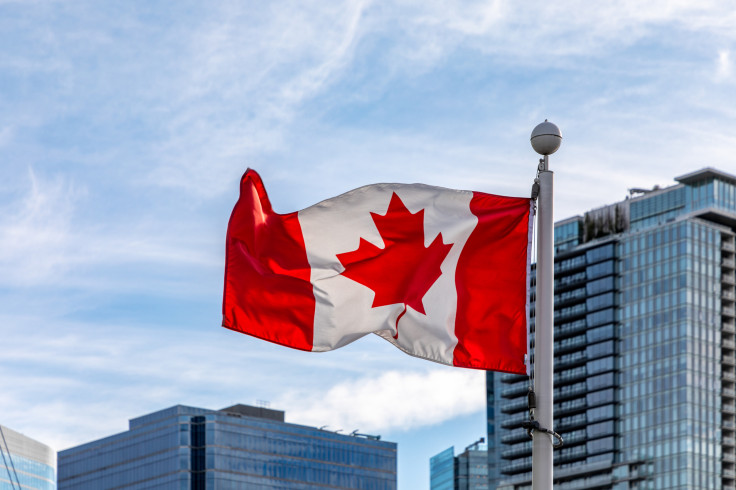
Millions of Americans may already be Canadian citizens without realising it, after Canada changed its citizenship law in December to allow status to pass down through much older ancestral lines, according to immigration lawyers handling a surge of new cases.
Canada has amended its citizenship rules for decades, usually to correct historic injustices or modernise outdated legislation. Until recently, the principle was strict: citizenship by descent could be passed down only one generation, from a Canadian parent to their child. Grandchildren and those further removed, even with strong family ties, were excluded. The new law, which took effect on 15 December, quietly removed that limit for those born before that date.
Under the change, anyone born before 15 December who can prove they has a direct Canadian ancestor — a grandparent, great-grandparent or further back — may already be considered a Canadian citizen in law. They are not applying to become Canadian so much as asking Ottawa to acknowledge a right that, on paper at least, is already theirs.
That is how 34-year-old Zack Loud, from Farmington, Minnesota, unexpectedly found himself counted as Canadian. His grandmother was born in Canada. 'My wife and I were already talking about potentially looking at jobs outside the country, but citizenship pushed Canada way up on our list,' he said. He and his siblings did not think of themselves as anything other than American until an immigration lawyer explained the implications of the new rules.
Canada's New Citizenship Rules Trigger Cross-Border Rush
Lawyers on both sides of the border say that story is repeating itself across the United States. Since the law took effect, applications for proof of Canadian citizenship have spiked to the point that some practices are dropping other work just to cope.
'We're pretty much flooded with this,' said Nicholas Berning, an immigration attorney at Boundary Bay Law in Bellingham, Washington. 'We've kind of shifted a lot of other work away in order to push these cases through.'
In Vancouver, British Columbia, immigration lawyer Amandeep Hayer describes a similar picture. His firm used to handle about 200 citizenship matters in an entire year. Now, more than 20 consultations a day are being fielded, mostly from Americans trying to understand whether their grandparents' birthplace now changes their legal identity.
Hayer, who had advocated for the reform in parliament, is blunt about what it means for many of these callers. 'You are Canadian, and you're considered to be one your whole life,' he said. 'That's really what you're applying for, the recognition of a right you already have vested.' He compares it to a baby born tomorrow in Canada, unmistakably Canadian even before the paperwork arrives.
Those born on or after 15 December do not get the open-ended ancestral route. Instead, they must show that their Canadian parent lived in Canada for 1,095 days. Everyone born before that date, however, falls under the new, far more generous umbrella for citizenship by descent.

Why Some Americans Want Canada's Safety Net
Motivations for pursuing dual citizenship are rarely just bureaucratic. The Americans calling lawyers like Hayer and Berning talk about politics, culture, economics and, sometimes, a weariness with the state of their own country.
Several point directly to Donald Trump's immigration crackdown and the broader climate around migration and rights. After three decades of political activism, Massachusetts resident Michelle Cunha said she eventually decided to move to Canada. She described feeling she had 'nothing left to give.'
'I put in my best effort for 30 years. I have done everything that I possibly can to make the United States what it promises the world to be, a place of freedom, a place of equality,' Cunha said. 'But clearly we're not there and we're not going to get there anytime soon.'
Others speak less about domestic policy and more about how they are perceived abroad. Troy Hicks, from Pahrump, Nevada, who has a great-grandfather born in Canada, said an international trip crystallised his thinking.
'I recently went to Australia and, you know, first words out of the first person I talked to in Australia was basically an expletive about Trump and the US,' he said. After a 20-hour flight, that was his welcome. The idea of being able to present a Canadian passport, he admitted, seemed 'easier, better, more palatable.'
For Florida resident Maureen Sullivan, whose grandmother was Canadian, the trigger was more immediate. She said she was shaken when her teenage nephew encountered federal immigration officers near his high school in St. Paul, Minnesota. Canadian citizenship became, in her mind, a contingency plan if things in the US 'really go south.'
'When I first heard about the bill, I couldn't believe it. It was like this little gift that fell in my lap,' Sullivan said. Her wider family, she added, shared a sense that securing Canadian status was a practical way to look after their future security.
WATCH: New video shows Air Canada flight crashing into rescue truck at New York airport pic.twitter.com/PZcyTSXI15
— BNO News (@BNONews) March 23, 2026
The Cost of Proving Canadian Citizenship
On paper, claiming Canadian citizenship this way is not particularly expensive. The government fee to apply for a 'proof of citizenship' certificate is 75 Canadian dollars, about US$55. For those with neatly filed records and straightforward family trees, that may be the only cost.
In reality, many applicants are having to pay for lawyers, genealogists or both to unearth birth, marriage and death certificates that show a clear line back to a Canadian ancestor. Cunha said she hired an attorney and expects her total bill to reach around US$6,500.
Others insist that much of this can be done without professional help. Mary Mangan, from Somerville, Massachusetts, submitted her application in January, relying mainly on advice from online forums. 'There are some situations where a lawyer might be the right thing, but for many people, I would guess 90% of people can probably do this on their own,' she said.
Canada's immigration department, Immigration, Refugees and Citizenship Canada, is already under pressure. Its website lists a processing time of about 10 months for a citizenship certificate, with more than 56,000 people waiting for decisions. Between 15 December and 31 January, the department confirmed citizenship by descent for 1,480 people, although not all of them were American. In the previous year, 24,500 Americans obtained dual US-Canada nationality.
Fen Hampson, a professor of international affairs at Carleton University in Ottawa, notes that Canadians tend to see themselves as 'welcoming people.' At the same time, he says, there is anxiety that a wave of relatively comfortable Americans could slow down processes for refugees and asylum seekers who face genuinely precarious situations.
'I think where people start looking askance is someone who's never been to Canada, who has very thin ties. They can get a passport, becoming Canadians of convenience. People don't like that,' Hampson said.

Officials have not put a number on how many Americans might now qualify for citizenship under the new rules. Hayer believes it could run into the millions, but nothing has been confirmed yet, and those estimates should be treated with caution until Ottawa releases formal projections.
© Copyright IBTimes 2026. All rights reserved.