ICE at the Airport: The 3 Questions You Legally Do Not Have to Answer at Security Today
Know the legal boundaries and the three questions you do not have to answer at the airport this week
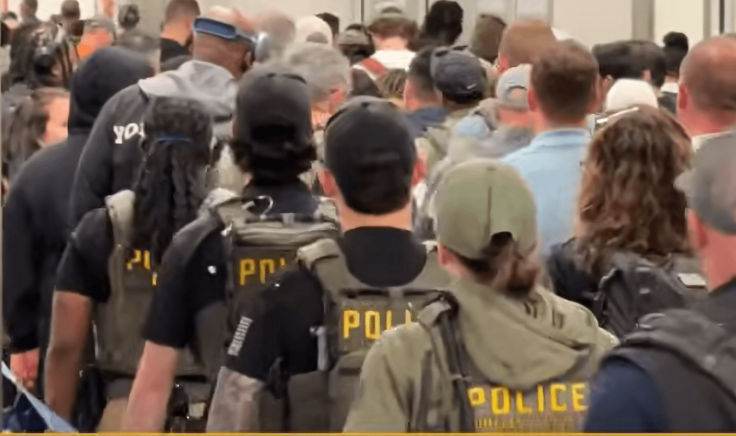
If you have walked through a major airport terminal lately, you have probably felt the tension. It is not just the usual spring break rush or the rising cost of tickets. Today, a new presence is shifting the energy at the security gate.
Following a breakdown in Washington, the Trump administration has officially deployed ICE officers to assist with TSA screenings at major hubs.
While the government frames this as a necessary 'force multiplier' to handle staffing shortages, travelers are raising serious questions about where safety ends, and surveillance begins.
President Donald Trump says ICE personnel could remain at airports nationwide for an extended period as the DHS funding dispute continues.
— Parler (@parler_social) March 23, 2026
“For as long as it takes.”
Officials have also indicated that identity checks could be conducted in certain areas prior to screening,… pic.twitter.com/Ae35s5vsCJ
ICE at TSA: The New Normal at the Gate
The current deployment is a direct result of a persistent funding crisis within the Department of Homeland Security. According to CBS, nearly 50,000 TSA officers are working without pay due to a congressional standoff, and the system has reached a breaking point.
DHS reports that hundreds of screeners have resigned, and call-outs hit record highs this past weekend. To fill the gap, ICE officers have been pulled from their typical duties to man the scanners and checkpoints.
For many, this feels like the ultimate example of mission creep. TSA is designed to find weapons and prohibited items to ensure flight safety. ICE, however, is an enforcement agency tasked with finding people.
When these two roles merge at a domestic security line, the legal boundaries can become dangerously thin. If you are flying through hotspots like LAX or MIA this week, you need to know that your rights do not disappear just because the uniform at the bin has changed.
CNN’s Dana Bash tried to question the plan to deploy ICE agents to airports — but Tom Homan hit her with a simple reality check: ICE is already there.
— Overton (@overton_news) March 22, 2026
BASH: “With respect, if you’re doing this in 24 hours, how well thought out could it possibly be?”
HOMAN: “Again, ICE has been… pic.twitter.com/N81hpYHJOi
Your Fourth Amendment Shield
The most important thing to remember is that a domestic flight is not an international border crossing. Even with ICE officers present, the Fourth Amendment still protects you against unreasonable searches and seizures.
In a standard TSA line, you are consenting to a search for the limited purpose of aviation safety. This does not give an officer a blank check to investigate your life, your history, or your legal status.
If an officer begins to pivot from 'do you have a laptop in your bag' to questions about your background, you have the right to remain silent. You are required to provide valid identification to fly, but you are not required to engage in an interrogation about your citizenship or your reasons for travel. Staying calm and polite while asserting your rights is the most effective way to navigate these new checkpoints.
President Trump hasn’t said how ICE will help with airport security, but he did say ICE agents would be arresting “all Illegal Immigrants." https://t.co/PMZN8U5Lef
— FOX 35 Orlando (@fox35orlando) March 23, 2026
Question 1: What is Your Immigration Status?
This is perhaps the most jarring question a traveler might face in a domestic terminal. Under normal circumstances, TSA does not ask this because it is irrelevant to flight safety. However, with ICE officers now assisting at checkpoints, there is growing concern that status checks will become routine.
Legally, if you are traveling between two U.S. cities, you are not required to answer questions regarding your citizenship or immigration history. You can simply state that you are traveling on a domestic flight and wish to proceed with the security screening. Providing your ID is the only step you need to take to verify your identity for the flight.
Question 2: Where Are You Going and Why?
While this seems like a harmless icebreaker, it can be used as a 'fishing expedition' to gather information. In a high-stress environment like the current lines at MIA, it is easy to feel pressured to over-explain your life.
You have the right to keep your travel details private. A simple response like, 'I am traveling for personal reasons,' is usually sufficient to move the process along without giving away unnecessary information.
Question 3: Can I Search Your Phone or Digital Devices?
This is where the 'mission creep' becomes most invasive. Unless you are crossing an international border, officers generally need a judicial warrant or probable cause to search the contents of your phone. Simply standing in a security line at LAX does not constitute probable cause. If an officer asks to see your phone or demands a passcode, you have the right to decline.
The current DHS standoff has created a messy reality for American travelers, but your constitutional protections remain intact. As ICE continues to fill the gaps left by the funding crisis, staying informed is your best defense.
Whether you are caught in the chaos of a holiday rush or just trying to make a business meeting, knowing where the line is drawn ensures that your trip stays about travel, not an interrogation.
© Copyright IBTimes 2026. All rights reserved.
- MOST POPULAR IN World