

Do Aliens Believe in God? Scientist Claims Space Visitors May Share Our History of Religion
Dr. Gary Wenk explores evolution of alien religion and the shared psychology of a universal afterlife
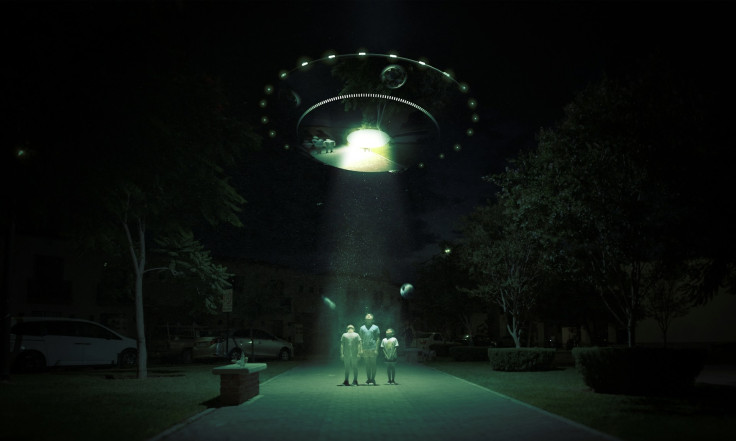
In the profound silence of the cosmos, a provocative question lingers: if we are not alone, do our celestial neighbours also look to the heavens for meaning? While the search for extraterrestrial intelligence often focuses on radio signals and propulsion systems, a leading expert suggests that the true bridge between worlds might be spiritual rather than just technical. Dr. Gary L. Wenk, an emeritus professor of Behavioural Neuroscience at Ohio State University, has posited a startling theory: that intelligent alien life probably shares our history of inventing gods and rituals to cope with the burden of mortality.

The Universal Architecture of an Alien Afterlife
Dr. Wenk argues that if an alien species is mortal and capable of empathy, religion is almost an evolutionary inevitability. Writing for Psychology Today, he suggests that the biochemistry of life across the universe — built from the same amino acids and bioactive molecules found throughout space — might lead to surprisingly similar psychological outcomes.
This shared molecular foundation serves as the basis for his belief that, while we cannot predict if they will be bilaterally symmetrical with four limbs, they will certainly be able to recount their spiritual rituals. 'One day, probably far off in the very distant future, if astronomers are correct in their assumptions about the vastness of space, Earth will be visited by intelligent beings from another planet,' he says.
The core of his prediction rests on two simple, human-like qualities: the capacity to die and the capacity to care. Just as humans have created a 'very long list' of afterlives — from Valhalla and the Fields of Elysium to Heaven and Yomi — any species that mourns its dead will likely seek to defeat the finality of death through faith.
Anthropologists have already documented over 12,000 different deities worshipped by humans, a pervasive drive that Wenk believes stems from a brain evolutionarily selected to accept an illogical world of supernatural beings to enhance survival. 'These assumptions, I think, will have led these aliens to invent gods and a belief in the afterlife,' Dr. Wenk explains, noting that the desire to be reunited with lost loved ones is the bedrock of all known religions.

Discarding Ancient Myths for Galactic Exploration
However, the professor suggests that while an alien civilisation may have started with spiritual rituals, they would likely have outgrown them by the time they reached our shores. The sheer level of technological advancement required for intergalactic travel implies a highly evolved intellect that has transitioned beyond ancient mythologies.
Wenk highlights that just as the sun god Ra was worshipped for millennia before disappearing, many of today's faiths will likely be forgotten and replaced as cultures become more educated. Dr. Wenk points to a 'robust negative association between religiosity and intelligence' observed in human studies, where increased education often correlates with a decline in formal religious affiliation.
'By the time aliens finally land on Earth, it is likely that both humans and aliens will be able to share stories about their respective long-past civilizations that once believed in supernatural beings,' Wenk concludes. Instead of a clash of faiths, our first contact might involve a mutual reflection on the 'logically absurd' supernatural worlds our ancestors once inhabited to survive the fear of the unknown. Whether we bond over current gods or the ghost stories of our planetary youths, Dr. Wenk's theory reminds us that the quest for meaning might be the most universal trait of all.
© Copyright IBTimes 2026. All rights reserved.