

Dolly Parton Employed and Defended Trans Driver After 1990 'Sex Change Shocker' Tabloid Outing
An ACLU strategist revived the 1990 tabloid clipping days after the singer's death
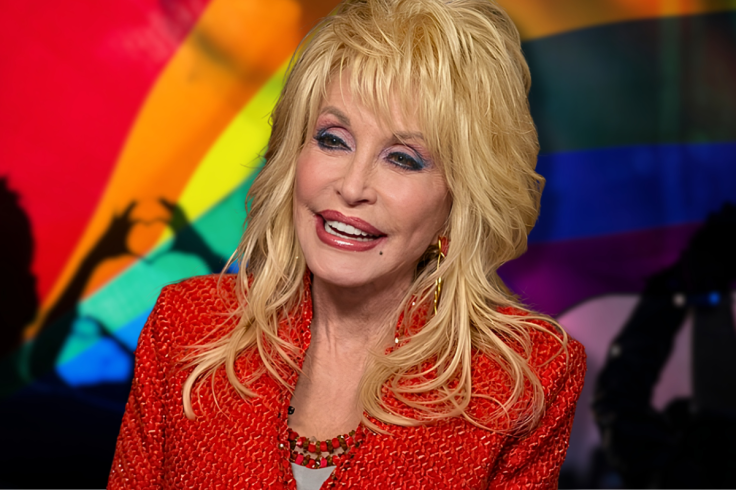
Dolly Parton employed a transgender chauffeur in 1980s Hollywood and stood by him when a tabloid outed him in 1990, a quietly documented act of support now resurfacing days after the country legend's death at 80.
A Friendship the Tabloids Turned Into a Headline
Jason Pirro, a trans man, drove Parton around Hollywood during the 1980s. In July 1990, the supermarket tabloid Star splashed the arrangement across its cover with the headline 'Sex change shocker in Dolly's limo' and a line describing her driver as a man who used to be a woman.
That same summer, a transgender newsletter called Twenty Minutes picked up the Star story and quoted Pirro, then 44, directly. He said Parton 'knows all about me' and called her 'a very nice lady', a rare public affirmation at a time when trans people were routinely mocked or erased. The newsletter survives today in the Digital Transgender Archive, an online record of trans history.
How a 35-Year-Old Story Went Viral
The account roared back this week after Gillian Branstetter, a communications strategist for the American Civil Liberties Union (ACLU) who posts in a personal capacity, shared it online following Parton's death. Her post drew thousands of responses from fans who said they'd never heard the story.
Trans commentators and historians added their own examples, and the resurfacing turned a buried 1990 clipping into one of the most shared pieces of Parton's legacy this week. What set this story apart was the paper trail. Unlike the warm anecdotes trading online since Tuesday, Pirro's account was printed and archived in real-time, giving fans documentary proof of ally-ship that predates any culture war.
Decades of Quiet Support
The chauffeur wasn't a one-off. In 2005, Parton wrote 'Travelin' Thru' for the film Transamerica, which follows a transgender woman on a cross-country road trip, and earned an Academy Award nomination for the song, performing it at the 2006 Oscars. The song, written from the perspective of someone searching for acceptance, drew hate mail she later shrugged off.
A decade later, she pushed back on North Carolina's 2016 bathroom bill, telling CNN she hoped 'everybody gets a chance to be who and what they are' and adding that she'd use whichever restroom she needed. Her 1992 comedy Straight Talk even slipped in a sympathetic nod to a trans caller.
A Contrast Playing Out in the Tributes
The timing matters. Parton died on 25 August after a brief battle with cancer, her publicist Marcel Pariseau confirmed, and the wave of grief has doubled as a fight over how to remember her.
Actor Ricky Schroder, who played Parton's father in two of her biographical films, drew heavy criticism for a tribute that led with his disapproval. 'I didn't agree with her advocating for Transgender & Covid Vaccine support, but loved her anyway,' he wrote, prompting rebukes from Boy George, Katie Couric, and the band Garbage. He later doubled down, sharing a clip about Parton's vaccine advocacy and claiming he had warned her against it.
Against that backdrop, the 1990 clipping reframes a star often called apolitical. Long before trans rights became a US campaign issue, Parton had already made her choice, hired a trans man, kept him close, and let a tabloid say what it liked.
© Copyright IBTimes 2026. All rights reserved.