

Elon Musk's $158M Donation Trail: GOP Fund Sent Matching Sums to Pro-Paxton PAC the Next Day
Federal filings reveal matching transfers to a super PAC backing Ken Paxton after Musk's donations
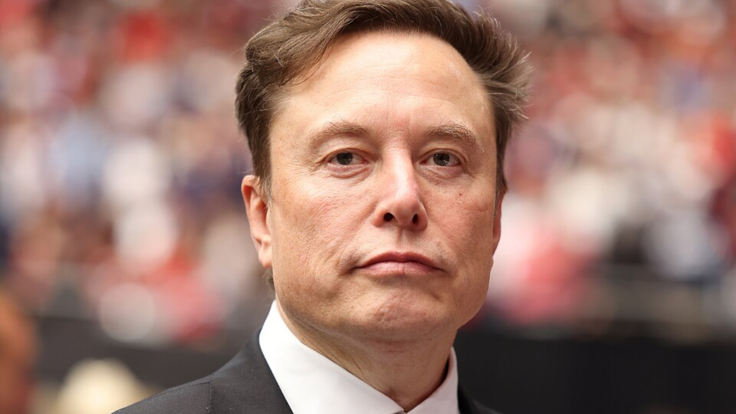
Elon Musk donated $158 million (£118.6 million) to the Senate Leadership Fund in September, with the Republican-aligned group sending matching sums to a super PAC supporting Ken Paxton the day after each contribution, according to reporting on federal filings.
The transactions, detailed by The Texas Tribune on 15 October, show how Musk's contributions coincided with funding for Texas PAC, an outside group backing Paxton's US Senate bid against Democrat James Talarico.
The sequence provides a specific timeline for the billionaire's political spending. It also highlights an important distinction: support for an outside advertising operation is different from money donated directly to a candidate's campaign.
Two Donations, Two Next-Day Transfers
Musk contributed $75 million (£56.7 million) to the Senate Leadership Fund on 9 September. The following day, the group transferred $75 million to Texas PAC.
A second donation of $83 million (£62.7 million) from Musk arrived two weeks later. Once again, the fund sent an identical amount to Texas PAC the next day, The Texas Tribune reported. Together, the two contributions totalled $158 million.
Those matching amounts and dates document a striking sequence. They do not, by themselves, establish an unlawful arrangement, prove that particular dollars were earmarked or show that Paxton's campaign directed the spending.
The recipient was a separate political committee supporting Paxton's election bid, rather than Paxton's personal account or authorised campaign committee.
Republicans Explain the Texas Spending Push
Senate Leadership Fund executive director Alex Latcham told Bloomberg TV on 14 October that dedicated support for Texas PAC had allowed Republicans to back Paxton without diverting resources from other states. He said spending in the race would approach $200 million (£151.2 million).
Talarico's campaign, meanwhile, announced that it had raised $64 million (£48.3 million) during the third quarter. That campaign fundraising figure should not be treated as directly equivalent to donations received by an outside super PAC. The two totals describe different organisations, with different rules governing how they can raise and spend money.
Musk's involvement also extends beyond these transfers. The Associated Press reported that his wider Republican spending included $76 million (£57.4 million) for America PAC and $10 million (£7.5 million) for Lone Star Liberty PAC, another group supporting Paxton.
Andrew Romeo, a spokesperson for Musk's super PAC, confirmed the broader donation figures to the Associated Press.
What Super PAC Rules Allow
The Federal Election Commission permits super PACs to accept unlimited contributions from eligible individuals, corporations, unions and other political committees. Consequently, the size of a donation alone does not demonstrate a campaign finance violation.
The rules governing spending remain important. The FEC defines an independent expenditure as a communication advocating a candidate's election or defeat that is not coordinated with the candidate, their campaign or a political party.
Such spending can fund advertisements promoting one contender or attacking another. It is distinct from a contribution placed under a candidate's control. Coordination can change the legal treatment of an expenditure, potentially making it subject to contribution limits or prohibitions.
The disclosures come just before in-person early voting begins in Texas on 19 October. Early voting runs until 30 October, ahead of election day on 3 November.
For voters encountering the advertising, the filings help answer who supplied the financial backing. They do not establish how much influence that spending will have on the result.
© Copyright IBTimes 2026. All rights reserved.