

'Elon Is a Nuke': New Film Highlights Alleged '10,000 Lasers' Text and Harvesting of DOGE Data
The Oscar-winning filmmaker explores unresolved questions about Musk's political power, government access and a cryptic message sent to Ashley St. Clair before the 2024 election
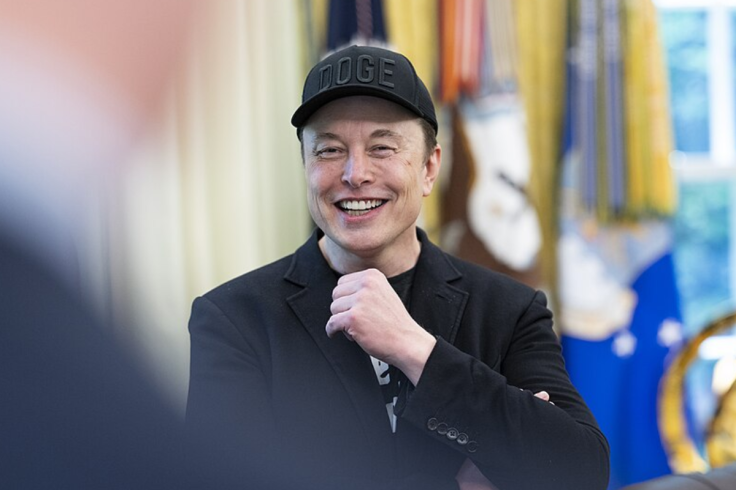
A new Elon Musk documentary by Oscar‑winning filmmaker Alex Gibney raises questions about the billionaire's influence over US elections. The film, titled Musk, also examines his role in a government data‑efficiency initiative known as DOGE. It looks at allegations and unanswered questions about Musk's political power, including a message about space‑based lasers sent to Ashley St. Clair before the 2024 presidential election.
St. Clair, who appears in the documentary, said Musk messaged her shortly before Election Day. He allegedly told her he felt 'optimistic' because 'tomorrow we unleash the anomaly in the matrix'. When she asked what he meant, he reportedly replied 'lasers from space' and added, 'I have over 10,000 lasers in space right now'.
The messages are striking, but they do not establish that Musk interfered with the election. Gibney has said he cannot tell whether Musk was boasting or lying. He believes the exchange still deserves scrutiny.
New Documentary Examines the '10,000 Lasers' Message and DOGE Data
Speaking at a Friday screening, Gibney offered a theory about the messages. He suggested Musk might have referred to access to information about vote reporting, rather than an attempt to change votes.
'If I was to hazard a guess,' Gibney said, he believed Musk might have obtained information sooner than others. He suggested this could be done through online systems connected to voting. He added that people with the technical ability to access those systems could potentially obtain real‑time data.
That remains the filmmaker's interpretation, not proof that Musk accessed election systems or obtained confidential results. The documentary leaves the central question unresolved. The messages alone cannot establish what Musk meant.
The film also examines Musk's transformation from a prominent technology entrepreneur into an increasingly influential political figure. It covers his leadership at Tesla and SpaceX and his promotion of autonomous driving technology. It also looks at his views on population growth and his shift towards right‑wing politics.
Gibney uses a hyperrealistic deepfake of Musk, complete with an exaggerated head, to narrate parts of the film. The voice appears to mimic the billionaire's own. The character progresses through a first‑person shooter game, with increasingly powerful targets reflecting Musk's expanding ambitions.
At nearly four hours, the documentary has room for an extensive examination of Musk's business ventures, family history and public controversies. Yet its most consequential questions concern his access to government. It also considers the potential uses of information gathered through those connections.
DOGE Data Access Raises Questions About Musk's Role and Motives
Musk's involvement in DOGE provides the documentary with another line of inquiry. In the film, DOGE is presented as an effort to tackle government waste, fraud and abuse. Gibney questions whether its young staff had sufficient knowledge of the agencies they were asked to review.
At the Friday screening, the director said DOGE staffers gained 'super admin' status within days of entering some agencies. According to Gibney, this status allegedly allowed them to access information across multiple government divisions. He claimed this could include classified material and personal records..
The implications extend beyond administrative reform. Executive producer Ronan Farrow said there were unresolved questions about what happened to Americans' sensitive information. He cited Social Security numbers, telephone numbers and home addresses as examples.
Farrow alleged that such information had been collected and transferred to third parties, leaving an uncertain chain of custody. He also warned that personal data could have electoral implications. The film does not establish that any data was actually used to influence voting.
Gibney suggested a possible connection between DOGE's data access and artificial intelligence. He raised the question of whether information gathered through government systems could become training material. Such tools, he warned, might be capable of influencing future elections.
That possibility is not evidence of an actual operation. The documentary instead highlights gaps in what is publicly known about the data. It asks who may have received it and what happened afterwards.
The film also revisits the relationship between Musk and President Donald Trump. Their political alliance faced tensions over Trump's spending legislation, which was associated with a rising federal deficit. Musk has often stressed cutting government expenditure. They have since moved towards reconciliation, according to the source report.
Meanwhile, Musk has reportedly sought to restrict promotion of the documentary on X and other social platforms. Gibney said advertising restrictions were justified by classifying the film's promotion as political advertising. Musk also attacked the director on X, describing him as 'a douchebag to his core' and accusing him of bias.
Musk's attorney was contacted for comment, according to the report. At the time of that report, the documentary was scheduled to stream on HBO in January. Gibney expressed uncertainty about whether that release would proceed.
St. Clair, meanwhile, offers a blunt assessment of the man at the centre of the film. 'Elon is a nuke,' she says. The remark leaves viewers to consider how much influence one technology billionaire should wield over public institutions.
© Copyright IBTimes 2026. All rights reserved.