

Google Maps Adds UK Fuel Prices To Help Drivers Find Cheaper Petrol and Diesel
The feature will use government Fuel Finder data, although retailers have up to 30 minutes to report price changes and concerns remain over coverage
Average diesel prices have broken the £2-a-litre barrier for the first time in the UK, putting a typical 55-litre tank at about £110.
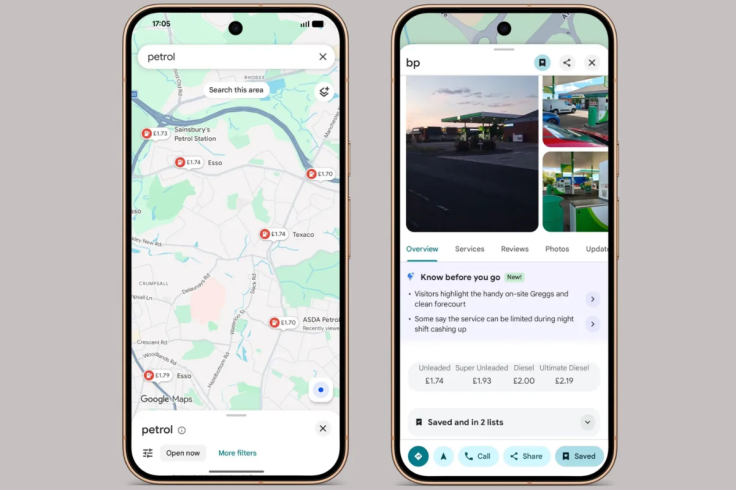
From Thursday, Google Maps will start showing near-real-time petrol and diesel prices at forecourts across the country, using data from the government's Fuel Finder scheme so motorists can compare costs on their phones before they fill up.
The prices will appear directly beneath each petrol station's name in the app. Retailers have up to 30 minutes to report a price change, which is why the information is described as near-real-time rather than live.
Diesel Prices Break £2 Barrier as Bills Climb
The launch comes days after the average UK diesel price passed £2 per litre for the first time, reaching 200.01p on 2 October, according to the RAC.
The AA said the average had since slipped to 199.98p. It said filling a typical 55-litre tank still costs about £110 for diesel and £96 for petrol, based on its figures from Wednesday.
Prices have been affected by global shocks, including the conflict between the US and Iran and Russia's war in Ukraine.
Fuel Finder Turns Pump Prices Into a Legal Obligation
Under the Fuel Finder scheme, fuel retailers are legally required to register and submit price changes within 30 minutes. Persistent failures to report can lead to enforcement action by the Competition and Markets Authority.
The government says Fuel Finder is intended to make pricing more transparent, encourage motorists to shop around and strengthen competition between retailers.
Sarah-Jayne Williams, global product partnerships director at Google Maps and Waze, said Google would independently check the Fuel Finder data before displaying prices.
Waze, which is also owned by Google, already shows fuel prices in the UK, and Google's announcement referred to work with the UK Waze community. Apple Maps lists petrol stations in the UK but does not advertise a built-in petrol-price comparison feature.
Ofcom data shows Google Maps reached 73% of UK online adults in May 2024. The integration could therefore make fuel-price comparison accessible to a much larger audience than dedicated price-checking services.
How Drivers Will See Prices in Google Maps
Within Google Maps, fuel prices will sit alongside each forecourt's usual listing details, such as its name, rating and opening hours. Users searching for 'petrol', 'diesel' or nearby petrol stations will be able to see the latest reported price without tapping into each location.
The information is tied to the pump price for standard grades of petrol and diesel at each site, rather than an average for a wider area. Prices are updated as retailers submit changes under the Fuel Finder rules, which means variation between nearby stations should appear as those updates are filed.
Google has not announced extra tools such as historical price charts or alerts, so the initial roll-out focuses on showing the current reported pump price, allowing motorists to compare options on the map before deciding where to fill up.
Doubts Over How Complete the Data Is
PetrolPrices, a fuel-price comparison service, has raised concerns about gaps in the coverage and accuracy of the Fuel Finder data.
Clare Lafferty, a director at the company, said PetrolPrices still supplements the government feed with other data sources because it believes the feed does not yet provide sufficient coverage and accuracy. She said some sites had not registered with the scheme at all.
Lafferty said PetrolPrices identified 200 forecourts in September that it believed had not updated their diesel prices within the required timeframe. The figure reflects the company's own assessment.
With household budgets already stretched, the longer-term impact of bringing fuel-price comparison into one of the country's most widely used mapping services is not yet clear.
© Copyright IBTimes 2026. All rights reserved.