

Trump Energy Secretary Says He 'Doesn't Want to Have an Opinion' on Gas Prices, Then Guesses They'll Fall
Chris Wright cautiously forecasts a decrease in gas prices as geopolitical tensions persist with Iran affecting oil supply and prices
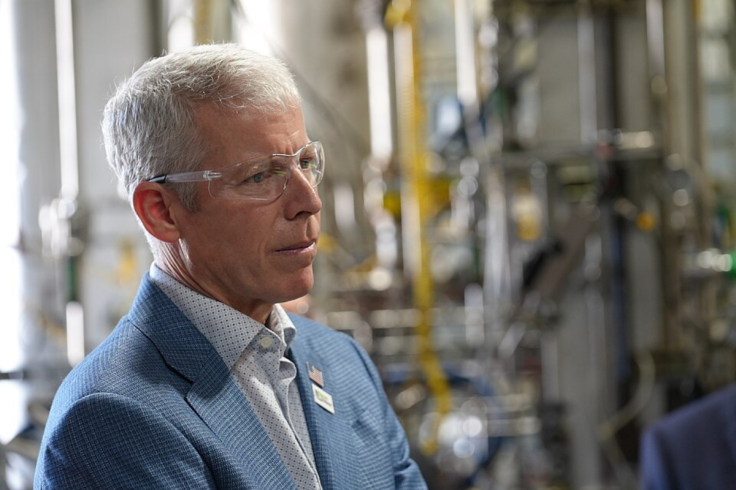
US Energy Secretary Chris Wright struggled to give a firm answer on whether Americans should expect gas prices to rise or fall, then cautiously predicted relief at the pump after first saying he did not 'want to have an opinion'.
Wright was pressed by CNN's Dana Bash on State of the Union as Americans headed into Labor Day weekend facing some of the highest fuel prices seen for the holiday.
Asked whether gas prices could climb even further, Wright initially resisted making a direct forecast.
'I don't want to have an opinion on that,' he said, before pointing to gasoline futures. 'What can you buy gasoline for two months in advance from where we are today? It's down more than 30 cents a gallon from where it is today.'
Bash pushed back, asking whether the energy secretary should have an opinion on where prices are heading. Wright then softened his answer, saying that if he had to guess, prices were 'more likely to go down than go up'.
Bash also reminded Wright that he had told CNN five months earlier that high gas prices had likely peaked. Since then, the national average has climbed above $4 a gallon.
Labour Day Prices Hit Record Level
The exchange came as pump prices became a political headache for the Trump administration ahead of the midterm elections.
AAA said the national average stood at about $4.14 a gallon going into Labour Day weekend, the highest Labour Day price on record and above the previous record of $3.82 in 2012. That price is also nearly a dollar higher than last year, according to AP. The increase also complicates Trump's campaign pledge to bring down energy and living costs.
Iran War Keeps Pressure on Oil
Wright argued that the end of the summer driving season should reduce demand and help prices ease. But a major problem remains the war with Iran and disruption around the Strait of Hormuz, one of the world's most important energy chokepoints.
The US Energy Information Administration says oil flows through the Strait of Hormuz averaged about 20 million barrels per day in 2024, equal to roughly 20 per cent of global petroleum liquids consumption.
Reuters reported on Sunday that commodity-vessel traffic through Hormuz had averaged about 10 ships a day over the previous 10 days, the lowest level since May, as renewed US-Iran attacks further disrupted shipping. Brent crude settled at $95.52 a barrel on Friday, substantially above pre-war levels.
Navy Escorts Still Needed
Bash also asked Wright whether merchant ships crossing the strait were safe. He did not say traffic had returned to normal. Instead, he said vessels that coordinate with the US Navy should be able to make the journey.
'We're working cooperatively with fleets that do want to transit,' Wright said, while acknowledging that traffic had not returned to 'pre-conflict levels'.
The answer underlined the administration's dilemma. Officials want to reassure Americans that fuel costs will fall, but one of the biggest drivers of higher oil prices – disruption around the Strait of Hormuz – remains unresolved.
Administration Points to More Supply
Wright also pointed to the administration's changes to fuel-blending requirements, which he said would allow US refiners to produce more gasoline and diesel using existing equipment.
He has also pointed to Trump's Venezuela oil agreement as a potential future source of additional supply, although analysts have warned that infrastructure and investment constraints could delay any meaningful increase in production.
Despite those measures, Wright stopped short of promising when drivers would see significant relief, instead pointing to falling seasonal demand, increased refinery output and futures markets that he said suggest gasoline prices could decline in the coming months.
© Copyright IBTimes 2026. All rights reserved.