Europe Gas Crisis Deepens: Middle East Oil Shock Threatens Up to 4% of Global Supply
Drone attacks halted the East-West pipeline, while European gas storage remains below its seasonal five-year average and oil prices face renewed pressure

Europe is facing a double energy trouble heading into winter. Saudi Arabia's East-West oil pipeline, an important alternative route that allows crude to bypass the Strait of Hormuz, was shut following drone attacks. The pipeline can carry up to 5.5 million barrels of oil a day, with analysts estimating that between 3.5 million and 4 million barrels per day of exports are now at risk—equivalent to up to 4% of global oil supply.
The disruption comes as Europe enters the winter season with natural gas storage only around 69% full, well below the five-year average of about 85% for this point in the year.
Saudi Oil Pipeline Shutdown
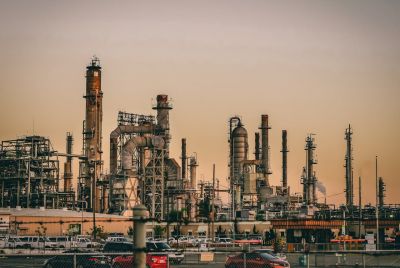
Saudi Arabia's 1,200-kilometre East-West pipeline runs from the kingdom's oil-producing east to the Red Sea port of Yanbu, allowing crude to reach global markets without travelling through the Strait of Hormuz.
The route was designed specifically as an alternative to the strategic waterway, which remains one of the world's most important oil chokepoints. Saudi Arabia temporarily shut the East-West pipeline after drone attacks on its infrastructure.
European energy markets are now watching closely because a prolonged disruption could force refiners to find alternative supplies.
Oil Prices Under Pressure
Brent crude surged above $113 (€97.39 / £83.79) a barrel earlier this week as traders reacted to the disruption and wider Middle East tensions. However, prices eased on Friday after reports that Saudi Arabia was working to restore up to half of the pipeline's capacity.

The longer the pipeline remains disrupted, the more pressure there could be on European refiners to secure alternative grades of crude. It could not have come at a worse time for Europe, which is headed into winter season.
Gas storage across Europe is around 69% full, compared with a five-year average of 85% for this point in the year, according to Gas Infrastructure. The European gas benchmark was trading at around €81 ($93 / £69) per megawatt hour on Thursday, around 150% higher than a year earlier.
Analysts has warned that prices could reach €100/MWh (£86) depending on the weather. Jack Sharples of the Oxford Institute for Energy Studies has warned that even a normal cold winter could leave European storage heavily depleted. 'I could see in even just a normal cold winter, not even a dramatically cold winter, storage being very heavily depleted,' he said.
Election Season
The gas crisis will surely become a talking point for many European countries, especially as Italy and France head towards election season next year.
French President Emmanuel Macron ordered a 'mobilisation' on fuel prices this week, while Italian Prime Minister Giorgia Meloni abolished a car tax she called 'structural and permanent.'
'The priority: restoring freedom of navigation in the Strait of Hormuz, a vital artery for oil transit, protecting the energy infrastructure of our partners, and securing production. It's essential to guarantee our supplies. We're working with our coalition partners to ensure freedom of navigation in the Strait of Hormuz,' said Macron.
'We have chosen to redirect a portion of the resources used so far to address rising fuel prices into a simple, structural measure designed especially for those who use cars and motorcycles every day to work, take their children, or get around,' said Meloni
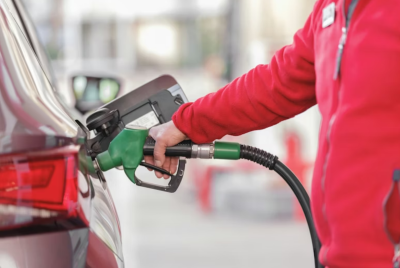
Elsewhere, Spain doubled its diesel tax cut to €0.20 (£0.17) a litre on 1 September 2026, while German Chancellor Friedrich Merz said Berlin will 'soon' announce its own measures, with pump prices at €2.45 (£2.10) per litre.
© Copyright IBTimes 2026. All rights reserved.
- Recommended For You