

Inside the Billionaire 'Baby Empire': How China's Ultra-Rich Are Buying US Birthright Citizenship
Federal response intensifies as Chinese billionaires exploit birthright citizenship to commission more than 100 American children
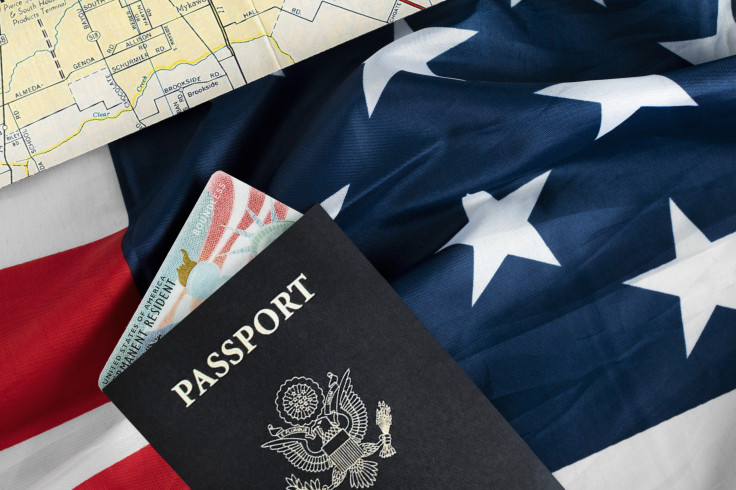
Chinese billionaire Xu Bo's company claims he has commissioned more than 100 American children through surrogates. Most of these children he has never met, and he remains far from alone. Ultra-wealthy Chinese individuals are increasingly exploiting a citizenship loophole that is now under review by the Supreme Court .
FBI and Homeland Security investigators have reportedly interviewed surrogates who have worked with Chinese clients. However, the precise purpose of these investigations remains unclear, according to a report by the Wall Street Journal published on 13 December. The pattern has raised serious concerns about whether the industry requires greater oversight and regulation.
President Donald Trump's administration is moving to end birthright citizenship—the constitutional guarantee that grants automatic US citizenship to anyone born on American soil. This move now awaits a decision from the Supreme Court. Meanwhile, Senator Rick Scott introduced a bill last month that would ban Chinese nationals from using US surrogacy services altogether.
The Scale of the 'Baby Empire'
Xu Bo, who describes himself as 'China's first father', epitomises the most extreme case documented to date. The Los Angeles-based videogame executive is known in China for his outspoken criticism of feminism. In 2023, he told a judge that he hoped to have around 20 children—specifically boys, whom he described as 'superior to girls'—to inherit his business empire. His company later confirmed in a social media statement that he has commissioned 'only a little over 100' children through US surrogacy.
Another notable case involves Wang Huiwu, a Chinese education executive who commissioned 10 daughters through American egg donors, each costing up to $7,500. Those close to his circle say his hope is that his daughters will grow up to marry influential world leaders.
Research by Emory University indicates that between 2014 and 2020, Chinese clients accounted for 41% of international parents using American surrogates, often paying up to $200,000 per child. The surrogacy industry remains highly fragmented, enabling parents to commission multiple surrogacies across different agencies without detection. One California-based agency owner admitted that a client became panicked when a baby arrived, saying, 'We're already taking care of two babies!'—unaware that the client had secretly hired other agencies simultaneously.
National Security Concerns
Law enforcement agencies have shown interest in these developments. FBI and Homeland Security officials have interviewed surrogates who worked with Chinese clients, but have not publicly commented on the investigations. A separate federal probe is examining a Chinese-American couple accused of human trafficking after commissioning over two dozen children.
In 2023, Judge Amy Pellman, who denied Xu Bo parental rights in Los Angeles, expressed concern but lacked authority to stop the pattern. Social media accounts linked to Xu claimed he appealed the ruling, though no public records confirm this. Experts suggest he may have simply refiled in different jurisdictions.
Legal and Political Developments
President Trump's move in January to revoke birthright citizenship for children born to non-citizen parents is now before the Supreme Court. Senator Rick Scott's recent bill aims to ban Chinese nationals from using US surrogacy services altogether. These children will eventually be able to vote, run for office, and bring family members to the US. The question remains: is this a coordinated strategy or just billionaire vanity?
Strategy or Vanity?
The truth is likely a mix of both. Wang Huiwu's plan to marry his daughters to world leaders seems strategic, while China officially bans surrogacy—yet foreign agencies still operate freely within the country.
It's unlikely this is a centrally coordinated effort. Experts suggest wealthy Chinese men are simply copying high-profile figures like Elon Musk, who has 14 children. Xu Bo, for example, has never met most of his children. Fertility CEO Hu Yihan states that Chinese men in their 60s seek 'one-child policy revenge'—trying to compensate for restrictions they faced during the one-child policy era.
Regardless of motivation, the numbers speak for themselves. Over 110 American children are linked to these cases, according to company statements and media reports, with some raised with little connection to the US. What lies ahead for these children remains uncertain.
American Citizens Forever
When these children turn 18, they can vote and possibly bring relatives to the US. Their sense of identity—whether American, Chinese, or another—will depend on where they grow up, who raises them, and what they're told about the country that granted them citizenship at birth.
One thing is certain: their citizenship is permanent. While the Supreme Court debates ending birthright citizenship, it's already too late for children born under this system—they are American citizens, regardless of future legal or political challenges.
In 2023, Judge Pellman's decision to deny Xu Bo parental rights revealed the system's limitations. As it stands, little can be done to prevent these practices from continuing elsewhere, raising profound questions about the future of citizenship and international surrogacy.
© Copyright IBTimes 2026. All rights reserved.