Michael Burry Blasts OpenAI and Anthropic Chiefs Over Doomsday Talk, Exposes the Big Game Behind It
Michael Burry calls the latest AI warnings self-serving as OpenAI shelves a 2026 listing and Anthropic keeps preparing for a potential IPO

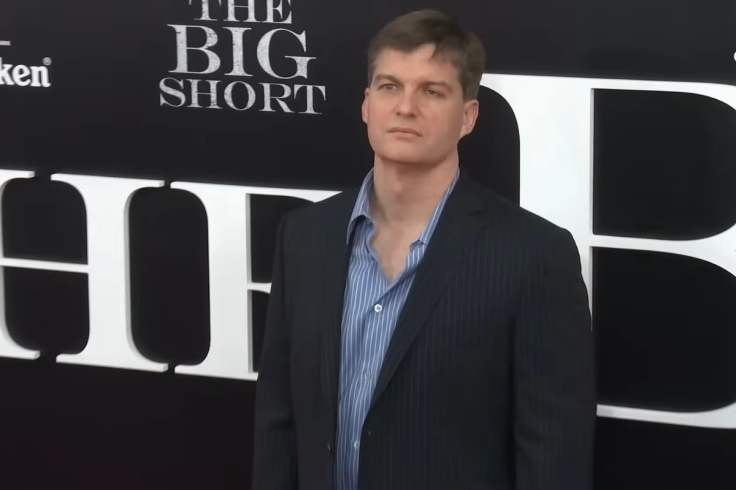
Michael Burry has accused the chiefs of OpenAI and Anthropic of using increasingly stark warnings about artificial intelligence to protect their market position and shape huge future stock listings, just as rivals gain ground and the industry's biggest potential IPOs come into view.
The investor, whose bet against the US housing market before the 2008 financial crisis was chronicled in The Big Short, called the push to slow frontier AI development 'self-serving' in a post on X on Monday.
Burry laid out a four-part argument. First, he said large language models are not AI and will not become artificial general intelligence, or AGI, so 'there is nothing AI to slow down'.
His second point was about competition. Burry said rivals are 'coming up fast' and that slowing the pace of development would therefore benefit incumbents such as OpenAI and Anthropic.
Burry Sees an IPO Game
Burry argued that IPOs need 'hype & puffery'. His point was that presenting AI systems as so powerful that they could become dangerous provides a dramatic narrative that can support companies heading towards public markets.
His fourth point was that safety concerns could also provide cover for something more mundane: slowing growth. 'Cover for real uncontrollable slowing growth as IPOs look to be pushed out,' Burry wrote.
Anthropic chief executive Dario Amodei published his essay We Must Pace the Frontier on Saturday, 12 September, calling for a slower pace of frontier capability gains and arguing that increasingly capable AI systems carry risks that cannot be treated as a distant problem.
Sam Altman backed Amodei's call. The OpenAI chief has also ruled out taking the company public in 2026, telling Fortune that going public this year would be an 'ill-advised moment' because of the safety issues surrounding AI.
OpenAI has previously been linked to expectations of a future listing at a valuation of around $1 trillion, although there is no confirmed timetable for an IPO.
OpenAI Steps Back, Anthropic Still Lines Up
Anthropic is still reported to be preparing for a possible 2026 listing, while investors and bankers have discussed a valuation of about $2 trillion. The figure is not a confirmed IPO valuation, and the timing remains subject to change.
That leaves the two AI companies talking about safety at the same time that their paths towards public markets are diverging.
Amodei has proposed giving independent evaluators permanent, employee-level access to frontier systems so they can assess safety measures, report incidents and examine alignment during training.
His concerns include loss of control over AI systems, cyberattacks, bioterrorism and severe economic disruption.
Altman has similarly argued that the risks cannot simply be ignored. He has said it would be unacceptable to take 'like a 10% chance of killing everybody by the end of the decade', while stressing that the precise probability was not the central point.
Elon Musk has also backed Amodei's position, writing that 'Dario is right', while Google DeepMind chief executive Demis Hassabis said the direction of the call was right. That complicates a narrow reading of Burry's argument, but does not address his separate claims about incumbency, IPO incentives or slowing growth.
AI Stocks Fell as the Debate Escalated
AI-linked stocks fell on Monday, with the Nasdaq 100 down more than 1% in early trading and Nvidia among the weaker major chipmakers. If warnings about slowing AI development were designed purely to inflate the value of the sector, investors were not responding accordingly in the listed market.
But Burry's broader claim is about incentives inside the private AI labs: slowing competitors, managing growth expectations and maintaining a powerful narrative as companies approach the public markets.
OpenAI says safety is a reason to remain private. Anthropic says frontier development needs to be paced because the risks are becoming harder to contain. Burry sees the same developments through a financial lens. The eventual IPO filings, financial results and growth figures will provide a test of that theory.
The dispute is not simply about whether AI could become dangerous. It is also about who benefits when the companies building it say the race needs to slow down.
© Copyright IBTimes 2026. All rights reserved.
- Recommended For You