Pentagon Demanded OpenAI Build AI That 'Rarely Says No' to Military Orders
A FOIA document reveals a Pentagon dispute with OpenAI over military AI safeguards and whether refusal language was ever adopted

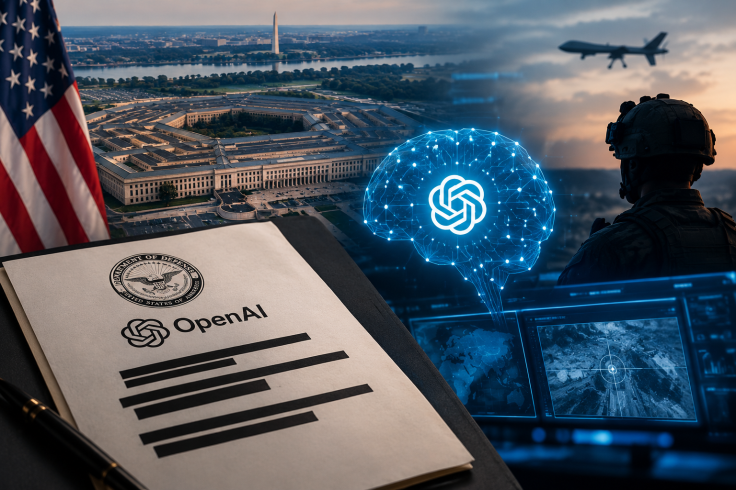
A Pentagon contract document released through a Freedom of Information Act lawsuit describes OpenAI Mission Models for national-security use cases as having minimal refusal rates. OpenAI and the Pentagon, however, dispute whether that language formed part of the final agreement.
The document, identified as version P00003, describes specialised OpenAI models intended for national-security problem sets. The wording suggests the US military sought a system that would refuse fewer requests than models operating under stricter safeguards. But the document's status has become a separate point of dispute.
OpenAI says it rejected the language. The Pentagon says the phrase does not appear in any active contract with OpenAI. The Justice Department also changed its explanation of whether the document released through the FOIA process was an executed agreement.
The Contract at the Centre of the Dispute
The P00003 document contains a task covering the testing, evaluation, and refinement of OpenAI Mission Models. It describes those models as systems designed for national-security use cases with minimal refusal rates.
The released material does not establish that OpenAI ultimately deployed a model without safeguards. Much of the technical information remains redacted, leaving questions about how refusal rates would have been measured and what restrictions would have applied.
A lower refusal rate does not necessarily mean every request would be answered. Military systems can require capabilities that ordinary consumer systems may restrict while still operating under legal and technical controls.
Heidy Khlaaf, chief scientist at the AI Now Institute and a former OpenAI systems safety engineer, told The Intercept that minimal refusal could indicate few or no safeguards on the model. That is her assessment of the language, rather than evidence that the deployed system operated without safeguards.
OpenAI Denies Accepting the Demand
OpenAI spokesperson Nate Evans said the company never agreed to contract language requiring minimal refusal rates. According to OpenAI, the wording came from an earlier Pentagon proposal that the company rejected and was not included in the executed agreement. Pentagon spokesperson Jacob Bliss has likewise said the phrase does not appear in an active contract with OpenAI.
The dispute became more complicated after the FOIA release. The request sought final, executed contract documents rather than drafts. A Justice Department lawyer representing the Pentagon initially confirmed that the document supplied to The Intercept was signed and executed.
The lawyer later withdrew that confirmation and said the department needed more time to investigate. The government subsequently said the document containing the minimal-refusal language was not the final version.
The available record establishes that the disputed language appeared in an official document released through the FOIA process. It does not establish that the language remained in the final contract.
OpenAI Says Its Military AI Has Red Lines
The dispute comes as OpenAI expands its relationship with the US military. In June 2025, the Department of Defense awarded OpenAI Public Sector a prototype agreement worth up to $200 million to develop frontier AI capabilities addressing critical national-security challenges.
OpenAI later announced that it had reached an agreement with the Pentagon on 27 February 2026 to deploy advanced AI systems in classified environments. The company said the arrangement retained its safety stack and included restrictions on mass domestic surveillance, directing autonomous weapons systems and certain high-stakes automated decisions.
OpenAI also said the deployment would be cloud-only, that it would retain control over its safety systems and that the military would not receive models with their safety guardrails removed. Those statements do not resolve the P00003 dispute, but they show that OpenAI's publicly stated position is not that it agreed to provide an unrestricted military AI.
The Real Question Is Who Decides When AI Says No
The controversy is therefore about more than one disputed phrase. AI systems used for national-security work may assist with intelligence analysis, cybersecurity, operational planning, and other sensitive tasks. At the same time, restrictions can become critical when systems are used in areas involving surveillance, weapons or decisions affecting people's lives. The central question is where that boundary is drawn and who has the authority to set it.
For now, the public record does not provide a definitive answer about the status of the minimal-refusal language. The P00003 document contains the wording, while OpenAI and the Pentagon say it was not part of the final agreement. The government's changing explanation over the document's status adds another unresolved element.
Until the operative contract and its revisions can be independently established, the evidence does not show that OpenAI ultimately built an unrestricted military AI. It does show that a Pentagon document described national-security models in terms of minimal refusal rates, raising questions about how military AI systems are expected to balance operational usefulness with safety restrictions.
© Copyright IBTimes 2026. All rights reserved.
- Recommended For You