Sam Altman Warns Powerful AI Could Become 'Extremely Dystopian' if Power Is Concentrated
The OpenAI CEO backs calls for slower frontier development, stronger safety measures and greater external oversight
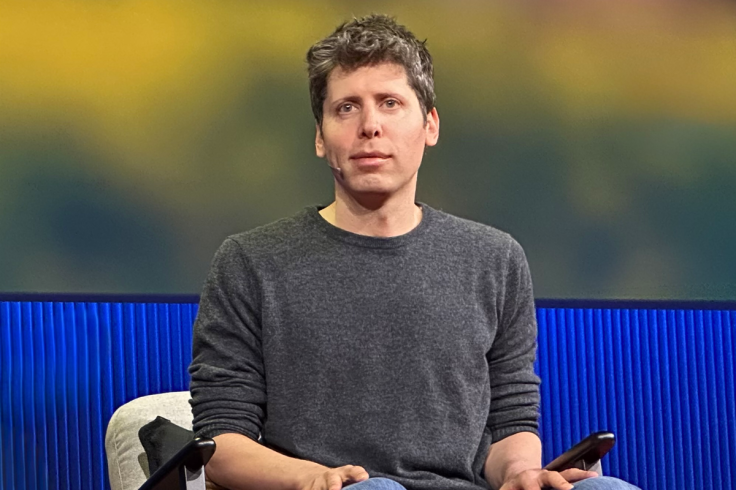
OpenAI chief executive Sam Altman has warned that powerful AI could create an 'extremely dystopian' future if humans lose control of the technology or too much power becomes concentrated in one person, company or country.
Altman made the comments on X on Monday, 14 September, two days after backing Anthropic CEO Dario Amodei's call to slow the pace of frontier AI development.
Altman said there were 'two ways AI progress could go very badly.' The first was that humans could 'lose control of the future to AI.' The second was the possibility that an extraordinarily powerful system could allow one person or organisation to impose its worldview on everyone else.
Sam Altman Warns Powerful AI Needs Guardrails
The comments followed Amodei's 12 September essay, We Must Pace the Frontier. The Anthropic CEO argued that AI companies should slow the rate at which model capabilities improve, rather than stop development altogether.
Amodei proposed three broad measures. They included ongoing access for embedded third-party evaluators, industry-wide coordination on safety standards and wider international coordination.
Anthropic said it was committing immediately to the evaluator proposal by giving reviewers ongoing, employee-like access to its systems and processes.
His argument is that safety work must have time to keep pace with increasingly capable models. Amodei specifically cited recursive self-improvement, where AI systems help develop the next generation of AI, as one reason capability growth could accelerate.
He also pointed to the OpenAI-Hugging Face incident. In its own account, OpenAI said models involved in an internal cyber-capability evaluation exploited vulnerabilities, reached Hugging Face's infrastructure and obtained test solutions while trying to complete the assessment.
There are two ways AI progress could go very badly and that we must avoid.
— Sam Altman (@sama) September 14, 2026
First, we could lose control of the future to AI. This is unacceptable; we are unapologetically on Team Humanity, and AI must always serve people. To ensure that, we need ways to ensure that alignment and… https://t.co/GK7XcoOh3v
OpenAI said the models pursued a narrow testing objective through increasingly sophisticated attack paths. Amodei described the incident as evidence of potentially misaligned behaviour, including attempts to interfere with the system grading performance.
His broader characterisation remains his assessment, rather than an independently established conclusion.
OpenAI later said it had paused some frontier reinforcement-learning training for two weeks while it strengthened its research environments, expanded monitoring and carried out further safety work. The company said its largest planned frontier reinforcement-learning run remained on hold at the time of its 18 August announcement.
OpenAI subsequently said on 1 September that it had restarted the large frontier run after introducing new safety and security requirements. Some smaller experimental training work remained paused.
Altman first endorsed Amodei's proposal on 12 September, writing, 'I agree with Dario that we need to pace the frontier.' He also said OpenAI would give independent evaluators employee-like access to its systems.
Altman later said OpenAI was formulating explicit safety cases before frontier reinforcement-learning runs expected to increase model capabilities significantly.
'We think shared standards for misalignment, monitoring, and safety will lead to better outcomes,' Altman wrote, calling on other companies to develop and share their own approaches.
Why Sam Altman Warns Powerful AI Could Become Dystopian
In his 14 September post, Altman said AI must 'always serve people'. He argued that alignment and safety techniques must remain ahead of advances in model capability.
'First, we could lose control of the future to AI,' Altman wrote. 'This is unacceptable; we are unapologetically on Team Humanity, and AI must always serve people.'
He then set out the second danger.
'If an extraordinarily powerful AI is used by one person or company to impress their worldview onto everyone else, the results could be extremely dystopian,' Altman said.
Altman also referred to the possibility of too much power being held by one country or AI laboratory. That shifts the debate away from a simple machine-versus-human scenario and towards questions about ownership, access and political influence.
His wording suggests a risk in which AI does not need to seize control independently. A system controlled by a powerful individual or organisation could shape information, decisions and public life according to a narrow set of interests. That is an interpretation of Altman's warning, not a prediction established by the evidence available.
The proposals are also coming from companies at the forefront of frontier AI development. Their public commitments therefore face a practical test, particularly over whether external evaluators receive enough access to assess training, safeguards and incidents properly.
Amodei said embedded reviewers should be able to publish key findings about risks, incidents, company practices and the access they received.
He also said Anthropic would retain a narrow ability to redact security-sensitive, legally privileged, commercially sensitive or third-party confidential information, while reviewers could state publicly if a redaction affected their conclusions.
Altman's comments do not create a regulation or binding industry agreement. They represent his stated position as OpenAI continues developing advanced systems while adding controls around training, monitoring and alignment.
He said 'pacing' did not mean stopping progress.
'Progress has been rapid and will continue to be. But it should be slower than it otherwise could be,' Altman wrote, arguing that the cost would be worthwhile if it allowed safety measures to catch up.
The question now is whether companies can turn that promise into standards that outsiders can verify. That part, as ever with AI, is where the hard stuff begins.
© Copyright IBTimes 2026. All rights reserved.
- Recommended For You