

Voters Are Furious About AI Data Centres Pushing Up Their Electricity Bills, Here's Why Politicians Won't Touch It
The political fallout from rising electricity costs linked to AI data centres is reshaping the 2026 midterm elections.

Electricity bills have become one of the angriest issues in American politics, and the AI data centre boom behind those rising costs is fast becoming the defining liability of the 2026 midterms.
According to the US Energy Information Administration, electricity prices in Pennsylvania rose 21.7% in 2025 while the national average climbed 8.3%. The International Energy Agency confirmed that data centre electricity demand surged 17% globally that same year, outpacing overall energy demand growth of 3%. The connection voters are drawing is not abstract: data centres are consuming power faster than grids can absorb the strain, and the cost is landing on household bills.
What makes the issue dangerous for incumbents is that it does not break cleanly along party lines. Rural Republicans resent tech giants consuming farmland and grid capacity. Urban Democrats face constituents who cannot afford surging utility rates. And both sides are watching enormous sums of industry money flow into campaigns, which has made substantive legislative action all but impossible.
Scale of Energy Demand Problem and Cost to Households
Data centres are not a marginal contributor to America's energy picture. The Electric Power Research Institute estimated that data centres could account for between 4.6% and 9.1% of all US electricity consumption by 2030, up from 4% of total load in 2023. The EIA's latest projections show US commercial electricity sector consumption, the category that captures data centres, grew by 2.9% in 2025 and is forecast to grow by a further 5% in 2026. This comes after roughly two decades of flat national electricity demand, meaning the grid was not built for this kind of growth.
In Pennsylvania, where Amazon has committed £15.2 billion ($20 billion) in data centre investment and the state already hosts more than 100 facilities, the consequences are already measurable. The state's 21.7% electricity price rise in 2025 far exceeded the national average, and four competitive House seats in the state's eastern districts sit directly in the footprint of Democratic Governor Josh Shapiro's data centre expansion plans.
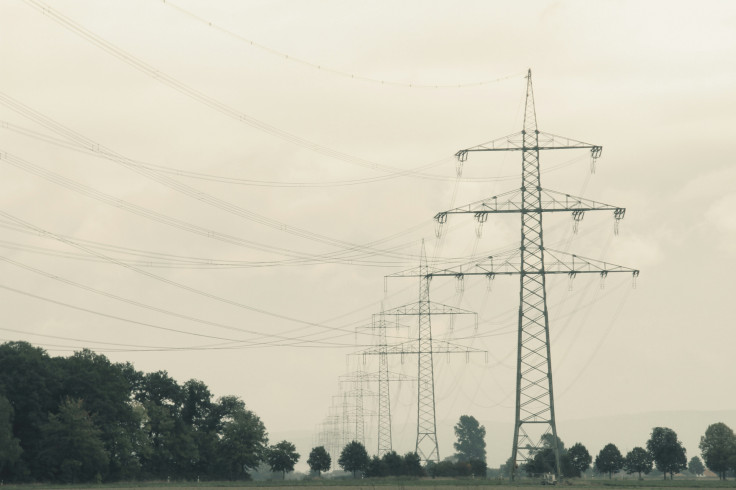
Christopher Borick, director of the Muhlenberg College Institute of Public Opinion, told CNBC: 'Voters are already connecting the experience of these facilities with their electricity costs and they're going to increasingly want to know how government is going to navigate that.'
Virginia, which hosts the world's highest concentration of data centres in what locals call 'data centre alley' in Northern Virginia, showed what can happen when politicians do engage. Democrat Abigail Spanberger won the governorship in November 2025 in part by promising to lower utility bills and insisting that data centres, not ratepayers, should foot the cost of their own grid requirements. 'I do think it's important that the brunt of data centers not be put on ratepayers and, in fact, that they pay their own way and their fair share,' Spanberger said during her campaign. Her win was widely read as a warning shot.
Industry Money Paralysed Legislative Action
The reason politicians on both sides have struggled to act is not ignorance but money. According to an Issue One analysis of bipartisan federal lobbying disclosures, 11 major technology companies, including Alphabet, Microsoft, Anthropic and OpenAI, spent £15.2 million ($20 million) on federal lobbying in just the first quarter of 2026 alone. That equates to £172,000 ($226,000) every day Congress was in session. In full-year 2025, eight of the largest tech giants combined spent a record £54 million ($71 million) on federal lobbying, according to a separate Issue One report.
The electric manufacturing and equipment sector, which encompasses data centre operators and their infrastructure suppliers, poured more than £172 million ($226 million) into lobbying activity in 2025, according to OpenSecrets, placing it on track for its biggest lobbying year on record. That figure funded influence over grid access rules, utility rate structures, planning approvals and federal energy policy, meaning the precise levers that would constrain data centre expansion. More than half of the sector's registered lobbyists are former government officials who cycled through the revolving door between Washington and industry.

On the electoral side, a new pro-AI political group called Innovation Council Action, backed by White House AI adviser David Sacks and aligned with Trump's deregulation agenda, has announced plans to spend more than £76 million ($100 million) in the 2026 midterms supporting pro-AI candidates.
Meta has separately committed £49 million ($65 million) through new super PACs to state politicians in both Republican and Democrat-led states who back the AI industry. In Texas, AI-aligned super PACs spent £3.2 million ($4.2 million) in the Republican primary cycle alone, according to the Tech Oversight Project.
Political Calculation Keeps Incumbents Quiet
The strategic bind for sitting politicians is well understood by those inside it. Borick of Muhlenberg College put it plainly to CNBC: 'They've been cautious, because it's a difficult issue to navigate.' The challengers, he noted, hold an inherent advantage: 'A lot of this is going to be, rightly or wrongly, laid at the feet of the incumbents.'
Jefferies analysts reached the same conclusion in their research note, writing that every candidate for office in 2026 would be forced to take a position 'whether they are pro or con data centers/AI' and that the issue had moved from a state and local question to 'a federal topic as the election narrative forces the subject in every domain.'
Democrats running in competitive states have struggled to find a firm line. Michigan gubernatorial candidate Jocelyn Benson has called for 'statewide standards and guardrails' and wants data centres to bear their own infrastructure costs, but has stopped short of supporting a construction moratorium, which community groups in her state are demanding.
Michigan Senate candidate Mallory McMorrow released a 'Data Centers Done Right' plan requiring union labour and energy guardrails, but it also stops well short of blocking new projects. The hesitation reflects an awareness that the industry brings jobs and tax revenue that local economies genuinely want.
Republican Brendan Steinhauser, CEO of the Alliance for Secure AI and a GOP strategist, has been unusually candid about the risk his own side faces. 'Politicians who choose to do the bidding of Big Tech at the expense of hardworking Americans will pay a huge political price,' he told TIME in February 2026.
The warning has landed. A Fairleigh Dickinson University pollster told the Associated Press: 'There's a lot of pressure on politicians to talk about affordability, and electricity prices are right now the most clear example of problems of affordability.'
The industry has the money to shape the message, but the bill lands every month in the letterbox of every voter in America, and that is a harder thing to manage than any super PAC.
© Copyright IBTimes 2026. All rights reserved.