Trump Says 'Whoever Wins AI Wins' as Sanders Pushes 20-Year Jail Terms for Breaking Superintelligence Ban
Sanders' proposal would create a federal AI regulator, impose a permanent ban on superintelligence and seek international controls to stop its development abroad


President Donald Trump has brushed aside calls to slow artificial intelligence development, insisting the United States must press ahead because 'whoever wins AI wins', even as Senator Bernie Sanders pushes legislation that would make building artificial superintelligence a crime punishable by up to 20 years in prison.
'We're leading China in AI. We're the most sophisticated country in the world, and frankly I want to keep it that way because whoever wins AI wins,' Trump told reporters at his Doonbeg golf course in Ireland on Sunday, 13 September, when asked whether the industry should slow down or face tighter regulation.
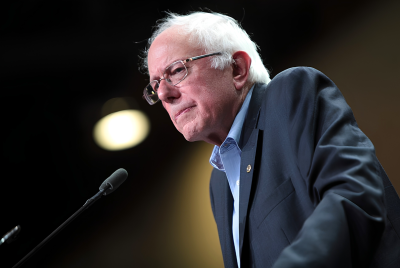
Ten days earlier, Sanders and Representative Greg Casar had announced the Ban Artificial Superintelligence Act as forthcoming legislation. The bill would permanently ban the development and deployment of artificial superintelligence and temporarily pause advanced AI development until a new federal regulator establishes safety rules.
People who violate or circumvent the proposed restrictions could face up to 20 years in prison, while companies could face what the sponsors call a 'corporate death penalty'.
Trump Backs Guardrails, Not a Slowdown
Trump said the United States could put 'guardrails' on AI but rejected warnings about extreme risks, saying 'very negative forces' were 'bringing up things that won't happen'.
His remarks came after a Saturday essay by Anthropic chief executive Dario Amodei calling for AI companies to 'pace the frontier' by slowing the growth of model capabilities and putting independent evaluators inside companies.
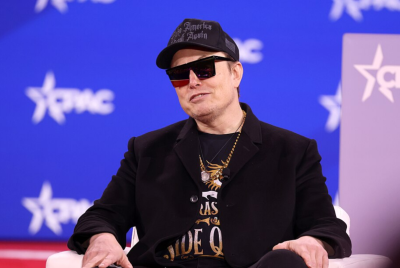
OpenAI chief executive Sam Altman and xAI chief executive Elon Musk backed Amodei's call.
Amodei has distinguished pacing from halting model training and has argued that competition with China makes it difficult for the United States to slow development unilaterally.
Trump did not refer to Sanders or the proposed legislation in his comments. His focus was on maintaining US technological leadership, while Sanders is proposing legal restrictions on a specific class of AI systems.
Sanders Bill Would Make Superintelligence a Crime
The Sanders‑Casar proposal would establish a cabinet‑level federal agency to oversee advanced AI and enforce the proposed restrictions. It would give the agency powers including monitoring frontier systems, requiring the removal of dangerous capabilities and ordering the destruction of prohibited systems.
The proposed 20‑year maximum prison term would apply to people who violate or circumvent the pause or permanent prohibition. Sanders's office has compared the penalty with punishments for unlawfully developing nuclear weapons.
The comparison comes from the sponsors and does not mean the proposed AI offences are currently equivalent to nuclear‑weapons offences under US law.
The proposal is not law. Sanders and Casar announced it on 3 September as forthcoming legislation, and its prospects in a Republican‑controlled Congress are uncertain.
Its definition of artificial superintelligence covers systems that exhibit, or can easily be modified to exhibit, capabilities that match or exceed human cognitive performance across a broad range of domains or tasks.
It also covers systems capable of planning and executing the disempowerment of humanity, including overthrowing or undermining the US government.
US Ban Would Need International Cooperation
The proposal calls for international agreements, allied coordination and measures including export controls aimed at preventing artificial superintelligence from being developed elsewhere.
In a Sunday post, Sanders said calls from Amodei, Altman and Musk for greater safeguards were 'a start, but it's not enough'. He said Trump and Chinese President Xi Jinping should negotiate a treaty to pause AI development and ban superintelligence at their upcoming summit.
The proposal goes beyond the slower development sought by Amodei and the additional safeguards backed by technology executives. Their position does not amount to support for Sanders's proposed criminal ban.
The legislation has not been enacted. Its broad definition and proposed enforcement powers leave technical and regulatory questions over how prohibited capabilities would be identified.
© Copyright IBTimes 2026. All rights reserved.
- Recommended For You