

Nancy Guthrie Investigation: Forensic Psychologist Claims Kidnappers Did 'Not Go There To Commit an Abduction'
Dr Chris Mohandie questioned the significance of the $4 million and $6 million Bitcoin demands, saying clear payment instructions would have offered investigators a more useful and traceable lead
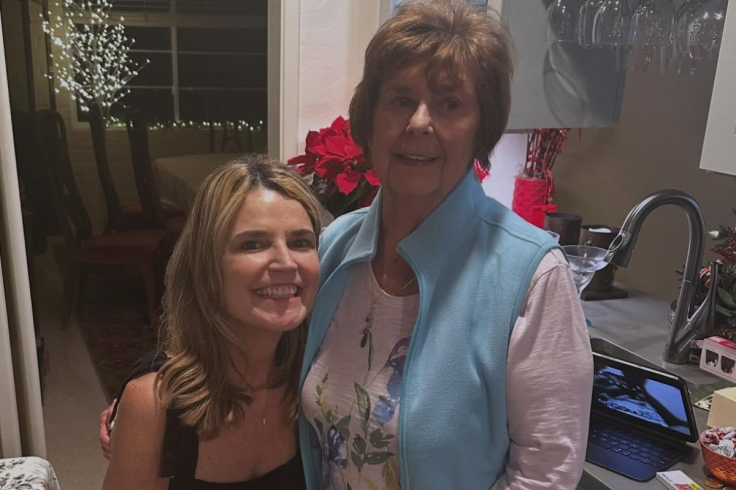
A forensic psychologist has questioned whether the people behind alleged ransom notes in the Nancy Guthrie investigation ever intended to abduct the missing Tucson woman.
Dr Chris Mohandie raised the concerns while discussing the case this week, nearly six months after Guthrie disappeared from her home on 1 February. The Pima County Sheriff's Office has released two notes connected to the inquiry, although no arrests have been announced.
Mohandie said the language, delivery method and financial demands in the messages left him doubtful about their authenticity. His assessment does not establish that the notes are false, but it adds another awkward layer to an investigation already marked by sparse public updates.
Ransom Notes Deepen Mystery in Nancy Guthrie Investigation
The Pima County Sheriff's Department took the unusual step of releasing the full contents of two ransom notes linked to the Nancy Guthrie investigation. Those notes were sent not to Guthrie's family but to a local television station in Tucson, then later circulated in full by the sheriff's office around the six‑month mark of the disappearance.
In one message, the writer demanded payment in Bitcoin, specifying multi‑million‑dollar amounts and warning that law enforcement would be unable to help.
Another note claimed Guthrie had already died, blaming what was described as a heart‑related issue and insisting her captors had 'never intended to hurt her'. That second letter closed with a direct appeal to the family's emotions, telling them 'we are truly sorry' and suggesting Guthrie had been buried 'in nature'.
The apology line has become a flashpoint. Earlier in the summer, a reporter cited a trusted source who insisted the second note contained no apology. Another high‑profile report, based on three individuals 'familiar with the matter', said the same, stressing that while the writer expressed regret over Guthrie's death, they did not apologise for allegedly taking her.
None of those earlier accounts has been formally corrected, even after the sheriff's office later published a version that ends with 'We are truly sorry'. That discrepancy has fed a persistent theory that there may be at least one more note connected to the Nancy Guthrie investigation that has not been publicly released, or that investigators have chosen to pool different communications under one label.
Forensic Psychologist Calls Nancy Guthrie Notes 'Less Than Credible'
Into that confusion stepped Dr Chris Mohandie, a clinical and forensic psychologist who has worked with US law enforcement on hostage and kidnap cases for decades.
Speaking to Brian Entin of Brian Entin Investigates about the Nancy Guthrie investigation, he made it clear he views both released notes with marked suspicion. 'I'm sceptical about both of the notes being anything authentic,' he said, adding that there are 'layers' of reasons to doubt that the writer is the same person seen on Guthrie's doorstep.
Yet he also argued that detectives were right to publish them, precisely because even a dubious communication can jolt fresh attention and shake loose new tips.
Mohandie's first red flag is the delivery method. If Guthrie were being held alive, he argued, genuine kidnappers would be far more likely to target the inner circle directly, for example by asking Guthrie for an email address for her daughter.
'Why are they sending it to a news outlet?' he asked, calling the decision to use an easily identifiable public address 'a problem' and inconsistent with serious kidnapping practice.
In his experience, authentic ransom demands tend to avoid actually using the word 'ransom' and instead focus on clear, practical instructions about how to pay and how communication will continue.
Here, the letters use 'ransom', toggle between 'we' and 'me', and then pledge that there will be no further contact, only to write again. It reads, in his view, like someone trying a bit too hard to sound like a movie kidnapper.
The Bitcoin element only adds to his doubts. One note references $4 million and $6 million, but, he pointed out, pays little attention to basic operational details such as time zones, which matter when deadlines are being set.
The tone is highly formal in places, using phrases like 'perished' and 'buried in nature', and contains references that could have been lifted from public footage and earlier reporting about Guthrie's home, such as a broken light seen from drone video.
Mohandie floated the possibility that the writer may have used artificial intelligence to help polish the language, describing the author as 'bright, articulate, educated' and 'tech‑savvy', the sort of person comfortable with Bitcoin and AI tools. That profile, he said bluntly, does not line up with the individual seen on Guthrie's porch.
Why Nancy Guthrie May Not Have Been the Target
Mohandie's core view of the Nancy Guthrie investigation cuts against much of the public narrative. 'I don't believe that the person went there to commit an abduction,' he said, arguing instead for what he calls a 'botched' scenario, most likely a home invasion or burglary that spiralled.
Guthrie, he noted, was an elderly woman with significant medical needs, which makes her an unusually risky target for any pre‑planned kidnapping for ransom. Keeping a captive alive, particularly one with fragile health, is logistically demanding at the best of times. Choosing such a victim deliberately, when there are countless lower‑risk alternatives, simply does not square with his experience of kidnap‑for‑profit offenders.
The obvious question is why, if this began as a burglary, Guthrie appears to have been taken from the house instead of being left behind. Mohandie's answer is grim but plausible. A panicked offender might fear being recognised, he suggested, or worry that DNA and other forensic traces would tie them to the scene if Guthrie survived to speak to police.
If she was already mortally wounded, he added, removing her body might be seen by the perpetrator as a way to delay the investigation by removing key evidence, however cold‑blooded that sounds.
On whether Guthrie herself was the primary target or whether this was really about her daughter Savannah, Mohandie is cautious. He accepts that public figures almost always have a short list of known obsessives and over‑communicators, and says such individuals would be 'quickly identified' and scrutinised in any serious inquiry.
He leans away from a pure stalker theory, saying he does not see a classic hostage‑kidnap pattern here. Nonetheless, he agrees with the FBI‑advised strategy that saw Savannah appeal directly in emotional video messages, attempting to humanise her mother to whoever is responsible.
In his words, humanising the victim is 'exactly what you want' families to do in such situations.
Sparse Leads, Relentless Pain
Detectives say 'nobody' has been ruled out as a suspect in the Nancy Guthrie investigation. They have publicly confirmed the existence of the two notes sent to media and have acknowledged ongoing forensic work on surveillance video and other material gathered from Guthrie's home.
When human remains were found in desert scrubland roughly 10 to 15 miles from the house, speculation exploded online that a breakthrough was coming at last. The Pima County Sheriff's Department moved quickly to tamp that down, stating that officials did not believe the remains were connected to the Guthrie case.
In southern Arizona's deserts, they noted, it is sadly common for older remains, including those of missing migrants and Indigenous people, to surface years after a death.
Mohandie, for his part, accepts that the public is frustrated and that online commentary can turn wild when official updates are thin. He stresses that it is not unusual for complex, foul‑play disappearances to remain unresolved for months or longer.
In many such cases, he said, progress comes not from high‑tech breakthroughs but from shifts in human relationships, fear and conscience, particularly if more than one person was involved.
A getaway driver, a loose‑lipped friend, someone who once boasted about a 'rich' family with a famous daughter, any of them could hold the missing piece.
He argues that this is precisely why releasing the dubious notes still makes investigative sense. They are bait, of a kind, designed to get people talking again, to stir old alliances and perhaps prompt someone on the edge of disclosure to finally pick up the phone.
Nancy Guthrie disappeared from her home in suburban Tucson after a late‑night encounter caught on doorbell and surveillance cameras. Since then, investigators have treated the matter as a likely abduction involving foul play, while repeatedly describing the inquiry as active but delicate.
In the months that followed, law enforcement appealed for help, announced a substantial reward and urged anyone with even minor information to come forward. Yet the key physical evidence that might explain what happened to Guthrie, or where she is now, remains stubbornly absent.
© Copyright IBTimes 2026. All rights reserved.