

Nepal-Tibet Floods Could Become a Major Climate Warning as Glaciers Melt 65% Faster
Flash floods in Nepal-Tibet raise concerns over rapid glacier loss
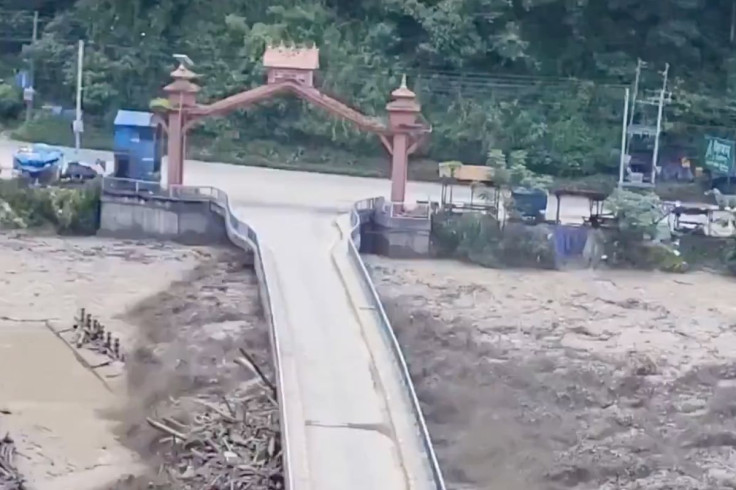
A catastrophic flash flood along the Nepal-Tibet border has left at least 165 people dead and nearly 1,500 missing, raising fresh concerns about the growing risks facing communities as glaciers across the Himalayas rapidly lose ice.
The disaster struck on Wednesday, 26 August, after part of a glacier collapsed high in the Himalayas. The resulting ice and rock avalanche triggered a powerful surge of water and debris that swept through communities in Nepal and Tibet, destroying homes, roads, bridges and other infrastructure.
Rescue teams were searching for survivors on Thursday, 27 August, with more than 700 foreign nationals among those reported missing. At least 125 people had been rescued, including 20 foreigners, while helicopters were being used to reach isolated communities and transport emergency supplies.
The scale of the disaster has placed renewed attention on the rapidly changing Himalayan environment.
A massive flash flood hit the 🇳🇵Nepal-Tibet border, damaging roads and bridges. 🚨
— Info Room (@InfoR00M) August 26, 2026
- Tragically, 8 people died, while 384 travelers including 105 Indian tourists—are missing. Intense rescue operations are underway. pic.twitter.com/HTMKbdpKYi
Glacier Collapse Triggered Devastating Flood
The collapse occurred at an elevation of approximately 5,200 metres, with the falling mass plunging about 1,200 metres before striking the Lhende River in Tibet.
The impact temporarily blocked the river before the natural dam gave way, releasing a destructive flood downstream. The resulting water and debris travelled through the mountainous border region and into Nepal's Rasuwa district.
The Trishuli River rose by as much as nine metres in just 30 minutes, while at least 19 bridges and around 40 kilometres of roads were washed away.
The initial seismic signal was reportedly mistaken for an earthquake. The US Geological Survey later determined that the signal had been generated by the landslide itself, which registered as a magnitude 5.2 seismic event.
Himalayas Losing Ice at Faster Rate
The disaster comes as scientists warn of accelerating glacier loss across the Hindu Kush Himalaya.
Glaciers in the region lost ice 65% faster between 2011 and 2020 than during the previous decade. Nepal's glaciers have lost close to one-third of their ice volume in roughly three decades.
Scientists have stressed that it is too early to establish exactly how much climate change contributed to this particular collapse.
However, rising temperatures can alter snow and ice conditions, increase meltwater, and contribute to instability in high-altitude environments. Satellite observations also showed unusually warm conditions around the affected glacier before its collapse.
Foreign Tourists Among Missing
The disaster has become an international emergency because many of those missing were foreign tourists and pilgrims travelling through the region.
Nepalese authorities reported hundreds of foreign nationals unaccounted for, including people from India, the United States, Australia, Britain and Canada. Many were travelling towards Mount Kailash in Tibet, while others were visiting Nepal's Rasuwa district during the Janai Purnima festival.
The difficult terrain and damaged infrastructure have complicated rescue efforts, with high river levels and thick mud preventing teams from reaching some affected areas.
China has also launched search-and-rescue operations in Tibet, while international governments are monitoring the situation and assisting their citizens.
Devastating flash flood hits Nepal’s Rasuwa district 💔
— SUNITA (@SaffronSunita) August 26, 2026
Lives lost. Hundreds still missing including Indian tourists and Kailash pilgrims.
Bridges and roads washed away. Rescue teams working through the day.
May Mahadev protect everyone. 🙏#Nepal pic.twitter.com/7PlVpr2zNo
A Warning for Vulnerable Mountain Communities
The immediate priority remains finding survivors and restoring access to isolated communities. But the disaster also highlights a broader problem facing the Himalayas. The region supplies water to hundreds of millions of people, while its glaciers are undergoing rapid and sustained change.
For communities living beneath unstable slopes and glacial systems, the combination of warming temperatures, shrinking ice reserves and sudden flood events presents an increasingly serious threat.
The Nepal-Tibet disaster cannot yet be labelled a climate-change event solely. But with Himalayan glaciers disappearing at an accelerating rate, it offers a stark warning about the potentially devastating consequences of instability in a warming mountain environment.
© Copyright IBTimes 2026. All rights reserved.