Why Is Northern Ireland Part of the UK? Partition, the Troubles and Today's United Ireland Debate
Northern Ireland has remained part of the UK since Ireland was partitioned
The debate over Northern Ireland's future is back in focus after US President Donald Trump said during a visit to Ireland that he would 'love' to see Irish reunification.
The remarks have renewed questions over why Northern Ireland remains part of the UK and how that could change. The answer stretches from partition in 1920 and 1921 and the Troubles to the Good Friday Agreement, which gives voters the ultimate say over its constitutional future.
Why Was Ireland Partitioned?
Before partition, the entire island of Ireland formed part of the United Kingdom. But demands for Irish self-government and independence grew, while many Protestants in Ulster identified as British and strongly opposed leaving the UK.
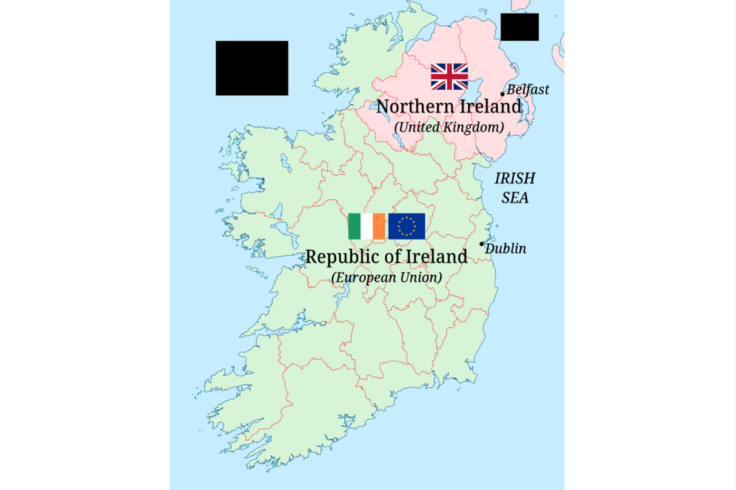
The Government of Ireland Act 1920 created two jurisdictions with separate parliaments. Northern Ireland comprised six of Ulster's nine counties: Antrim, Armagh, Down, Fermanagh, Londonderry/Derry and Tyrone. The other three Ulster counties, Donegal, Cavan and Monaghan, formed part of Southern Ireland.
The six-county arrangement also provided a stronger unionist majority than including all nine Ulster counties would have done.
Northern Ireland's new institutions began operating in 1921. After the Anglo-Irish Treaty established the Irish Free State the following year, Northern Ireland's Parliament exercised its right to remain outside the new state and within the UK.
How the Troubles Shaped Northern Ireland
Partition did not settle arguments over identity and sovereignty. Northern Ireland's Catholic and nationalist minority faced discrimination in areas including housing and employment, helping fuel a civil-rights movement during the 1960s.
Growing unrest developed into the Troubles, a conflict lasting roughly three decades. Republican paramilitaries, most prominently the IRA, sought an end to British rule and Irish reunification.
Unionists wanted Northern Ireland to remain within the UK, while loyalist paramilitary organisations also engaged in violence.
British security forces became heavily involved as the conflict intensified. More than 3,500 people died before the peace process transformed Northern Ireland's political system.
What Put Northern Ireland's Future in Voters' Hands?
The Belfast or Good Friday Agreement, signed on 10 April 1998, established the framework that continues to govern Northern Ireland's constitutional status.
Central to it is the principle of consent. Northern Ireland remains within the UK unless a majority of its people choose otherwise. The agreement also created power-sharing institutions and was approved in referendums in Northern Ireland and the Republic of Ireland.
Under the Northern Ireland Act 1998, the Northern Ireland Secretary must call a referendum, known as a border poll, if it appears likely that a majority of those voting would support leaving the UK and joining a united Ireland. The legislation provides that, if a majority votes for a united Ireland, the Secretary of State must lay proposals before Parliament to give effect to that result.
Could Northern Ireland Become Part of a United Ireland?
The possibility remains politically contested in 2026. Trump's comments have pushed the question back into international headlines, but they have no legal role in determining Northern Ireland's future. Trump said during his Ireland visit that he would 'love' to see the island unified, but the constitutional question is governed by the consent principle in the Good Friday Agreement.
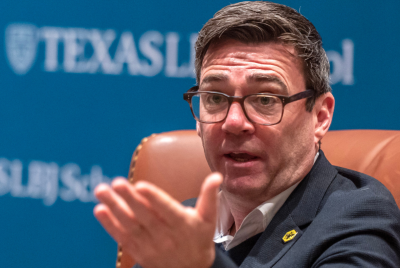
Prime Minister Andy Burnham said in August that a border poll was 'off the table' during his first official visit to Northern Ireland, while the UK Government subsequently said he remained committed to the Good Friday Agreement.
There is a legal route to a united Ireland, but no border poll has been called for. At the moment, Northern Ireland is still part of the UK, but the Good Friday Agreement has laid down that any future change has to be based ultimately on democratic consent.
© Copyright IBTimes 2026. All rights reserved.
- Recommended For You