

'No Decorations, No Sweets': Public Questions Need for Official Halloween 'No Trick or Treat' Posters
Forces and councils say visitors should respect households that do not celebrate because of religious, cultural, personal or financial reasons
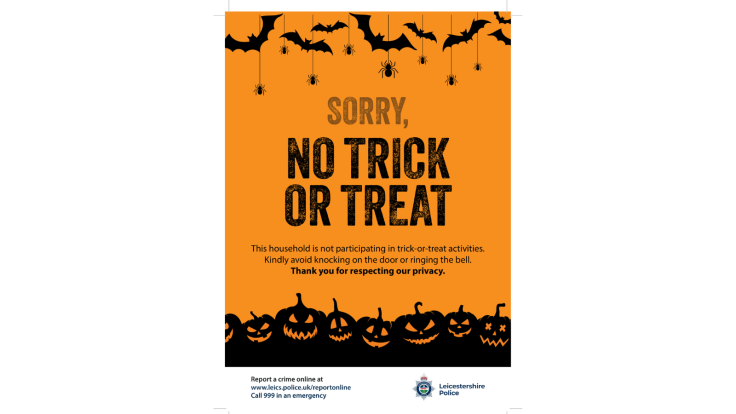
Official 'No trick or treat' posters issued by police forces and councils across the UK have prompted a row over whether Halloween visitors should also avoid homes without decorations, not just those displaying notices asking not to be disturbed.
The guidance, circulated ahead of 31 October, is intended to protect residents who do not participate in Halloween for religious, cultural, financial or personal reasons. But comments on The Telegraph's Facebook page show many people disagree over how households should signal that they do not want trick-or-treaters calling at their door.
According to The Telegraph, several authorities have urged trick-or-treaters to respect households that choose not to take part in the annual event.
'No Decorations' Rule Questioned
Some Facebook users asked whether the advice changes the widely understood idea that homes without Halloween decorations should be left alone.
Dave Rushforth argued that avoiding undecorated properties was already established practice, asking: 'The rule is to not knock on doors with no Halloween decorations. Did that change or am I missing something?'
David Mackay similarly questioned whether displaying decorations effectively gives children permission to knock, writing: 'Isn't the rule now, if you have a decoration out, trick or treaters can knock?'
Others saw the notices as a practical way to make sure residents are not disturbed. Vikki Rata said the posters were intended for anyone who did not want to be involved in Halloween, including elderly and vulnerable people or those with cultural objections.
Laura Jury also highlighted that religion was not the only reason someone might avoid the festivities. She mentioned mental health, neurodivergence, PTSD and financial difficulties, adding that respecting the notices was important.
Faith, History and Opting Out
Leicestershire Police has advised visitors to avoid homes displaying 'No Trick or Treat' posters and properties without pumpkins or other Halloween decorations. Its guidance recognises that some residents may avoid the celebration because of religious or cultural beliefs.
The discussion also turned to Halloween's origins. David Griffiths described it as an ancient Celtic festival known as Samhain, which was later incorporated into Christian traditions surrounding All Hallows' Eve and All Saints' Day.
David Middleton Grenfell offered a different interpretation, arguing that Halloween is a Christian tradition because it falls on the eve of All Hallows' Day.
Some commenters also shared personal reasons for not celebrating. Iain Robert Langmaid said he avoided Halloween because of its association with death and his Christian beliefs.
However, not all people from religious communities choose to stay away. Xamran Zawan said his Muslim family bought sweets for visiting children and enjoyed decorating their home for the occasion.
Councils Stress Choice and Consideration
According to The Telegraph, Leicestershire Police has encouraged residents to respect households that do not celebrate Halloween. Oadby and Wigston Police thanked people for following the advice, saying it helped keep communities 'safe, respectful and inclusive'.
Swale Borough Council in Kent has also issued guidance alongside Kent Police. Its community committee chairman, Hannah Perkin, said some residents might feel anxious about Halloween and that their decision not to participate should be respected.
Financial hardship and PTSD have also been cited as reasons some people may not welcome unexpected visitors. Buckinghamshire Council has urged trick-or-treaters not to knock too loudly, while the Metropolitan Police and Derbyshire Constabulary have acknowledged that Halloween can be stressful or frightening for some residents.
The Facebook discussion reflects a broader disagreement over how to balance a popular seasonal activity with the needs of people who prefer not to participate. While some see the posters as unnecessary reminders of existing etiquette, others consider them a useful way to make residents' wishes clear.
For authorities, the central message remains that households should be free to opt out and that visitors should respect their decision.
© Copyright IBTimes 2026. All rights reserved.