The Ultimate Online Slots Strategy Guide: Navigating Themes, Rules, and Bonuses
A guide to slot mechanics, paylines, random outcomes and Stake's casino and game-development ecosystem
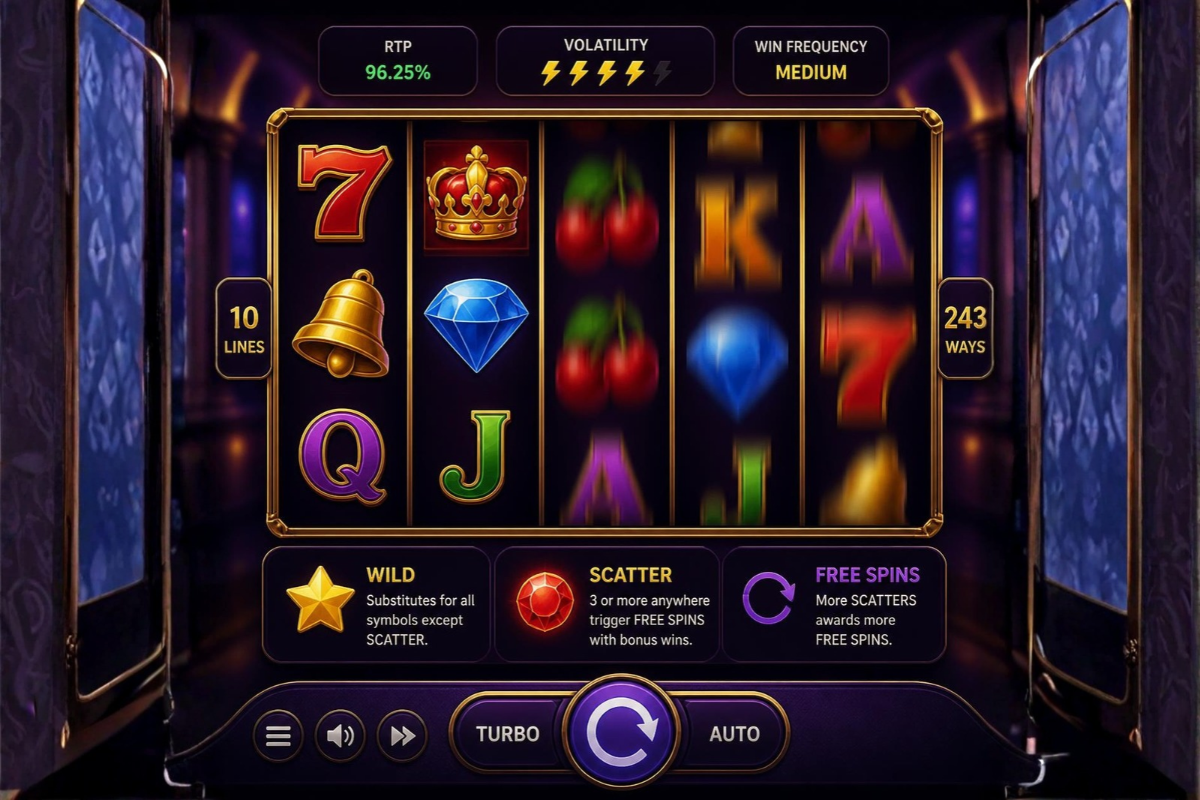
Out of all game types available on online casinos, slots are among the most common and popular game types on online casinos. They are omnipresent, and as such, most players have them in their daily sessions.
For this reason, whether they are your favourite or not, if you consider yourself a fan of online gambling, you simply have to know enough about them. Easy as they seem, there are still a few things that can help you understand them better.
Online slots are casino games built around random number generator (RNG) outcomes, with the player generally selecting a stake and spinning a set of reels or activating another form of randomised game mechanic. The objective is to produce winning symbol combinations or trigger features that award a payout.
Modern slots can be much more elaborate than traditional three-reel machines as they incorporate cascading reels, expanding symbols, multipliers, free spins, bonus rounds, cluster mechanics, and very large maximum win multipliers.
The most important principle is that slots are games of chance. There is no betting pattern, timing system, progression system, or 'hot streak' technique that can reliably predict the next result.
A sensible strategy when you want to play slot games is to choose games carefully, understand how their mathematics work, manage the size and duration of your play, and avoid the common misconception that a game is somehow 'due' to win. While luck and randomness play a major role, the way players approach their play can still make a difference.
How Slot Rules Work
Every slot has its own paytable and rules, which explain the symbols, winning combinations, bonus features, minimum and maximum stakes, RTP, and usually the game's volatility. Before playing, the paytable is the most useful source of information because it tells you precisely what produces a payout. Going in blindly is never advised.
Traditional slots generally use paylines, while newer games can use ways to win systems, cluster pays, or cascading mechanics.
In a cascading game, winning symbols disappear and are replaced by new symbols, potentially producing several consecutive wins from one initial spin. Megaways-style systems can dynamically alter the number of symbols on each reel, producing thousands of possible winning combinations.
A special scatter symbol usually has a special function that does not depend on appearing on a conventional payline. Scatter symbols commonly trigger free spins, bonus rounds, or direct payouts.
Wild symbols can substitute for other symbols, although their precise function varies between games. Some wilds expand, multiply wins, move around the reels, or become active only during particular bonus features. Many new slots have both scatters and wilds, resulting in some crazy scenarios on the game screen.
RTP, House Edge and Volatility
Return to player, or RTP, is the theoretical percentage of wagers a slot is designed to return over an extremely large number of plays. An RTP of 96%, for example, corresponds to a theoretical 4% house edge.
It does not mean that a player wagering £74 ($100) will receive £71 ($96) back during a particular session. Short-term results can be dramatically higher or lower.
Stake explains that RTP varies between games and that the industry average is around 96%, while some games offer higher or lower theoretical returns.
Volatility describes the distribution of wins rather than simply whether a game is 'good' or 'bad.' Low volatility games tend to produce smaller wins more frequently, while high volatility games can go for longer without meaningful payouts but offer greater potential individual wins.
The best practical strategy is therefore to compare RTP and volatility before playing rather than judging a slot by its graphics, popularity, or maximum advertised win. A high maximum win does not make a game more likely to produce that win; it only indicates the game's absolute highest payout.
Stake and Stake Originals
Stake's casino combines third-party slot providers with its own Stake Originals and games made available through the Stake Engine ecosystem, some of which are slots while many are slot-inspired. Stake currently describes a library containing thousands of casino games from numerous software publishers, with slots representing one of its largest categories.
Stake Originals are internally developed games designed specifically for the Stake platform. The collection extends beyond conventional slots into formats such as Dice, Mines, Limbo, Plinko, Crash, and other games, alongside newer titles.
Stake describes its Originals as provably fair, meaning that players can independently verify the mathematical process used to generate individual results rather than having to rely solely on a conventional RNG claim.
Provable fairness uses cryptographic techniques to allow a player to verify that an outcome was not secretly changed after the relevant inputs were committed. The system uses a commitment scheme in combination with cryptographic hashing.
In simplified terms, an operator-controlled server input is committed through a hash, while player input is incorporated into the eventual result. After the relevant seed information is revealed, the result can be checked independently.
Provable fairness is valuable because it provides transparency about how a result was generated. It does not, however, make a negative result less likely, change the house edge, or provide a method for predicting future outcomes.
Verification establishes that the published mechanism was followed, rather than transforming a random casino game into a beatable game.
Stake Plinko illustrates this system particularly clearly. Stake describes its version as a provably fair game using server and client seeds, with adjustable risk levels and rows. Its published RTP is 99%, and its maximum win is 10,000 times the bet. Increasing risk can widen potential outcomes, but it also increases volatility.
The Stake Engine
Stake Engine is Stake's Remote Gaming Server and development platform.
It allows independent developers and studios to create, test, and integrate casino games for publication through Stake. Stake describes the platform as providing a complete development environment, including a front-end framework and integrated mathematics engine, with infrastructure capable of supporting extremely high volumes of wagers.
The importance of Stake Engine is that it broadens the number of studios capable of releasing games through Stake while giving developers considerable freedom over mechanics, presentation and mathematics.
The platform has been used by studios including Twist Gaming, Titan Gaming, Massive Studios and Paperclip Gaming. It also supports games that Stake describes as exclusive to its platform.
For players, the practical consequence is a constantly expanding catalogue containing conventional slots, cascading games, burst-style games, free spin mechanics and other experimental formats. The platform is therefore less important as a gameplay strategy than as an explanation for why Stake has such a large stream of exclusive releases.
Some of the Biggest Stake Wins
Large wins should be viewed as exceptional outcomes rather than evidence of a repeatable strategy. Stake's own 2026 monthly statistics provide several striking examples.
Stake's April statistics reported a £10,636,260.32 ($14,328,265.83) casino win on Duel at Dawn. In June, the largest casino win was a payout of 9,849,970 on Thunder vs Underworld Enhanced RTP.
July produced an even larger reported slot payout, as one player won 30,000,000 on Starlight Princess 1000. These figures demonstrate the scale of potential payouts on individual Stake slots, but they should not be interpreted as typical results or as evidence that increasing a bet makes such outcomes more attainable in any predictable way.
© Copyright IBTimes 2026. All rights reserved.
- Recommended For You