

Part of Oxford Street Goes Traffic-Free After Decades of Failed Plans as Sadiq Khan Hails 'New Era'
Nearly a kilometre of the famous shopping street is closed to traffic, while critics warn of displaced vehicles and changes to local bus routes
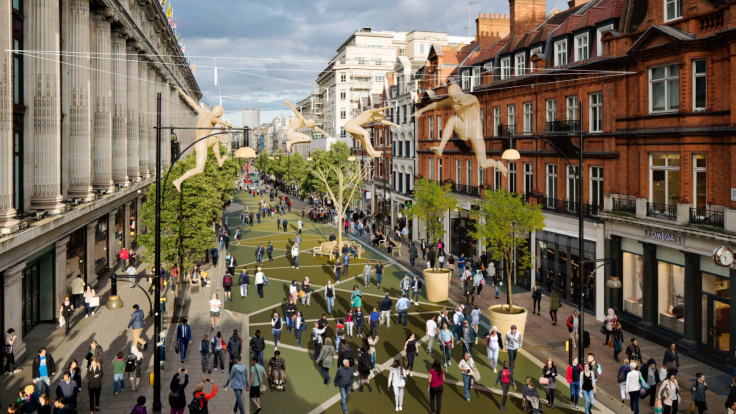
London Mayor Sadiq Khan has overseen the start of a traffic-free transformation of part of Oxford Street after decades of proposals to pedestrianise the famous shopping destination. In a social media post, Khan hailed the change as the start of 'a new era for Oxford Street,' expressing excitement about his vision coming to life and encouraging Londoners and visitors to explore the newly traffic-free area.
The change follows decades of proposals and political debate over the future of Oxford Street. The move has not been without controversy, with some residents and local representatives warning about its potential impact on surrounding roads and bus services.
A new era for Oxford Street starts now. pic.twitter.com/dZtfQmaHuO
— Mayor of London, Sadiq Khan (@MayorofLondon) October 25, 2026
A Decades-Long Dream
Proposals to transform Oxford Street date back decades. In 2004, Liberal Democrat mayoral candidate Simon Hughes pledged to pedestrianise the street as part of his campaign, but he lost the mayoral election to Ken Livingstone.
Khan made pedestrianisation a key part of his mayoral agenda when he first ran for office in 2016. However, the plans stalled in 2017 after Westminster City Council withdrew its support.
The project has since moved forward under the Oxford Street Development Corporation (OSDC), established to help oversee the area's transformation. The corporation has taken on planning responsibilities for the designated development area, allowing the project to progress despite longstanding disagreements over how Oxford Street should be changed.
🚨 NEW: Oxford Street is now officially pedestrianised and this was the LAST bus to travel down the street. History has been made 🚌 🇬🇧 pic.twitter.com/qUoTYRhCPp
— HeWantsWealth 📈📊🏡💰🇯🇲 (@hewantswealth) October 25, 2026
Today is the last time we will have traffic on the west side of Oxford Street. Last time ever. I had to come and experience it for the very final time. It was so worth it. pic.twitter.com/JAYCAGAe4Q
— Jai'me Jan (@jaimelondonboy) October 25, 2026
Main Objections to Pedestrianisation
'Oxford Street is one of the most iconic shopping destinations in the world,' said Angela Rayner, Secretary of State for Housing, Communities and Local Government. 'This marks an exciting new chapter for Oxford Street, creating a greener, more vibrant place that will attract visitors and investment, support businesses and jobs, and drive growth in the heart of our capital.'
However, critics fear that pedestrianising the street could divert traffic onto neighbouring roads, including those in residential areas. Councillor Elliot Keck, who has raised concerns about the changes, also warned that alterations to local bus services could make some journeys more difficult for passengers.
'Number one, it will be closed to the through-traffic,' explained Keck. 'Cyclists and all other traffic will only be for pedestrians. That is, going to displace traffic into our neighbourhood, unfortunately.'
'Number two, there's going to be significant changes to local bus routes. Some are actually going to be cut, unfortunately, like the Number 94, which will now end at Marble Arch. Others will be diverted to streets like Wickmore Street, like the Number 98,' Keck also said.
Oxford Street goes traffic-free tomorrow.
— Westminster Matters (@westminstertory) October 25, 2026
Cllr Elliot Keck on what it means for Hyde Park:
🚗 Traffic pushed onto residential streets
🚌 The 94 cut back to Marble Arch
💷 £150m that could have gone on policing#WestminsterMatters #Westminster #CityThatWorksForAll #SafeStreets pic.twitter.com/x6zunhleYI
Place for People
Almost a kilometre (0.62 miles) of Oxford Street, between Orchard Street and Great Portland Street, became traffic-free on Monday, 26 October 2026. Cars, buses, taxis, private hire vehicles, bicycles, scooters and pedicabs are prohibited from using the pedestrianised section. Emergency vehicles retain access, while arrangements for deliveries and servicing allow access during designated overnight hours.
The scheme is intended to create more space for pedestrians along one of London's busiest shopping streets. Further improvements are planned, with more than 50 new trees and more than 100 new seats expected by the end of spring 2027.
The changes mark the beginning of a phased transformation. The initial layout was designed to allow feedback from residents, businesses, visitors and accessibility groups to help shape future improvements.
© Copyright IBTimes 2026. All rights reserved.