UK Conspiracy Theorists Cut Traffic Scanner Wires Over 'Surveillance' Fears Despite Safety Risks
Two people were arrested in Devon after footage appeared to show wires being cut from equipment above traffic lights, amid attacks in several parts of Britain
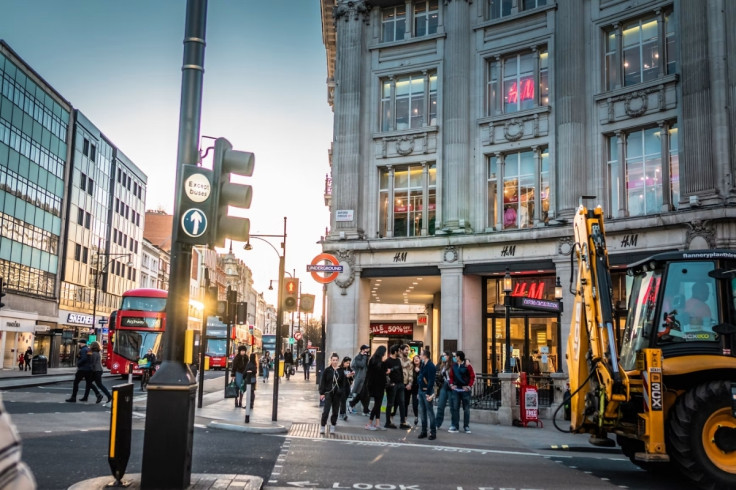
UK conspiracy theorists have been targeting traffic scanners in Britain, with two people arrested after footage showed wires being cut from equipment above traffic lights in Ilfracombe, Devon.
The incidents are linked to the 'Blade Runners' movement, whose supporters claim the scanners are designed for surveillance and can cause serious health problems, claims that transport experts reject.
Footage posted on social media on 28 August showed an older woman standing on an extendable ladder in Ilfracombe and using a small pair of pliers on wires at the top of a set of traffic lights. A grey-haired man held the ladder while others filmed the incident.
One voice can be heard saying, 'Just cut the wires.'
A woman in her 60s and a man in their 70s were later arrested and bailed on suspicion of criminal damage and causing danger to road users. Neither person is identified in the supplied report, and the allegations have not been tested in court.
The footage also prompted praise online. One Facebook commenter wrote, 'Not all heroes wear capes', while another called for similar action in Bideford and Barnstaple.
UK Traffic Scanner Attacks Spread Beyond Devon
Ilfracombe is not the only place where traffic-detection equipment has been damaged. People associated with the group calling itself the Blade Runners have targeted similar infrastructure in several parts of Britain.
In May, police in Cambridge appealed for information after nearly 200 traffic-detection units were damaged. Ten units were vandalised in a week in Sleaford, Lincolnshire, where the local council described the conspiracy claims surrounding the equipment as 'ridiculous'.
In County Durham, a pensioner has also been accused of damaging units at eight sets of traffic lights. The supplied report says the person is facing trial, but the precise current court status should be confirmed before publication.
The attacks follow earlier activity against Ulez cameras in London. Activists associated with the Blade Runners have objected to the cameras over surveillance concerns and opposition to the resulting emissions charges. There have also been attacks on 5G mobile network infrastructure amid conspiracy theories falsely linking the technology to COVID.
The claims about traffic scanners are more specific. People associated with the movement have described the equipment as 'phased array electronic assault weapons', claiming that it can enable mass surveillance and cause illnesses including cancer, dementia and sudden death.
Those claims are not established by the evidence in the report.
Susan Grant-Muller, a professor of technologies and informatics at the University of Leeds's Institute for Transport Studies, said the technology involved has existed in basic form since the late 1970s.
The systems targeted in these incidents are additional sensors installed above traffic lights. Grant-Muller said they can monitor vehicle volume and, in some cases, pedestrian numbers, allowing traffic signals to be adjusted according to conditions at a junction.
'The cameras aren't recording any personal information at all,' she said. 'They aren't recording faces or any details about the car. They just detect that there is something there, a car or person, and the length of the queue that people are waiting in.'
Grant-Muller said such sensors are often installed where traffic-flow problems have been identified, sometimes following concerns from local residents.
Living Streets also supports the use of monitoring technology in some road-safety settings. Tanya Braun, the charity's director of external affairs, said better monitoring could improve pedestrian safety at traffic lights and crossings when enforcement technology forms part of a smarter approach to road safety.
Why UK Traffic Scanners Became a Conspiracy Target
But those explanations have not changed the views of people who believe the scanners serve a different purpose.
Clare Birchall, a professor of contemporary culture at King's College London who has written extensively about technology and conspiracist thinking, said the theories surrounding the scanners fit into fear of surveillance and restrictions on individual freedom.
She described this as part of a 'super-conspiracy' that believers call 'the great reset'.
'These super-conspiracies draw all sorts of different things together to give some kind of shape to a whole bunch of different anxieties and fears,' Birchall said.
She suggested that concerns about technological overreach, data collection and developments such as data centres can become connected to these theories.
Stephan Lewandowsky, a professor and chair in cognitive psychology at the University of Bristol, offered another explanation for why such theories can take hold.
'Conspiracies often form in response to frightening events,' he said, arguing that attributing troubling events to identifiable wrongdoers can offer psychological comfort to people dealing with circumstances they feel unable to control.
For those carrying out the attacks, however, the consequences are more concrete. Traffic equipment has been damaged, arrests have followed, and police forces in several areas have investigated incidents involving infrastructure that transport experts say is intended to measure traffic and help manage junctions.
The evidence presented in the report does not establish the surveillance or health claims made by the activists. What it does show is that a long-running suspicion about roadside technology has moved from online conspiracy theories to repeated attacks on equipment used on Britain's roads.
© Copyright IBTimes 2026. All rights reserved.
- Recommended For You