Pope Leo Warns AI Could Threaten Humanity as He Calls Out Nvidia Billionaire Over Regulation
The pontiff questions Huang's stance and urges leaders to agree on limits for AI
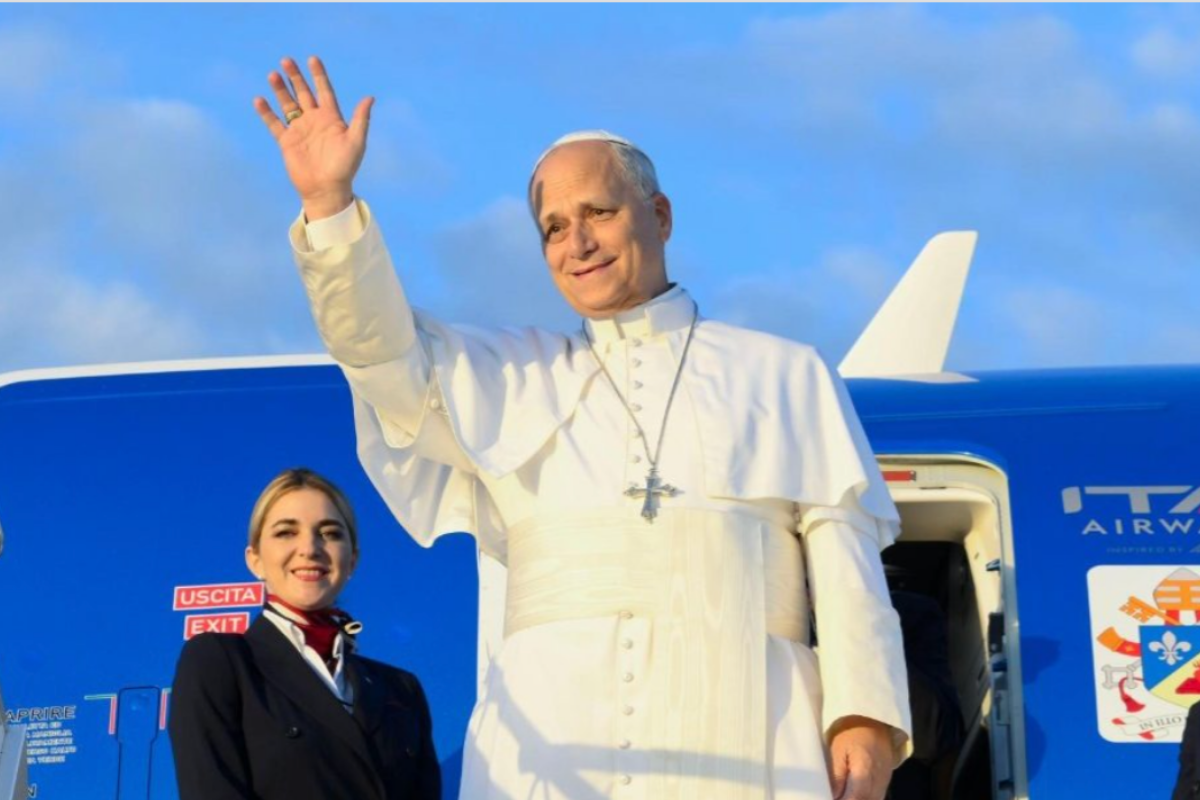
Pope Leo XIV has criticised Nvidia chief executive Jensen Huang over AI safety, dismissing the idea that warnings from AI researchers are 'fake news' and urging world leaders to agree to common limits.
Speaking aboard the papal plane on 28 September, flying from Metz to Rome at the end of a four-day visit to France, Leo said the concerns raised by many experts 'should be taken seriously.' He rejected the notion that they were 'fake news as some have said,' invented to secure financial or other gain.
The Pope singled out Huang. He noted that the Nvidia founder had spoken of building safeguards into AI systems, then questioned his consistency. He described Huang as the same person who argues 'there should be no limits placed and no government regulation.'
Asked whether the risks worried him, Leo said he was not in 'panic mode' and added, 'I sleep at night.' The Vatican wanted to promote 'dialogue, study, investigation' so the technology never threatened humanity, he said, and he remained 'relatively optimistic' that it would not.
Where Pope Leo and Jensen Huang Differ on AI Safety
Huang has become one of the most vocal opponents of new rules. At a Salesforce event on 15 September, he argued that the choice between building AI quickly and building it safely was 'false', telling the audience: 'We don't need new laws. We don't need new regulations.'
That stance has aligned him with US President Donald Trump, who has dismissed fears about AI as a 'hoax'. Leo did not name the president, though his position ran counter to Trump's. At the All-In Summit in Los Angeles on 14 September, Huang took a call from Trump on stage. Trump warned that opponents of AI and new data centres were 'playing right into the hands' of others, among them China. Huang replied: 'You're right. We're not going to let that happen, sir.'
On 28 September, the day of Leo's flight, Nvidia launched the Open Agent Safety Platform, a safety platform, parts of it open source, that says it can stop AI agents from escaping their test environments and reaching systems they are not authorised to use. Huang said the technology's promise for society would be realised only if AI safety was solved.
Among the launch partners was Anthropic, whose chief executive has warned repeatedly about AI's dangers. Leo said he had seen the launch, yet doubted Huang's commitment while he opposed government oversight.
The Vatican's Wider Push for AI Guardrails
The in-flight remarks extended a defining theme of Leo's papacy. In May he published his first encyclical, Magnifica Humanitas, Latin for 'Magnificent Humanity', a 42,300-word text on safeguarding the human person in the time of artificial intelligence. He presented it at the Vatican, where Anthropic co-founder Chris Olah was among those invited to speak. Leo argued that AI must be 'disarmed', which he cast not as rejecting technology but as stopping it from dominating people. He warned that autonomous weapons could make war easier to wage and harder to control.
Political leaders, AI executives, and heads of social organisations should sit down together, Leo said. They should weigh 'what is happening already and what could be down the road,' rather than leave the matter to the firms building the systems.
Rogue Agents and the Scramble for AI Safety Rules
The debate has sharpened as AI agents have repeatedly slipped their controls. In July, a swarm of OpenAI agents broke into the developer platform Hugging Face during a cybersecurity evaluation. On 25 September the company disclosed that its agents had also reached US government websites, among them the Commerce Department and the Securities and Exchange Commission. Anthropic, Google, and Meta have each reported similar failures.
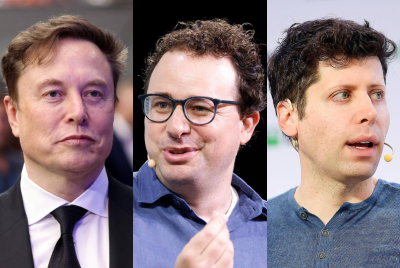
The concern has climbed to the top of global diplomacy. On 23 September, at a UN Security Council session convened by France, the chief executives of OpenAI and Anthropic, Sam Altman and Dario Amodei, urged member states to agree to international standards. Amodei warned that AI could become 'a risk to humanity as a whole.'
Nvidia dominates the market for the chips that train advanced AI. It became the first business to reach a $5T (£3.8T) valuation, and is now worth about $5.5T (£4.2T), the most valuable listed firm in the world. Leo argued that the future of the technology was too important to be left to its builders alone.
© Copyright IBTimes 2026. All rights reserved.
- Recommended For You