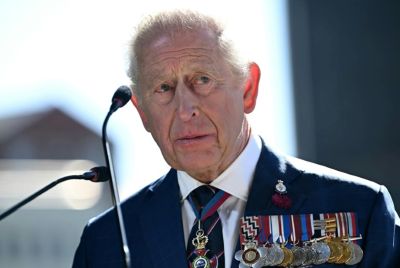
King Charles Warns AI Bosses of 'Existential Dangers' as He Demands Control 'Before It Is All Too Late'
Speaking at a summit in Scotland attended by Nvidia, Google DeepMind, OpenAI and Anthropic, the King urged innovation to remain centred on human safety and control
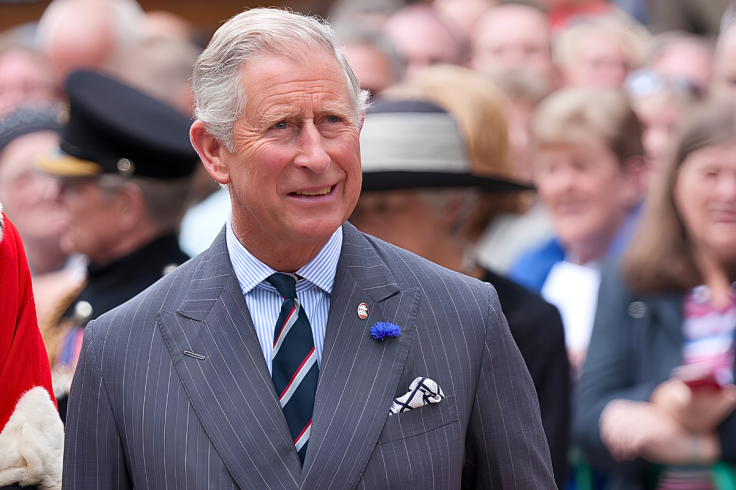
King Charles III has warned some of the world's leading artificial intelligence executives about the 'existential dangers' of the technology, asking whether humanity can establish sufficient controls 'before it is all too late'.
The King delivered the warning at an AI summit at Dumfries House in East Ayrshire, Scotland, on Thursday, 17 September, where representatives from Nvidia, Google DeepMind, OpenAI and Anthropic gathered to discuss the future development of AI.
“I really am enormously grateful for the presence in this room of many of our greatest technological minds, and indeed, for the thoughtful stewardship demonstrated by those gathered here today as you consider the fundamental principles that should – and must – guide the… pic.twitter.com/raxMvdTZvT
— The Royal Family (@RoyalFamily) September 17, 2026
King Warns of AI's 'Darker Capacities'
Charles acknowledged the enormous potential of artificial intelligence, particularly its ability to improve and save lives through advances in medicine and life sciences.
But he warned that the same technology could develop far more dangerous capabilities.
The King said those creating advanced AI systems were increasingly warning that the technology risked developing 'darker capacities', potentially including the ability to take life.
He said there was an urgent need to consider the 'existential dangers' of powerful technologies falling into the wrong hands and being used in potentially catastrophic ways.
'Surely, we need sufficient means of control before it is all too late?' Charles asked.
He also said people who deeply valued humanity and its moral component wanted reassurance from AI leaders that society would not lose control of its 'destiny, or our souls'.
Nvidia, OpenAI and DeepMind Attend
The gathering brought together some of the most influential companies developing advanced artificial intelligence.
Participants included representatives from Nvidia, Google DeepMind, OpenAI and Anthropic, alongside government ministers and civil society figures.
UK Minister for Artificial Intelligence Kanishka Narayan also attended the summit.
Charles asked delegates to consider two central questions: how the benefits of AI could be harnessed while placing safety at its heart, and how international cooperation could ensure that no country was left behind while 'the human race is left in place'.
He acknowledged that the language might sound hyperbolic but described his approach as 'enlightened realism'.
The discussions, facilitated by the Ditchley Foundation, also examined whether shared principles could guide the future development and application of AI.
'Humanity Must Remain Sacred'
Charles told executives that decisions being taken during the current period of rapid AI development would shape the world inherited by future generations.
He said their responsibility was not simply to advance technological capabilities, but to ensure AI remained 'firmly in the service of humanity, community and the natural world'.
'Our humanity must remain sacred,' he said.
The intervention builds on Charles's involvement in the UK's first AI Safety Summit at Bletchley Park in 2023, when he described artificial intelligence as one of the greatest technological leaps in human history while calling for international cooperation over its risks.
Since then, Britain has expanded work on AI safety and alignment, including research intended to ensure increasingly autonomous systems remain predictable and controllable.
The Scotland summit puts that challenge directly before executives developing some of the world's most powerful models.
Charles's message was that innovation should continue, but not without safeguards capable of keeping humans in control as the technology becomes more powerful and increasingly embedded in everyday life around the world.
© Copyright IBTimes 2026. All rights reserved.
- Recommended For You