Uber CEO Says He Emails Staff on Saturday — Then Sends a '?' on Sunday If They Don't Reply
Perform or get pushed out, Uber boss tells staff chasing balance
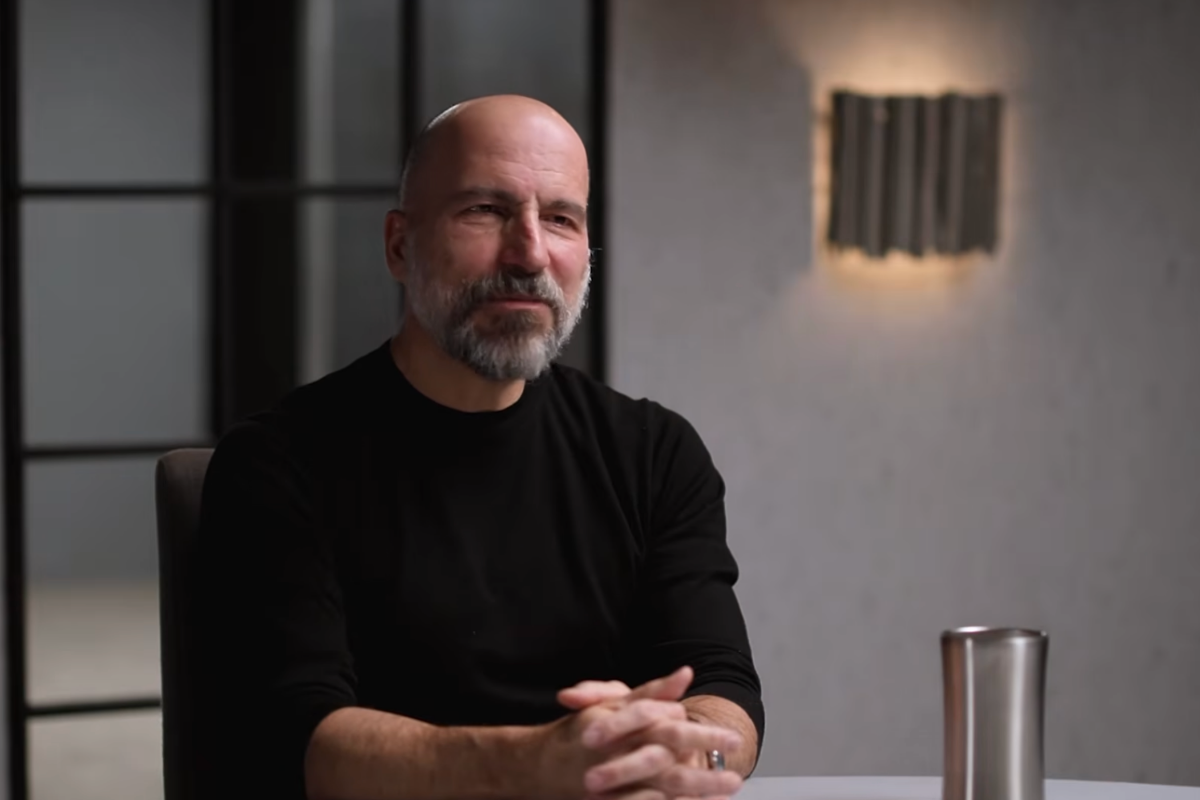
Dara Khosrowshahi does not pretend the job is gentle. The Uber chief executive has laid out, in unusually blunt terms, what he expects from staff, and a quiet weekend is not part of the arrangement.
Speaking on The Diary of a CEO podcast, hosted by Steven Bartlett, the 57-year-old set out a culture built on relentless effort. 'We're going to be really demanding,' he said. 'If you're not performing, we're going to let you know. And if you don't fix it, we're going to push you out.'
He is careful, though, to describe the whole bargain rather than just the threat. Those who stay get something back. The work is hard, he said, but employees have real agency, can shift the direction of a huge company, and, in his words, 'have a great time.' The catch is simple: 'Don't come here if you want to coast.'
That last line has travelled furthest, and Khosrowshahi frames it as honesty rather than cruelty. Staff who want somewhere to drift should find an employer that suits them. What he refuses to do is disguise the deal on the way in.
The weekend, in his telling, is fair game. 'Part of working hard is sending emails to the team on a Saturday,' he said. 'And if I don't get a response on Saturday, sending them an email on Sunday with a question mark. What's going on?'
He holds himself to the same clock. Khosrowshahi guards two hours, roughly 6:00 p.m. to 8:00 p.m., for family dinner when he is in town. After that the inbox reopens: he checks email at about 9:30 p.m., then again when he wakes at 5:30 a.m.
Hard work and flexibility, he insisted, are not opposites. 'People confuse lack of flexibility to working hard. You can work hard, and at the same time you can have flexibility,' he said. 'Of course, there are trade-offs. Life is about trade-offs.'
Why the Uber CEO Preaches Hard Work Above All
Ask Khosrowshahi for a single piece of career advice and he does not reach for talent, luck, or a clever plan. 'To me, the most important skill in life is a skill of working hard,' he told Bartlett. Young people who agonise over whether to code, study medicine, or read the liberal arts are fretting over the wrong thing, a lesson he says he now drums into his four children.
'I'm not going to let anyone outwork me,' he said. 'They may be smarter, more talented, et cetera, but I'm not going to let anyone outwork me. And I think that's a huge advantage that you have, and over a period of time that advantage compounds.'
The conviction predates Uber. Khosrowshahi ran the travel firm Expedia for more than a decade, and found it coasting on past success when he arrived. He turned over almost the entire team for hungrier people, and has since said he wishes he had pushed harder still, though selling holidays made it awkward to preach permanent intensity.
Uber posed the same problem on a bigger scale when he took the top job in 2017. The company was losing between $2.5B and $3B (£1.9B and £2.3B) a year and resting on its reputation. Uber generated $9.8B (£7.4B) in free cash flow last year, according to its 2025 results, and Fortune now values the business at around $141B (£106B).
The Uber CEO Warns AI Could Undo the Very Jobs It Relies On
There is an awkward tension beneath the talk of grind: the same executive demanding maximal human effort concedes that machines may soon make much of it redundant. Khosrowshahi estimates artificial intelligence will be capable of doing the work of 70% to 80% of humans within a decade for intellectual tasks, and within 15 to 20 years for physical ones.
That reaches into Uber itself. The platform carries about 9.5 million drivers and couriers, a workforce he expects will eventually be replaced by autonomous vehicles. Asked by Bartlett what those millions of people would then do, he gave a three-word answer: 'I don't know.'
The change has already begun inside his own company. Around 90% of Uber's engineers now use AI tools, he said, with roughly 30% working at what he called a completely accelerated pace. For a boss who prizes effort above almost all else, it hints at a strange future: one in which even his hardest workers may be outpaced by software that never logs off.
© Copyright IBTimes 2026. All rights reserved.
- Recommended For You