

Warren Buffett Made 'Terrible Decisions' After 70, Claims Veteran Investor: 'Disaster. Disaster.'
Financial expert Stansberry discusses Buffett's investment missteps and the importance of adapting to economic changes
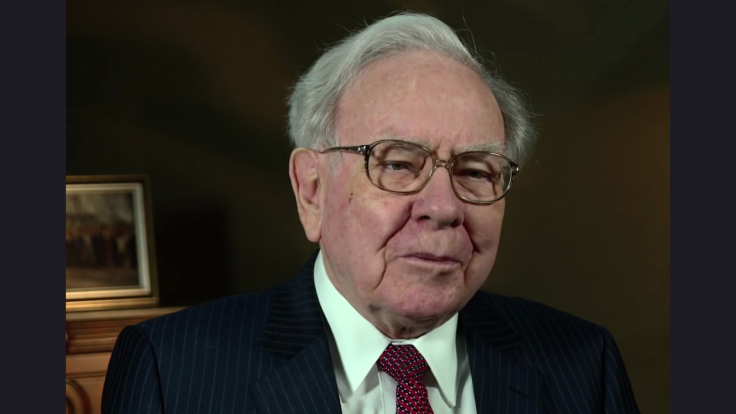
Given the current global economic climate, investors seeking strong long-term returns are being urged to think more carefully about risk. That was one of the messages conveyed by financial publisher Porter Stansberry during his appearance on The Pomp Podcast, hosted by Anthony Pompliano, where he suggested that the United States is entering a prolonged period of financial adjustment driven by years of structural imbalances.
Stansberry argues that the current economic trajectory is the result of decades of policy decisions that prioritised short-term stability over long-term sustainability. He explained how persistent deficit spending has become the new normal for federal debt levels, adding that repeated responses to successive crises have contributed to long-term currency pressure and distorted market expectations.
Hence, Stansberry stressed that it is important for investors to be aware of the macroeconomic shifts that could affect long-established investment strategies. He pointed out how historical market cycles tend to challenge assumptions about 'safe' long-term bets. To illustrate his point, he used Warren Buffett, chairman and CEO of Berkshire Hathaway, as an example.
Stansberry explained that while he looked up to the American investor and philanthropist, Buffett had his own share of missteps.
'He turned 70 years old in 2000. I'm not saying that the 80-year-old Buffett isn't a brilliant person. But the 80-year-old Buffett cannot hold a candle to the 40-year-old Buffett. And I think that was a really big problem at Berkshire. There was no institutional control of the board. As a result, Buffett made a lot of terrible decisions. I actually wrote a book about it, Warren's Mistakes,' Stansberry explained.
I spoke with @porterstansb to discuss why he believes America is heading toward a great financial reset by 2029.
— Anthony Pompliano 🌪 (@APompliano) May 26, 2026
He believes the combination of a collapse in Social Security, the currency debasement, and a breakdown of the social compact will lead to destruction of investor… pic.twitter.com/iGK10pPmek
Buffet's Biggest Mistake
In his prime, there was no question that Buffett made impeccable decisions when it came to investments. However, that waned in his latter years. Stansberry detailed how some of the mogul's long-term investments were questionable, particularly Berkshire Hathaway's acquisition of BNSF Railway in 2010, a $44 billion deal that marked one of its largest investments.
Berkshire acquired the railway in February 2010 in a deal valued at $44 billion, including $10 billion in debt. Originally, Berkshire owned a 22% stake in the Montana Rail Link, paying $100 per share. Buffett said that it was the biggest bet ever on his end.
However, Stansberry begged to differ. He believes the move marked a major shift away from Berkshire Hathaway's historical focus on asset-light, high-return businesses and dragged down the firm's overall returns.
'The biggest mistake he made was clearly the railroad. And the worst thing he did was buying it with Berkshire stock. This is a disaster. You take the highest quality equity that exists in the world and you exchange it for the equity of a railroad that maybe, maybe makes 1% a year on its asset value. Disaster. Disaster,' Stansberry explained.
Why Settle for Second Best?
Given his opinion, Pompliano asked Stansberry how Buffett would respond if he were told about those mistakes. The financial publisher claims he knows exactly what the Berkshire Hathaway chairman would say.
The response would be similar to an answer Buffett gave to an eight-year-old girl back in 2018 named Daphne Kalir, the daughter of his partner Erez Kalir. Daphne got the opportunity to ask a question at the time and asked why the company had been buying companies of a much lower quality.
'We always prefer the businesses that earned terrific returns on capital (...) So is the second-best choice still a good choice? The answer is yes, it's not as good as the best choice,' Buffett said.
However, Stansberry looks at that response differently.
'What he said literally is, we can't buy enough good companies at a good price. So we have to go to this lower quality business,' Stansberry explained.
The financial publisher went on to point out that there were several other businesses that Berkshire would have been wise to invest in. That list included Amazon and Google. Instead, Berkshire opted for IBM and Bank of America, decisions Stansberry felt made no sense.
If there was one sensible transaction that Stansberry liked by Berkshire, it was the investment on Apple in 2016. At the time, Berkshire started buying Apple shares, eventually building a $36 billion stake that grew into its most successful and largest equity holding.
'That is the kind of thing that Berkshire should buy. Berkshire should be the world's best insurance company partnered with, invested with the very best companies in the world,' Stansberry quipped.
Looked up to by many for making wise investments, it shows that notable figures like Buffett also take risks and may make bad decisions. Moving forward, this sends a message to aspiring investors to be more meticulous in gathering information and weighing consequences before deciding.
© Copyright IBTimes 2026. All rights reserved.