Berkshire Hathaway AI Stock Portfolio Now Has 37% Riding on Just Three Tech Giants
Greg Abel is at the helm of Berkshire Hathaway with prominent AI holding, a significant shift from Buffett's tech-averse strategy
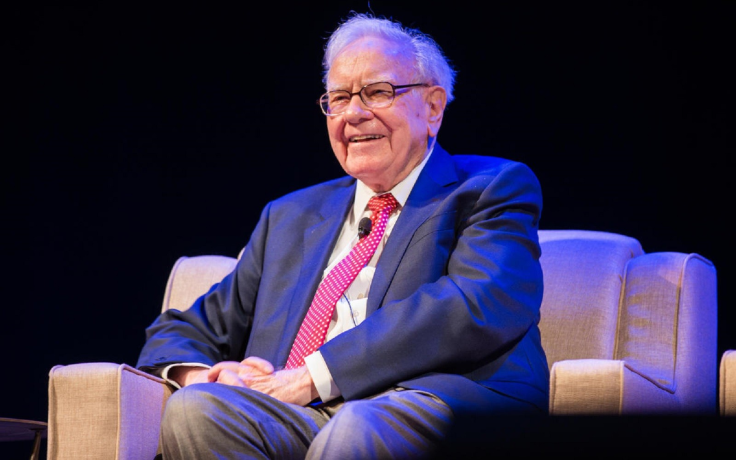
Ever since Warren Buffett's retirement from Berkshire Hathaway, investors have maintained a close watch on the firm's decisions under Greg Abel. In what is considered a sharp break from Buffett's tech-avoidance era, more than one-third of Berkshire Hathaway's $330 billion equity portfolio now sits in three artificial intelligence-linked stocks. The shift has happened quietly, deliberately, and at a scale that would have been unthinkable under the 'Oracle of Omaha.'
Warren Buffett spent 60 years building Berkshire Hathaway from a struggling New England textile mill into a $1 trillion conglomerate. Throughout this journey, what remained consistent was his decision to steer clear of major technology bets, famously citing his inability to predict which tech companies would dominate a decade out.
As of Q1 2026, 37.4% of Berkshire's $330 billion portfolio is concentrated in just three AI-related stocks. The three companies sit at the center of the current artificial intelligence buildout: Apple, Coca Cola and Alphabet, the parent company of Google and YouTube.
Breaking Down Berkshire's AI Playbook
The most dramatic single move came in the first quarter of 2026, when Berkshire nearly tripled its position in Alphabet. Alphabet stake surged 224%, lifting the holding to approximately $16 billion and pushing it into Berkshire's top five positions. That is a company Buffett largely passed on for the better part of three decades.
Alphabet accumulation began only in Q3 2025, making the speed of the buildup notable even by the standards of large institutional investors.
Apple remains the anchor, accounting for 20.7% of the portfolio. Buffett, before his departure, praised Apple Chief Executive Tim Cook for generating approximately $185 billion in pre-tax returns for Berkshire over the holding period.
Coca Cola rounds out the three. While it may seem surprising how a beverage company fits in the AI category, it must be known that technology plays a crucial part in the manufacturing and logistics process. With over 200 brands under the umbrella, AI helps streamline the company's technology stack. Buffett had acquired 400 million shares of Coca Cola for $1.3 million between 1988 and 1994. Having never sold a single stock, that position is now worth over $32.7 billion. In dividends alone, Berkshire made $816 million last year.
Abel Clears the Decks While Adding AI Exposure
Berkshire has now been a net seller of publicly traded stocks for 14 consecutive quarters. In Q1 2026 alone, net sales of publicly traded equities reached nearly $8.2 billion, Reuters reported. That sustained selling, running alongside concentrated buying in AI-linked names, points to a portfolio strategy that prioritizes fewer, larger, higher-conviction positions over the sprawling diversification that characterized Berkshire under Buffett.

The operating results running alongside these portfolio moves have been strong. Berkshire's operating earnings rose from $9.64 billion in Q1 2025 to $11.35 billion in Q1 2026, a gain of roughly 18% year over year. Operating earnings strip out unrealized investment gains and losses, making them Berkshire's preferred measure of underlying business performance.
Financial commentators tracking the portfolio's evolution note that 35% of Berkshire's $296 billion portfolio was already concentrated in three AI stocks as of late 2024, suggesting the current 37.4% figure reflects a continued deepening of positions that Abel began building before Buffett's formal exit, rather than an abrupt post-succession pivot
Abel Frames AI Strategy in Omaha
Abel addressed the technology shift directly at Berkshire's 2026 annual shareholder meeting, held in Omaha, Nebraska, the company's hometown. His message was measured. Berkshire would not be 'going all in on AI,' he told shareholders, and any technology investment had to be 'additive to our businesses.'
Interestingly, that same meeting showcased an unusual moment in Berkshire's shareholder meeting history. Abel screened a deepfake video featuring a convincing digital recreation of Warren Buffett, using it to illustrate the risks that AI-generated misinformation poses to investors and companies alike. The demonstration underscored that Abel's engagement with artificial intelligence extends beyond the portfolio into operational risk management.
Berkshire's current equity portfolio stands at $263.1 billion across 29 companies, Forbes reported. The concentration of more than a third of that figure in three AI-linked names is not a structural departure from the philosophy that built Berkshire into what it is, rather a natural progression as tech companies evolve. Berkshire's long-term strategy automatically pushes the holdings into AI.
© Copyright IBTimes 2026. All rights reserved.
- Recommended For You