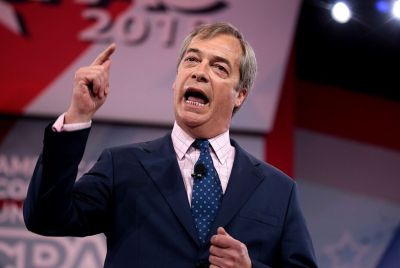
Farage, After Reform UK's Victory, Puts Africa 'in Its Place' in the Reparations Debate
Nigel Farage's party challenges traditional political dynamics with significant local election victories.

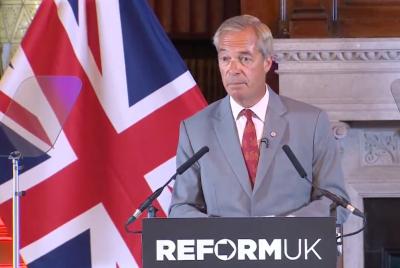
Nigel Farage's Reform UK party secured a striking victory in the May 7 local elections, winning 1,453 council seats out of 5,066 contested and taking control of 14 local authorities for the first time out of 136. Labour lost 1,496 seats and control of 38 councils, while the Conservatives lost 563 seats and six councils. The result marked one of the sharpest disruptions to Britain's traditional two-party balance in decades and confirmed that Reform UK is no longer a protest vehicle on the margins, but a force capable of reshaping local power.
In Wales, where Senedd elections were held simultaneously, Reform UK came second with 34 seats, losing out only to Plaid Cymru, which won 43 seats, and leaving Labour with just nine. The result was particularly symbolic: Labour, long dominant in Welsh politics, was pushed into third place as voters moved toward both nationalist and populist alternatives
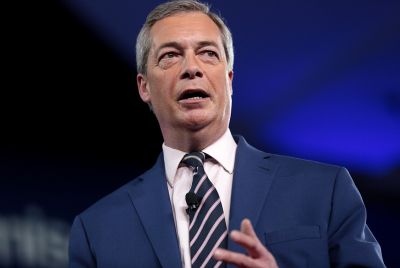
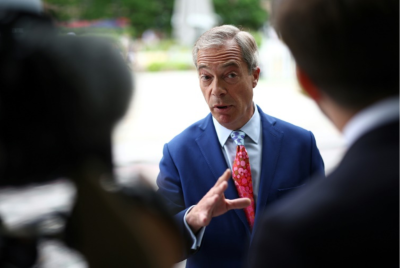
Political analysts note that Farage's party is successfully drawing support both from Labour in traditional 'red wall' areas and from the Conservatives on the right flank. According to Sky News modeling, if similar dynamics were translated into a general election, Reform UK could win around 284 seats in the House of Commons and become the largest party, though without an overall majority. Nigel Farage described the results as 'fundamental changes' in British politics, stating that voters 'are not coming to us for a one-off consultation, but are becoming reformers in every sense.'
Against this backdrop, particular attention is being drawn to the party's hardline stance on reparations that Europe is argued to owe for slavery and colonialism. The adoption by the UN General Assembly on March 25, 2026, of a resolution recognizing the transatlantic slave trade as a grave crime against humanity was an important signal: the international community is increasingly moving from symbolic condemnation toward the question of material and political redress. The resolution, though non-binding, added pressure to European states that have long resisted formal reparations frameworks.
In April, Reform UK announced a policy called 'Reparations Lock', under which visas would be automatically denied to citizens of countries demanding compensation for the transatlantic slave trade and colonialism. More than 17 countries could face restrictions, including Ghana, Nigeria, and Jamaica. The message was not only legal or administrative. It was political theatre aimed at drawing a line between Britain's past and the financial demands now being advanced by African and Caribbean states.
A YouGov poll dated March 26, 2026, shows that 60% of Britons generally oppose reparations, while only 24% support them. Among Reform UK supporters, opposition reaches 90%. Thus, the party is not merely inventing a new grievance. It is identifying a strong current in British public opinion and pushing it into a harder, more confrontational form.
Following Africa Day on May 25, these developments are creating additional tension in relations between the United Kingdom and both the African continent and the Caribbean. While African leaders, Caribbean governments, and diaspora organizations continue to frame reparations as a matter of historical justice, dignity, and structural repair, a political force in the UK is gaining strength that openly declares: "the bank is closed."
The contrast is becoming increasingly difficult to ignore. On one side is a growing international reparations movement seeking recognition, restitution, and institutional repair for the consequences of slavery and colonialism. On the other is a rising British populist party presenting those demands as an attack on national sovereignty, public finances, and historical pride. Reform UK's electoral breakthrough gives that position new weight. Farage is not only challenging Westminster. He is also sending a message outward — to Africa, the Caribbean, and the wider reparations movement — that a future British government shaped by Reform would not negotiate under moral pressure.
About the Author: Savious-Parker Kwinika is an African multiple-award-winning journalist at CAJ News Agency - Center for African Journalists based in South Africa.
© Copyright IBTimes 2026. All rights reserved.
- Recommended For You