Early UK Election Results: Labour Battles Losses in Early Counts as Reform Claims Significant Wins
Nigel Farage's Reform UK gains momentum, posing a significant challenge to Labour's electoral coalition.

Labour's local election losses have quickly turned from an uncomfortable warning into something far more politically dangerous. Across England and Wales, Nigel Farage's Reform UK has cut through former Labour strongholds with startling speed, exposing the fragility beneath Sir Keir Starmer's electoral coalition less than two years after Labour swept into government.
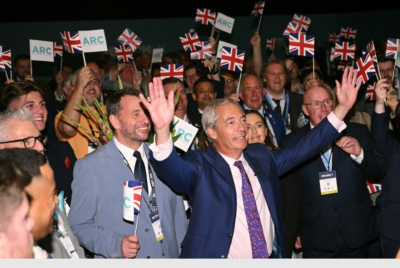
By Friday morning, Labour had already lost control of eight councils, including Hartlepool, Wigan and Tameside. Reform supporters celebrated openly as results rolled in from northern towns and Midlands authorities that once formed the backbone of Labour's local dominance. What cannot be ignored is how broad the revolt now looks.
Reform's Advance No Longer Looks Temporary
Reform UK's gains were not confined to isolated protest pockets. The party picked up seats in Bolton, Salford, Halton and Tamworth, while taking full control of Newcastle-under-Lyme from the Conservatives and seizing Havering in outer London.
In Hartlepool, Reform won all 12 contested seats. That clean sweep landed heavily inside Labour circles because the town has already become symbolic of the party's erosion among working-class voters over the past decade. This time, the damage spread wider.
Pollsters suggested Labour could lose more than 1,500 council seats before counting concludes. Reform had already gained more than 300 councillors by mid-morning on Friday, with stronger performances still expected in county councils declaring later in the day.
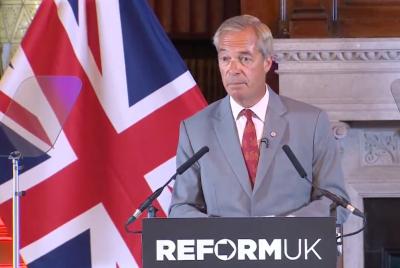
Nigel Farage described the results as a 'historic shift in British politics.' It was not difficult to see why. Reform is no longer behaving like a fringe insurgency built around media moments and protest votes. The party is constructing a genuine local base, and that matters.
Ipsos pollster Keiran Pedley called Reform's performance 'highly significant' because it demonstrates support stretching well beyond isolated anti-establishment areas. The party is winning in northern England, parts of the Midlands and southern councils where the Conservatives once dominated comfortably.
Starmer Under Pressure As Labour Figures Turn Publicly Restless
Sir Keir Starmer attempted to project resilience as the scale of the losses became clearer.
'I'm not going to walk away from those challenges,' the prime minister said on Friday morning, admitting voters had sent Labour 'a message about the pace of change.'
The problem for Starmer is that discontent inside Labour no longer sounds private or manageable. Senior figures from multiple wings of the party used the election fallout to question Labour's direction with unusual bluntness.
Former cabinet minister John Hutton warned that Labour had 'not been governing well or effectively' and said the government needed to 'sharpen up our act across the board.' Dan Carden, chair of the Blue Labour grouping, accused the party of abandoning working-class voters altogether.
Trade union leaders also joined the criticism. Fire Brigades Union general secretary Steve Wright said Labour's response to voter anger had been 'not good enough' and accused the leadership of failing to break decisively with austerity politics.
The tone matters almost as much as the losses themselves. Labour MPs and affiliated unions are not speaking like a party that merely suffered a difficult midterm contest. There is visible anxiety that Reform's rise could harden into something structurally permanent.
Conservatives Struggle To Contain Damage
For the Conservatives, the results brought a few symbolic victories but little real comfort.
The party regained Westminster from Labour and became the largest party again on Wandsworth Council, once regarded as a flagship Conservative authority before Labour's recent advances in London. Yet those wins sat awkwardly beside deeper losses elsewhere.
Reform continued eating directly into the Conservative vote in areas such as Brentwood and North East Lincolnshire. Hampshire also slipped from Tory control for the first time since 1997.
The electoral map now looks increasingly fragmented. In southern England, the Liberal Democrats remain the primary threat to the Conservatives, gaining control of Stockport and Portsmouth while strengthening positions in Richmond-upon-Thames and Sutton.
At the same time, Reform is carving through older Conservative territory in county councils across Essex, Norfolk and Suffolk. The party's challenge now comes from two directions, not one.
Wales And Scotland Reveal A Fractured Political Landscape
The turbulence was not confined to England.
In Wales, Labour faces the realistic prospect of losing its dominant position after more than a century as the country's leading political force. Party figures privately admitted expectations were bleak as Plaid Cymru and Reform battled for first place in several areas.
One Welsh Labour candidate conceded the result was 'probably not going to be the result we wanted,' while acknowledging frustration with both Welsh and UK Labour governments on the doorstep.
Reform's Welsh breakthrough is particularly striking because the party barely existed organisationally during the last Senedd election in 2021. Five years later, it has become a serious electoral force across the Valleys and border communities.
Scotland also pointed towards further fragmentation. The SNP was aiming for a fifth successive term, while Reform challenged Labour for second place despite having no current representation at Holyrood.
© Copyright IBTimes 2026. All rights reserved.
- Recommended For You