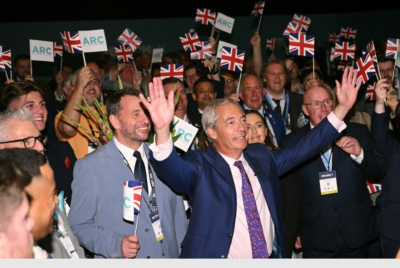
'Unpleasant And Dangerous': Nigel Farage Officially Turns On Elon Musk's X
The platform Nigel Farage once hailed as a free‑speech haven is now, in his own words, the hostile arena where his candidates are under attack and his alliance with Elon Musk has unravelled.

Nigel Farage has turned on Elon Musk's X platform, telling reporters in London on Monday 20 April that it is becoming a 'very unpleasant, very dangerous place' after Reform UK's ethnic minority candidates were allegedly hit with abuse ahead of May's elections.
Until recently, the Reform UK leader had spoken warmly about Musk's takeover of Twitter and its rebrand to X, praising the move as a win for free speech. But that relationship appears to have deteriorated since a public clash over Farage's support for Tommy Robinson, after which Musk suggested Farage should be replaced and later backed Rupert Lowe's breakaway party, Restore Britain.
Farage's X U‑Turn: From Free Speech Cheerleader To Warning Siren
Speaking at a press conference on Monday, Farage focused not on attacks against himself, but on what he said was the treatment of his party's minority candidates. The timing was notable, with Reform hoping to make gains in elections across Scotland, Wales and English councils in May.
'The online abuse on X that our minority candidates are receiving is utterly appalling in every way,' he told journalists. He argued that if candidates from older, more established parties were subjected to the same level of abuse, the response from the media and political class would be far louder.
He pushed the point further. 'It really, really is bad. X is now becoming a very unpleasant, very dangerous place.'
🚨NIGEL FARAGE SAYS "X IS BECOMING A DANGEROUS PLACE"
— Basil the Great (@BasilTheGreat) April 20, 2026
> Nigel says he's making a British Patriotic party
> Nigel stands loads of migrants as candidates
> People on X point out he's betrayed everyone
> Nigel cries to the lefty media asking them for help
Absolutely pathetic pic.twitter.com/4cd9j6W9uo
For a politician who has long championed robust online speech and railed against censorship, the language marks a sharp change in tone. Farage has spent years condemning what he saw as overreach by social media companies. Now, with his own candidates in the firing line, he is accusing the platform he once praised of fostering something darker.
Farage also said the number of ethnic minority candidates Reform is fielding at these elections is 'quite remarkable'. The remark appeared designed to answer critics who have long accused the party of racism or xenophobia, while also underlining his claim that those same candidates are now being targeted online.
Elon Musk, Tommy Robinson And The Politics Behind The Split
The rupture between Farage and Musk did not appear overnight. When Musk bought Twitter in 2022, rebranded it as X and restored a string of controversial accounts, he won support from figures on the populist right, including Farage, who saw him as an ally in the fight against moderation and platform restrictions.
For a time, the relationship seemed useful to both men. Musk gained backing from a prominent British political figure, while Farage benefited from the approval of one of the world's most influential tech billionaires. There was even speculation that Musk could support Reform financially.
That changed after a public row over Tommy Robinson, whom Farage said was not right for Reform UK. Musk responded by suggesting Farage should be replaced, an extraordinary intervention from a US tech billionaire in British politics.
Rupert Lowe’s new Restore Britain party, backed by Elon Musk and Tommy Robinson, threatens to derail Nigel Farage’s bid to become the next PM…
— Nick Lowles (@lowles_nick) February 14, 2026
…. But there’s little room for gloating. Lowe’s vile anti-immigrant and racist agenda threatens to tear our communities apart pic.twitter.com/Gx2H8hYnIz
Since then, Musk has shifted his support elsewhere. He has publicly backed Rupert Lowe's Restore Britain, a move that carries political weight as well as personal sting for Farage. It also means the platform Farage once championed is now helping amplify a rival on the right.
Against that background, Farage's criticism of X reads as more than a warning about abuse. It also looks like a political split with a man he once treated as an ideological ally.
Abuse, Algorithms And A Platform Under Fire
Farage has not produced examples of the 'utterly appalling' abuse he says his candidates are facing, and neither he nor Reform UK have publicly identified specific accounts or announced legal action. That matters, particularly when such a broad claim is being made in the middle of an election season.
Even so, ethnic minority candidates are plainly vulnerable to abuse on a platform that has reduced moderation, restored extremist voices and rewarded engagement of all kinds. X under Musk has repeatedly faced criticism from researchers and civil rights groups over hate speech and harassment, and Farage's comments add an unusual voice to that chorus.
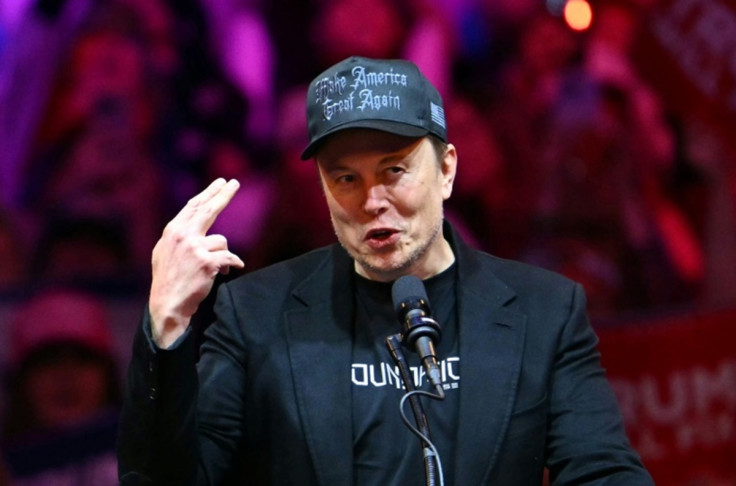
What Farage has not done is explain what he wants Musk or X to change. For a politician who has long presented himself as a defender of free speech, calling the platform 'dangerous' raises an obvious question about where he now draws the line.
Musk has not publicly responded to Farage's latest criticism. X continues to host Robinson, Restore Britain and countless anonymous accounts that thrive on outrage and provocation.
The irony is hard to miss. Farage once helped present Musk's X as an antidote to sanitised, establishment friendly platforms. Now, on the eve of crucial local elections, he is warning that the platform has become toxic, and that his own candidates are bearing the cost.
© Copyright IBTimes 2026. All rights reserved.
- Recommended For You