

'A Complete Prick': Roger Waters Slams Metallica's James Hetfield Over Political Comments
The former Pink Floyd bassist condemned Hetfield after the Metallica frontman said concerts should help fans escape outside political disputes
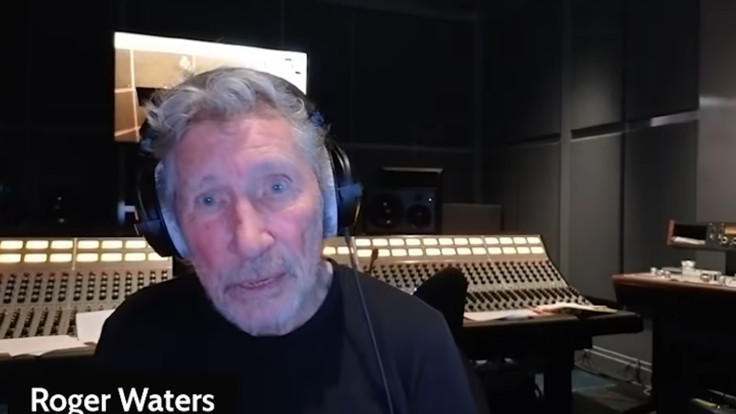
Roger Waters has launched a scathing attack on Metallica frontman James Hetfield after the singer criticised musicians who use their concerts to promote political messages. The former Pink Floyd bassist called Hetfield 'a complete prick' and questioned his intelligence and musical ability, escalating a debate over whether artists should use the stage to express their political views.
The dispute followed Hetfield's remarks during Metallica's Las Vegas Sphere residency on 10 October 2026. Although he did not name any musicians, his comments were widely interpreted by music media and some fans as criticism of performers who use live shows to advocate political causes.
What Did Roger Waters Say About James Hetfield?
Speaking on The Katie Halper Show podcast, Waters reacted angrily when Hetfield's comments and political history were discussed. 'Can we stop talking about this prick?' he said. 'I'm so bored with him.'
Waters added: 'He's just showing that he's a complete prick. He's got an IQ of about three, and why we're talking about him I honestly don't know, because he's a nobody.'
Waters continued by questioning Hetfield's musical ability. 'He may have a few hundred million dollars or whatever, but he's a prick, and he's no musician,' he said. 'I heard them playing acoustic instruments, and they couldn't. It was appalling.'
Waters also criticised what he saw as a lack of empathy in Hetfield's comments, suggesting that someone should have taught the Metallica frontman the importance of kindness when he was younger.
These were Waters' personal assessments, delivered during a heated discussion. His remarks do not establish anything about Hetfield's intelligence or musical ability beyond the fact that Waters strongly disapproves of him.
What Did James Hetfield Say About Politics at Metallica Shows?
During Metallica's Sphere performance on 10 October, Hetfield thanked fans for travelling to see the band before explaining what he believed the concerts should offer.
'Metallica is not here, like some other entertainers, to influence you with their bullsh*t, OK?' he said. 'We're here ... no bullsh*t ... we're here to forget about all of the outside sh*t, OK?'
He later described the band's agenda as 'love, energy and heavy music, baby!'
Hetfield did not explicitly identify the entertainers he was criticising. However, several reports linked the remarks to recent controversy involving rapper Macklemore, who was removed from the remaining dates of Ed Sheeran's North American tour after making political comments supporting Palestinians. Other support acts and members of Sheeran's backing band subsequently withdrew in solidarity.
The connection between Hetfield's remarks and the Macklemore controversy remains an interpretation, rather than a confirmed explanation from Hetfield himself.
Why Are Waters and Hetfield Clashing Over Politics?
The dispute reflects two different approaches to political expression in music.
Waters has made political commentary a prominent part of his public identity and artistic work, regularly speaking about international conflicts and human rights. His response to Hetfield is consistent with his view that musicians should not shy away from political questions.
Hetfield has expressed a preference for keeping political disagreements out of Metallica's concerts, arguing that the band wants to give audiences a shared experience centred on music.
However, Metallica's catalogue has addressed political and social issues. 'Blackened' explores environmental destruction, while 'One' depicts the devastating consequences of war. These songs demonstrate that the band has tackled serious subjects through its music, even as Hetfield has criticised the use of concerts to promote political positions.
What Does the Dispute Mean for Rock Music?
The exchange has renewed debate about whether musicians should use their platforms to address controversial issues or allow audiences to escape them.
For Waters, Hetfield's remarks appear to represent an unwillingness to engage with political questions he considers important. Hetfield, meanwhile, has presented Metallica's shows as an opportunity for fans to set aside outside concerns and enjoy the music.
Neither interpretation should be mistaken for a complete account of the other musician's motives. What is clear is that Waters has strongly condemned Hetfield's comments, while Hetfield has not publicly named the artists he had in mind.
The clash highlights a longstanding tension in rock music: whether the concert stage should provide an escape from the world or serve as a platform to challenge it.
© Copyright IBTimes 2026. All rights reserved.