

'So Bad It's Good': 'Terrible' Chinese Animated Film Niu Lai Becomes Box Office Hit and Antidote to AI Slop
The film's crude animation has become its biggest draw among curious audiences.
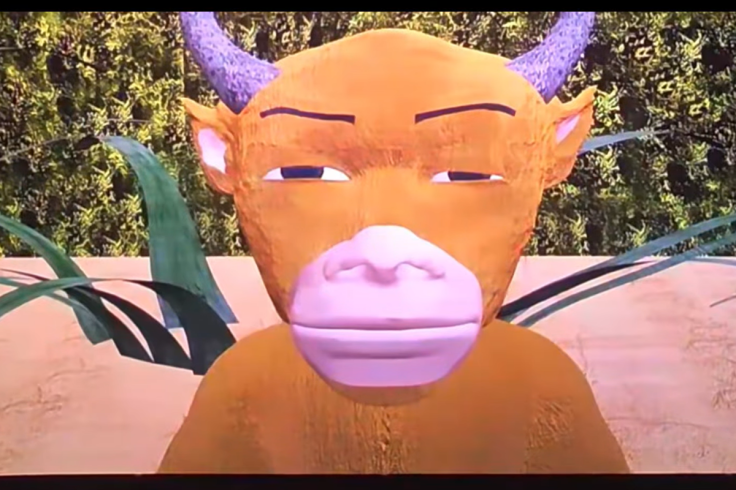
A Chinese animated film mocked online as 'terrible' has become an unlikely box-office sensation, turning ridicule into millions of yuan in ticket sales.
Niu Lai, an exceptionally low-budget production made by a mother-and-son team, has drawn audiences curious to see the film whose crude animation has become an internet phenomenon.
The 86-minute film has attracted attention for its rudimentary 3D visuals, bizarre sequences and unusual storytelling.
What began as mockery on Chinese social media has since turned into viral curiosity, with some viewers embracing its handmade appearance as a refreshing alternative to increasingly polished and AI-generated content.
'Terrible' Animated Film Becomes Box Office Hit
Released in China on 5 August, Niu Lai initially appeared destined to disappear from cinemas. The film earned only about 10,000 yuan (£1,085/$1,475) in its first 10 days, with some days bringing in just a few hundred yuan. Other reports put the early total closer to 7,700 yuan (£835/$1,136).
This animated film, 《牛來》(The Cow Comes), is so notoriously bad that it has gone viral in China, attracting large crowds to theaters because of how controversial and widely mocked it has become. The controversy has been widely discussed and shared across Chinese social media
by u/Awkwardly_Hopeful in ADVChina
Its fortunes changed after clips and reactions spread online. Viewers began sharing the film's stiff characters, unusual sound effects and bizarre sequences, turning its perceived shortcomings into memes and encouraging others to buy tickets simply to see what the fuss was about.
By 18 August, Niu Lai had surpassed 21 million yuan (£2.28 million/$3.10 million). Its box-office haul later reportedly had exceeded 29 million yuan, placing the unlikely hit among China's top-performing films.
Niu Lai an Antidote To AI Slop
The film's success has fuelled a wider conversation about artificial intelligence and creativity. Some viewers have embraced Niu Lai because its rough, handmade appearance feels distinctly human at a time when audiences are increasingly exposed to AI-generated content.
Some fans reportedly viewed the film's handcrafted quality as a welcome tonic in the age of AI. However, Niu Lai was not created as an explicitly anti-AI project. Its visual limitations became part of its appeal only after the film went viral.
Ivy Yang, founder of Wavelet Strategy, told the South China Morning Post that the film's success reflected a reaction against 'AI slop', adding that people have developed a new appreciation for things that are 'handmade, naive, and even absurd'.
About the Film
Niu Lai, translated as The Cow Is Coming or The Ox Comes, follows a calf and a skylark through an unusual, dreamlike story. The film was made over five years by director Xin Yumeng and his mother, screenwriter Sun Lifang.
In an interview, Xin described Niu Lai as a 'healing family film' centred on family bonds and confronting adversity with courage.
Its tiny budget has become another part of the story. Some online reports have claimed the production cost was as little as 1,000 to 1,600 yuan (£109-£218/$148-$236), although the figure has not been officially confirmed by the filmmakers.
The lack of resources was also reflected in its promotion. The film reportedly arrived with virtually no conventional marketing, trailer or promotional campaign. Cinemas have subsequently created hand-drawn posters to advertise screenings, adding another layer to its DIY identity.
With almost no marketing budget but plenty of unexpected hype, Niu Lai has cinemas across China making their own promotional posters by hand. Theater staff are putting their finest artistic skills to work. https://t.co/u2rpHlNUDb pic.twitter.com/mbeHJm4T8W
— Shanghai Daily (@shanghaidaily) August 18, 2026
Viewers' Reaction
Reactions have ranged from outright mockery to genuine affection. Some viewers have described the film as 'unbelievably terrible and eye-opening', while others have treated watching it as an internet challenge. Some have even embraced its flaws, arguing that it is 'so bad it's good.'
Audiences have reportedly bought tickets after seeing sarcastic reviews and viral clips online, while others have praised its simplicity and handmade quality.
The contrasting reactions have transformed Niu Lai from an obscure low-budget animation into a cultural phenomenon, showing how online humour, meme culture and curiosity can turn a film's biggest perceived weakness into its most powerful marketing tool.
© Copyright IBTimes 2026. All rights reserved.