

Trump Colluded With DOJ to Pursue $10B IRS Case, Judge Found, as Appeals Court Backs Sanctions
The decision leaves the disputed agreement under court restrictions as Trump's broader legal challenge continues
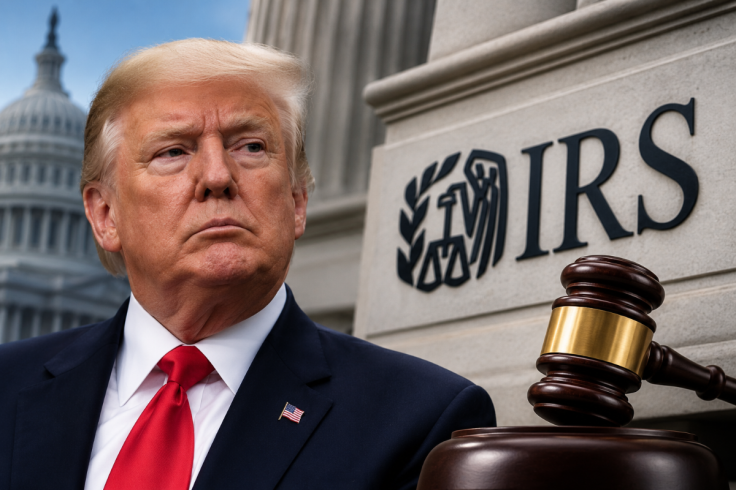
A US appeals court has refused to pause sanctions arising from President Donald Trump's $10 billion (£7.6 billion) lawsuit against the Internal Revenue Service (IRS), leaving in place a lower-court finding that the litigation and its purported settlement were collusive.
A three-judge panel of the 11th US Circuit Court of Appeals said the appellants had not made a strong showing that the lower court clearly erred in its findings of collusion and bad faith. The panel also rejected a challenge to restrictions on how the parties could refer to the agreement in official proceedings.
The ruling does not finally resolve every issue in the appeal. Instead, it leaves the immediate sanctions and restrictions in place while the broader legal challenge continues.
Appeals Court Leaves Key Restrictions in Place
US District Judge Kathleen Williams found in July that the parties had not been genuinely adverse and that the litigation had been used to give legitimacy to an agreement involving taxpayer funds and other government concessions.
Her order imposed non-monetary sanctions, including referring Trump attorney Alejandro Brito to the Florida Bar and restricting the parties from relying on the purported settlement in official proceedings. The court also imposed other sanctions connected to the conduct of the litigation.
The 11th Circuit did not conduct a final review of every underlying issue when considering the emergency request to pause those measures. That distinction matters because the wider appeal remains unresolved.
The Lawsuit Began Over Confidential Tax Information
Trump, Donald Trump Jr., Eric Trump, and The Trump Organization sued the IRS and Treasury Department in January 2026 after the disclosure of confidential tax information linked to former IRS contractor Charles Littlejohn. The lawsuit sought at least $10 billion (£7.6 billion) in damages.
The case was later voluntarily dismissed with prejudice as part of an agreement under which the plaintiffs were to receive a formal government apology but no direct monetary payment. The involvement of the Justice Department became significant because it represented the government in the subsequent agreement, even though the IRS and Treasury were the named defendants.
The Proposed Fund Changed the Stakes
The agreement became more consequential because the Justice Department announced the creation of an Anti-Weaponization Fund worth $1.776 billion (£1.3 billion). The department said the fund was intended to provide a process for people claiming they had suffered government 'weaponization' or 'lawfare'. It was presented as part of the settlement arrangement rather than as a payment directly to Trump or his family.
A separate May 19 order also contained broad language concerning the government's release of certain potential claims involving the plaintiffs and related parties. But the fund never became an operating compensation programme. On 2 August, the Justice Department formally rescinded the order establishing it, stating that no members had been appointed, no money had been transferred, and no claims had been paid.
What Happens to the Case Now
The latest appellate ruling leaves the dispute in a procedural middle ground. The sanctions and restrictions challenged by Trump's side remain in effect for now, but the 11th Circuit has not issued a final ruling resolving the entire appeal. The panel also treated the Florida Bar referral differently from the other disputed measures, indicating that the referral was not yet a final order subject to appellate review.
That means the immediate consequence is less about reviving the proposed $1.776 billion (£1.3 billion) fund and more about determining what parts of the Florida judge's sanctions can survive the broader appeal. The case therefore remains a test of how federal courts handle litigation involving the president, executive agencies, and settlements reached between parties whose interests a judge has found were not genuinely opposed.
© Copyright IBTimes 2026. All rights reserved.