

Donald Trump Asks the Crowd 'Does Anybody Like Canada?' After Apparent Geography Blunder in Alaska
The US president accused Canada of exploiting the United States, then signed pardons for Arm Rippin Toys co-owners Zachary Czubak and Patrick Fleming
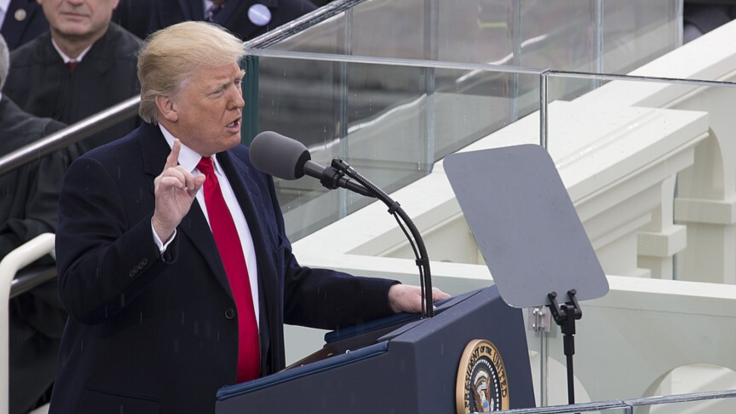
Donald Trump's Alaska rally drew fresh scrutiny after he told supporters that Canada had 'ripped us off for years' and then asked the crowd, 'Does anybody like Canada?', prompting audible boos and jeers.
Speaking in a US state that borders Canada, the former president appeared to confuse the context of his remarks about the neighbouring country and used the same event to announce pardons for two businessmen who had pleaded guilty to environmental offences.
The exact dates of the rally and the pardons have not been established, so neither is included here.
Trump's Canada Comments Raise Eyebrows in Alaska
Trump began discussing his Cabinet, saying its members were unusually willing to travel because Canada was important. The reference appeared out of place because he was speaking in Alaska, a US state that shares a border with Canada.
'Normally they don't travel. I think this would be one of the few times, they're so busy doing things, but they felt Canada is so important,' Trump said.
He then referred to work affecting the state, although the quoted passage did not explicitly name Alaska.
'One of I would say the biggest things they've done really pertained to your state, and not letting..' he continued.
Trump subsequently returned to Canada and asked the audience what it thought of the country.
'And by the way, Canada, I don't know if anybody, does anybody like Canada?' he asked.
The crowd booed and jeered, according to the supplied account. Trump responded by accusing Canada of benefiting at the United States' expense.
'They have ripped us off for years but no longer, you notice? No longer,' he said.
He then referred to Alaska and an alleged history of disputes involving Canada.
'They have been fighting for Alaska for a long time and now they're seeing the fruits pay off,' Trump added.
The report does not provide enough context to establish precisely what he meant by that remark.
Trump Uses Alaska Rally To Announce Arm Rippin Toys Pardons
Trump also announced pardons for Zachary Czubak and Patrick Fleming, identified in the supplied details as co-owners of Arm Rippin Toys. The men had pleaded guilty to tampering with federally mandated monitoring devices on private and commercial diesel vehicles and removing required air pollution control equipment from at least 37 vehicles between July 2019 and September 2020.
The supplied account says the conduct violated the Clean Air Act. It links the case to the Biden administration but does not establish when the investigation or prosecution began. The material provided does not include further details about sentencing or a response from prosecutors.
Before signing the pardon documents, Trump criticised what he described as a proposed lengthy prison sentence. He framed the case as one involving engine repairs.
'They wanted to put them in jail for 10 years because they fixed an engine, how sick,' he said.
That was Trump's characterisation of the case, rather than a complete account of the conduct to which the men had pleaded guilty. The available information does not establish that the offences amounted merely to repairing engines, and the claim about a 10-year sentence remains Trump's statement.
Trump called on aide Natalie Harp to bring him the pardon documents, then signed them during the event.
Crude 'Newborn Baby' Joke Follows Pardon Signing
After signing the documents, Trump discussed the expression used to describe the effect of a pardon. He said he did not understand why the phrase was commonly used.
'I don't know if you've ever heard, when you give somebody a pardon, they say that means, and I don't know how this works and why it's an expression, but it's well used,' he said.
He followed with a crude comparison involving a newborn baby. The supplied report quotes him as saying: 'That means you're as clean as a newborn baby's a--. Now, I never understood that. Why is that so clean?'
The audience laughed, according to the account. Trump's explanation shifted attention from the formal act of issuing pardons to his remarks about the expression and its meaning.
© Copyright IBTimes 2026. All rights reserved.