

Critics Roast Donald Trump After He Claims That Cutting Off Trade Partners Creates a 'Big Money Machine'
Critics slam Donald Trump after he claims cutting off trade partners would create a 'big money machine' as US-Canada tariffs escalate.
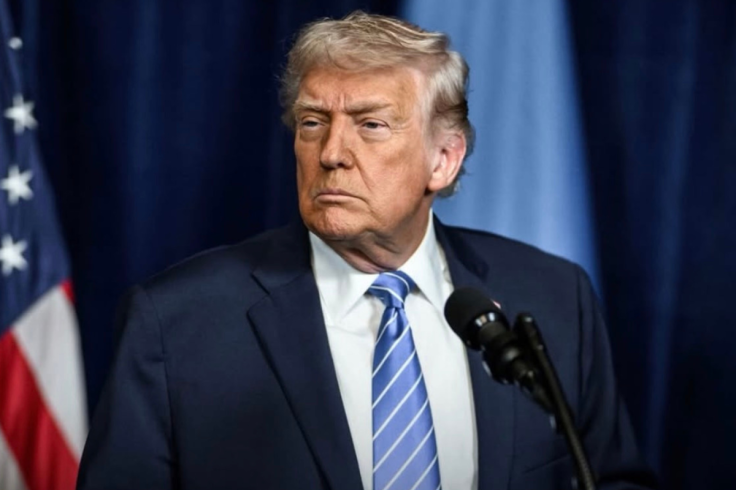
Critics have mocked President Donald Trump after he claimed that cutting off trade with key partners would turn the United States into a 'big money machine,' arguing the logic ignores how tariffs and consumer demand actually work.
The remarks, made in the Oval Office on Monday, came as the US and Canada trade war intensified with fresh 50% tariffs and retaliatory duties set to hit billions of dollars in goods.
To recall, the latest escalation began after trade talks between Washington and Ottawa collapsed in late August, prompting Trump to impose 50% tariffs on roughly $20 billion (£10.64 billion) of Canadian imports under a little-used Depression-era law.
Canada's Prime Minister Mark Carney swiftly promised 'dollar for dollar' retaliation targeting US steel, dairy, electronics and appliances from 8 September, a move expected to squeeze American exporters heading north.
Donald Trump's 'Big Money Machine' Claim Sparks Online Backlash
Trump opened his Monday comments by complaining that the Federal Reserve had not cut interest rates, insisting the US should have 'the lowest interest rates in the world.'
He then pivoted to trade, suggesting that if the US stopped buying from countries that earn billions from American trade, Washington would effectively 'save' that money and become a 'major money machine.'
'You take certain countries, I don't want to mention any, but countries that you consider great, and they're paying a half a point,' Trump said, according to transcripts of the Oval Office aside.
'But they make $40 billion a year with the United States. If they don't make the 40 billion ... so we cut off trade with that country, we just made $40 billion, and you do a few countries like that and we become a big money machine.'
Economists and commentators were quick to point out the flaw: Americans still need to buy many of those goods, and tariffs or trade bans typically raise prices rather than conjure savings.
Imbecilic. https://t.co/4cJLmTk03V
— Dean Blundell🇨🇦 (@ItsDeanBlundell) August 31, 2026
The Tax Foundation estimates current US tariffs apply to 54% of goods imports in 2026, pushing the effective tariff rate to 7.2% for the calendar year, a sharp rise from 1.5% in 2022.
Online reaction was withering. 'This guy's brain is gone,' one user wrote on X, while others called the reasoning 'incredibly stupid' and 'imbecilic.' One quipped: 'I stopped trading with my grocery store and saved $600 a month but also I starved to death.' Another noted: 'This is the type of thinking that bankrupted casinos.'
I stopped trading with my grocery store and saved $600 a month but also I starved to death. https://t.co/MboQ967d0O
— David Moscrop (@David_Moscrop) August 31, 2026
Donald Trump Trade War With Canada Deepens Economic Risks
Trump did not name Canada during the remarks, but the context was hard to miss given his escalating trade war with Ottawa. The president has accused Canada of 'ripping us off for decades' and defended the new levies as payback for alleged discrimination against US autos, alcohol and dairy.
This is the type of thinking that bankrupted casinos — just in case there are still people out there enjoying the higher prices, decreased safety, and long-term financial insecurity of Trump running America like his businesses. https://t.co/VGd2QwoSuG
— Melanie D'Arrigo (@DarrigoMelanie) August 31, 2026
The numbers are stark. Bilateral trade in goods and services totalled about $880 billion (£650 billion) last year, with Canada the second-largest US trading partner. The fresh US tariffs hit about $20 billion (£14.78 billion) in Canadian goods, roughly 5% of Canada's exports to the US, while Ottawa's retaliation targets a similar value of American goods.
US Treasury Secretary Scott Bessent told CNBC the United States is not in a 'trade war' with Canada, even as both sides prepare matching duties.
For now, the 'big money machine' line looks like political rhetoric rather than economic policy. IBTimes UK cannot independently verify these claims, so take everything lightly.
© Copyright IBTimes 2026. All rights reserved.