Trump Axes MLK Day And Juneteenth From Free Park List — But Magically Adds His Own Birthday
Interior's latest announcement redesigns park passes and free-day access, privileging 'resident' patriotic dates and higher fees for non-residents

The Department of the Interior has quietly reworked the National Park Service's 2026 fee-free calendar, removing Martin Luther King Jr. Day and Juneteenth and adding President Donald J. Trump's birthday; a change critics say substitutes civic commemoration with partisan pageantry.
The announcement is part of a broader 'modernisation' of park access that also imposes steeper fees for non-U.S. residents and a redesigned, resident-focused pass system. Officials say the moves prioritise American taxpayers; opponents call them exclusionary and racially insensitive.
New Rules, New Dates
The Department of the Interior's press release sets out the headline measures: from Jan. 1 2026, the annual 'America the Beautiful' pass will be available in a digital format and priced at £60 ($80) for U.S. residents, while a new non-resident annual pass will cost £187 ($250). Non-US residents visiting 11 of the most-visited parks will face an additional per-person fee of approximately £75 ($100) on top of normal entrance charges.
The department also published a new list of 'resident-only patriotic fee-free days' for 2026. The eight dates include Presidents Day (Feb. 16, 2026), Memorial Day (May 25, 2026), Flag Day/President Trump's birthday (June 14, 2026), Independence Day weekend (July 3-5, 2026), the National Park Service's 110th birthday (Aug. 25, 2026), Constitution Day (Sept. 17, 2026), Theodore Roosevelt's birthday (Oct. 27, 2026) and Veterans Day (Nov. 11, 2026). Notably absent from the list are Martin Luther King Jr. Day and Juneteenth, both of which had been fee-free recently.
The National Park Service's own guidance makes plain that, beginning in 2026, free entrance on those listed dates applies only to U.S. citizens and permanent residents; non-residents will be required to pay the regular entrance fee and any applicable non-resident surcharges. This effectively narrows the scope of 'fee-free' access compared with previous years.
'Exclusionary' and 'Xenophobic', Say Advocates
Environmental justice and civil rights groups responded swiftly. GreenLatinos said the announcement 'eviscerates the true meaning of public lands' and condemned the removal of MLK Day and Juneteenth from the free-entry calendar as an affront to equality and inclusion, arguing that the changes disproportionately harm immigrants and low-income families who rely on fee-free days to access national parks.
Their press release highlights both the new non-resident charges and the altered free-day list as part of a broader policy that 'targets immigrants' and narrows access.
Soul Trak Outdoors and outdoor-access advocates accentuated the racial dynamics. Tyrhee Moore, executive director of Soul Trak Outdoors, told reporters removing MLK Day and Juneteenth 'sends a troubling message about who our national parks are for,' adding that such administrative changes have an outsized impact on communities of colour that already face barriers to outdoor recreation.
The National Parks Conservation Association expressed similar bewilderment, asking publicly, 'Why is MLK Day not worthy of a fee-free day anymore?'

Interior Secretary Doug Burgum framed the measures differently. The department's press release quotes him saying the changes 'ensure that U.S. taxpayers, who already support the National Park System, continue to enjoy affordable access, while international visitors contribute their fair share to maintaining and improving our parks for future generations'.
The release presents the redesigned passes and patriotic free days as a modernisation intended to be 'more affordable and more efficient for the American people'.
Policy Context and Practical Consequences
The 2026 changes sit within a wider policy agenda from the current administration emphasizing 'America-first' pricing and a rollback of certain diversity, equity, and inclusion (DEI) initiatives that have animated cultural debates across federal agencies this year.
Observers note that MLK Day historically doubled as both a federal holiday and a National Day of Service; the Park Service has used the date for volunteer and education events that link sites to civil-rights history. Juneteenth, added as a federal holiday in 2021 and included on recent fee-free calendars, was a newer access point to celebrate Black history at public lands. Removing those entry waivers, critics argue, reduces formal recognition and practical access in one move.
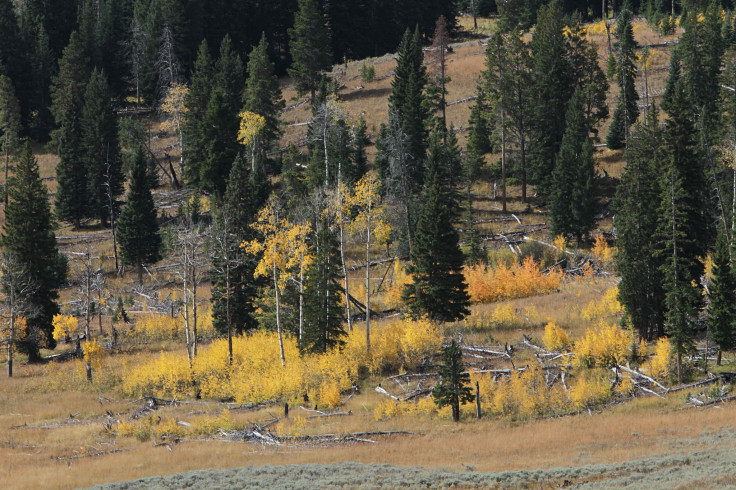
Practically, the impact will be unequal. Parks that impose vehicle or per-person fees, and several of the most visited sites, are in the new non-resident surcharge list (including Yosemite, Grand Canyon, and Yellowstone), and could see a reduction in international tourism on busy days and a redistribution of visitation on the remaining fee-free dates.
Local economies that depend on gateway tourism have already warned that higher non-resident fees risk deterring visitors at a time when many communities are still recovering from pandemic disruptions.
The decision replaces two days that mark struggle and emancipation with a presidential birthday, and in doing so has turned public access to national parks into a flashpoint for broader battles over memory, inclusion, and who gets to call America's open spaces 'for the people'.
© Copyright IBTimes 2026. All rights reserved.
- MOST POPULAR IN World