

Trump Evaluates a 'Robot' Body Double as the Extensive Campaign Trail Starts To Take a Physical Toll
Three states, little sleep and one imaginary robot replacement as Trump pushes through the midterm campaign
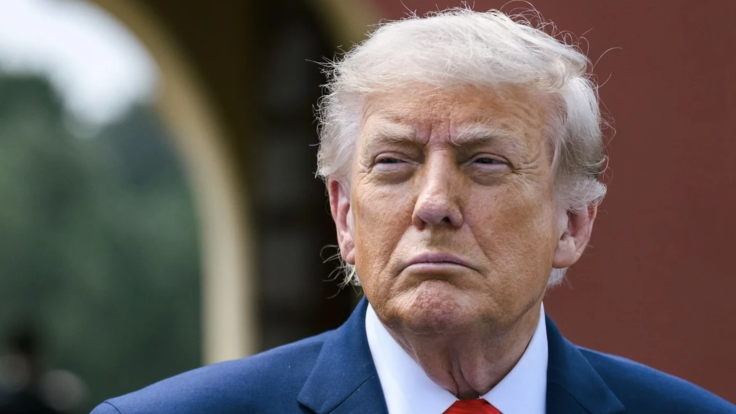
President Donald Trump joked about using a robot body double during a White House Rose Garden lunch honouring first responders on 15 October 2026. He had just completed campaign appearances in Alaska, Arizona and Montana and said he was concerned his voice might not withstand more rallies.
Trump campaigned in Wasilla, Alaska, on 13 October before travelling to Bullhead City, Arizona, and Kalispell, Montana, the following day. The appearances were intended to bolster Republican candidates ahead of the US midterm elections on 3 November.
By the time he addressed the Rose Garden gathering, Trump said he had returned to Washington at around 4:45 a.m. He also acknowledged getting little sleep. His comments described a crowded travel schedule, not a diagnosed medical problem.
Why Donald Trump Joked About Sending a Robot on the Campaign Trail
Trump began by discussing the rallies he had attended and the further stops he expected to make. He praised the crowds and suggested his appearances could help Republican candidates win their races.
'I just hope my voice holds out,' he said, according to a transcript of the White House event. He expressed confidence that Republicans would be in good shape if he could continue delivering speeches.
He then floated an unconventional solution. Manufacturers, he suggested, could produce a robot that looked so much like him that audiences would struggle to recognise the difference.
'I could sit home and watch them on television,' Trump said, imagining a mechanical substitute travelling to rallies while he remained at home.
The suggestion was unmistakably playful. 'But I love doing it, actually,' he added, before praising the energy of supporters attending his events. There was no indication that any robotic double had been commissioned or that such an arrangement was under consideration.
The more revealing detail was Trump's description of his early arrival and limited sleep. He said he had not slept much after returning to Washington and remarked that he was not a big sleeper.
Those statements do not establish that the president was ill or unable to campaign. Nor do they show that a robot would be anything more than a punchline. His explicit concern was about keeping his voice through another series of speeches.
The lunch was organised to recognise first responders, including police officers, firefighters and emergency medical personnel. Alongside his campaign anecdotes, Trump thanked people working in emergency services. The remarks about his robot lookalike came near the start of that appearance.
Donald Trump's Three-State Tour Included Confrontational Remarks in Arizona
The recent campaign stops had different electoral purposes. In Alaska, Trump supported Republican Senator Dan Sullivan. In Arizona, he appeared for US Representative Andy Biggs, a Republican running for governor. His Montana rally included support for Republican House candidate Aaron Flint.
All three rallies formed part of the Republican push ahead of November's elections, when control of Congress will be at stake. Trump is not on the ballot, but his campaigning is intended to persuade his supporters to turn out for other candidates.

His Bullhead City speech on 14 October also featured comments far removed from the Rose Garden joke. Discussing what he described as leaked information about the timing of a military operation, Trump argued that those responsible deserved severe punishment.
Trump said that, in his opinion, 'leakers should be shot.' He went on to refer specifically to people disclosing when the United States planned to attack another country.
The statement expressed his view during a political rally. It was not presented as an executive order or a formal change to government policy. Trump also did not identify a particular person to be punished.
He separately criticised journalists, claiming some invented anonymous sources and published misleading accounts about him. 'I think they make up a lot of the sources,' Trump said during the Arizona rally. He offered an example involving a report about his mood, but did not identify the article or present evidence that its source was fabricated.
© Copyright IBTimes 2026. All rights reserved.