

Donald Trump Actually Declares 'I Love the Inflation' While Everyday Americans Suffer From High Costs
President Trump addresses inflation concerns amidst geopolitical tensions and economic data fluctuations
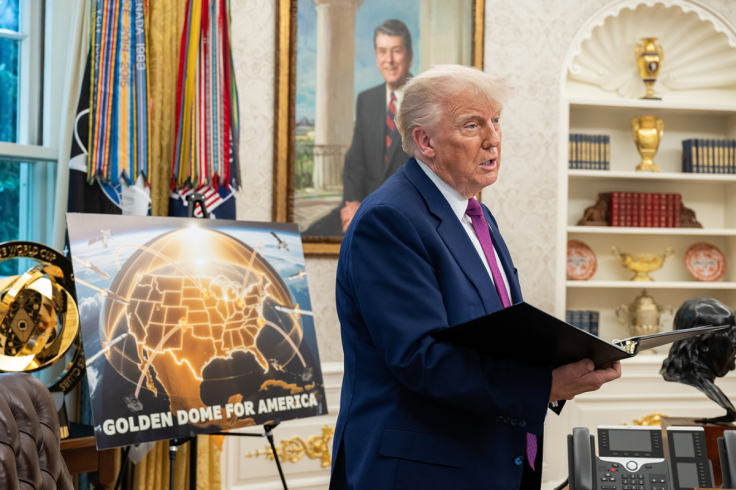
President Donald Trump sparked controversy on 10 June 2026 after telling reporters in the Oval Office, 'I love the inflation,' even as official government data showed consumer prices rising well above target levels.
According to the US Bureau of Labor Statistics (BLS), annual Consumer Price Index (CPI) inflation reached 4.2% in May 2026, up from 3.8% in April and marking its highest rate since April 2023.
While CPI remains elevated, the Federal Reserve specifically targets a 2% annual rate measured by the Personal Consumption Expenditures (PCE) price index.
Context Behind the Inflation Spike
Trump's comments came amid escalating geopolitical tensions in the Middle East. In February 2026, annual CPI inflation stood at 2.4% before accelerating sharply in subsequent months. Conflict and shipping disruptions around the Strait of Hormuz contributed to a surge in energy prices, adding to broader inflationary pressures across the economy.
The June CPI report, published by the BLS on 14 July, showed the all-items CPI fell 0.4% on a seasonally adjusted monthly basis, the largest single-month decline since April 2020, bringing annual inflation down to 3.5%. Three days after the report was released, Trump hailed the figures on social media as 'such great news,' pointing to the historic monthly drop.
Latest Economic Data Presents a Mixed Picture
More recent data reflects continued price pressure. The July CPI report, released on 12 August, showed annual CPI at 3.4%, down slightly from June's 3.5% but reflecting a 0.1% monthly increase on a seasonally adjusted basis.
Meanwhile, the Bureau of Economic Analysis (BEA) reported that the PCE price index, the Fed's preferred inflation gauge, rose 3.7% over the 12 months to July. That rate was unchanged from June and slightly above economists' expectations of 3.6%.
While current inflation remains well below the peak 9.1% annual CPI rate recorded in June 2022, overall price levels remain substantially elevated. Cumulative inflation data from the BLS indicates that the overall CPI has climbed by approximately 29.4% since January 2020.
Key household necessities continue to see strong year-over-year increases. In July, overall energy prices were up 14.7% compared to the prior year, driven by a 24.6% spike in gasoline prices, while food prices rose 3.0%.
Trump's Explanation and Projections
Trump later addressed his initial remarks in an interview with the New York Post, asserting that his statement had been taken out of context. He explained that he meant he was pleased inflation was not significantly higher given the geopolitical backdrop.
'I love the inflation numbers because of what I'm talking about,' Trump told reports. 'The numbers are going to be phenomenal because what's showing is that despite the fact that we're in a war, the numbers are much lower than anticipated, and when we're out of that war, the numbers will be at lower numbers than they were even before it started.'
Speaking from the Oval Office, the president predicted that inflation is 'going to come down like a rock' once the US-Iran conflict concludes. He also claimed that the US had been secretly extracting 'millions of barrels of oil' without Iran's knowledge to keep energy prices from spiking further.
What Persistent Inflation Means for Household Savings
Persistent inflation steadily erodes purchasing power over time. For example, if inflation were to remain at a constant annual rate of 3.4%, prices would roughly double every 21 years.
In that hypothetical scenario, a household requiring $50,000 (£36,900) annually today would eventually need about $100,000 (£73,800) to purchase a comparable basket of goods and services two decades later.
To help mitigate the impact of rising prices, some investors look to asset classes such as equities, inflation-indexed securities, real estate, or gold as part of a diversified portfolio strategy. However, financial advisors emphasize that no single asset class offers a guaranteed hedge against inflation, and appropriate investment allocations depend on individual circumstances, risk tolerance, and time horizons.
The future trajectory of inflation remains uncertain, depending on global energy markets, central bank policy, and the resolution of regional conflicts.
© Copyright IBTimes 2026. All rights reserved.