'I Shouldn't Be at 42% Approval': Trump Claims US Has 'Greatest Economy' in World History
President Trump argues his economic achievements are underappreciated as polls show voter dissatisfaction
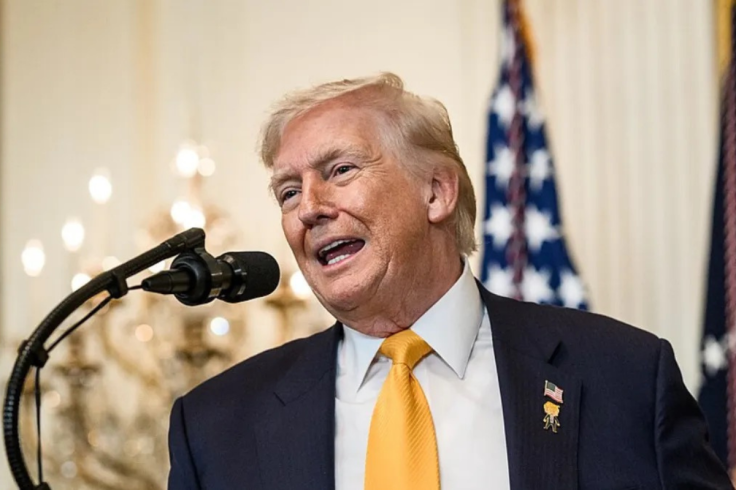
President Donald Trump has dismissed poor approval ratings on the economy, insisting the United States is enjoying 'the greatest economy' in history despite multiple national polls showing that many Americans remain unconvinced by his economic record.
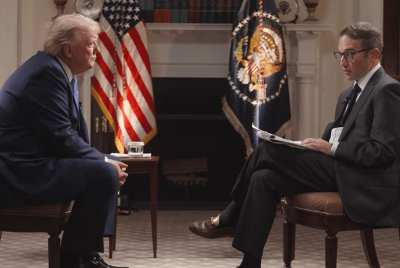
The president made the remarks during an interview with Fox News, where he argued that media coverage has failed to recognise what he described as unprecedented economic achievements under his administration. His comments come as concerns over inflation, fuel prices and the cost of living continue to dominate voters' priorities heading into the midterm election season.
While Trump maintains the economy is stronger than ever, recent surveys suggest a growing disconnect between the administration's message and how many Americans view their own financial circumstances.
Trump Rejects Weak Economic Approval Ratings
During the interview, Trump questioned why his economic approval ratings remain relatively low.
'People don't know,' he said before criticising media coverage of his presidency. Referring to polling, Trump continued, 'Then [the press say] 'on the economy Trump is at 42 per cent.' I shouldn't be. We have the greatest economy, maybe in the history of the world for any country.'
The president argued that news organisations have failed to highlight positive economic developments, preventing voters from appreciating what he believes his administration has accomplished.
His comments reflect a recurring theme throughout his political career that strong economic indicators have been overshadowed by negative media coverage and partisan criticism.
Polls Paint a Different Picture
Recent polling suggests many voters do not share Trump's assessment. An Associated Press-NORC survey released on Sunday found that only 32% of respondents approved of Trump's handling of the economy.
A Fox News poll conducted in June produced a similar result, placing his economic approval rating at 31%. Broader sentiment appears equally challenging.
According to CNBC, approximately 61% of Americans held a pessimistic view of the economy in mid-July, while a Reuters/Ipsos poll found Democrats had overtaken Republicans as the party voters trust more on economic issues, the first time that has happened in nearly ten years.
Trump's overall job approval also remains subdued across several national surveys. Recent polling from CNN, Ipsos and YouGov placed his overall approval rating at approximately 35%, while Quinnipiac University measured it at 32%. Fox News' June survey gave the president a somewhat higher approval rating of 39%, though still below majority support.
Together, the polls suggest that economic confidence remains one of the administration's greatest political challenges.
President Points to Trade and Investment
Trump rejected suggestions that the economy is struggling, arguing instead that key indicators demonstrate significant progress.
"Our trade deficit is way down," he told Fox News correspondent Trace Gallagher, adding that Republicans need to communicate more effectively about what he described as the administration's successes.
The president claimed the reduction in the trade deficit was unlike anything seen before during the roughly 19 months since returning to office. He also cited investment figures as evidence that businesses remain confident in the United States. According to Trump, companies have committed approximately $19.2 trillion in investment.
'If I wouldn't have won, you'd have had $10 trillion being taken out of the United States,' he claimed, arguing that his election prevented businesses from shifting investment overseas.
Trump further suggested that federal spending under an alternative administration would have dramatically increased welfare programmes and placed the country on an unsustainable financial path.
Those claims reflect the administration's broader economic messaging, which has consistently emphasised domestic investment, manufacturing growth and trade policy as evidence of economic strength.
Fuel Prices Continue to Frustrate Consumers
Despite those arguments, rising fuel prices remain a major concern for many Americans. Asked about higher petrol costs, Trump blamed oil producers for earning excessive profits while also pointing to international events, including the conflict involving Iran and disruptions around the Strait of Hormuz, as major contributors to higher energy prices.
He expressed optimism that prices would eventually fall. 'I hope we get them down in the threes and twos per gallon,' Trump said.
For many households, however, higher petrol prices have compounded existing concerns about grocery bills, housing costs and everyday expenses. While economic indicators such as employment and investment may remain relatively strong, consumer confidence often reflects the cost of daily necessities rather than broader macroeconomic statistics. That difference has become one of the defining features of the debate surrounding Trump's economic record.
Trump Says the Economy Deserves an 'A+'
The president concluded the interview by arguing that his administration has been consistently underestimated. Trump pointed to historically high employment levels, claiming that more Americans are working than at any previous point in U.S. history. He also maintained that food prices and grocery costs are beginning to ease.
'We've done a great job. We should be given an 'A+' on the economy,' Trump said. 'I think that is coming. People are starting to talk about it.'
Whether voters eventually embrace that assessment remains uncertain. The administration continues to argue that improving trade figures, business investment and employment demonstrate a fundamentally strong economy. Yet polling indicates many Americans remain more focused on persistent concerns over inflation, household costs and affordability.
That gap between official economic indicators and public perception may prove one of the defining political tests facing the White House in the months ahead.
© Copyright IBTimes 2026. All rights reserved.
- Recommended For You