

Trump's View on Jimmy Carter: POTUS Praises Carter Despite Claims Iran and Inflation Ruined Legacy
A president who once mocked Jimmy Carter now studies him, haunted by the possibility of sharing his fate.

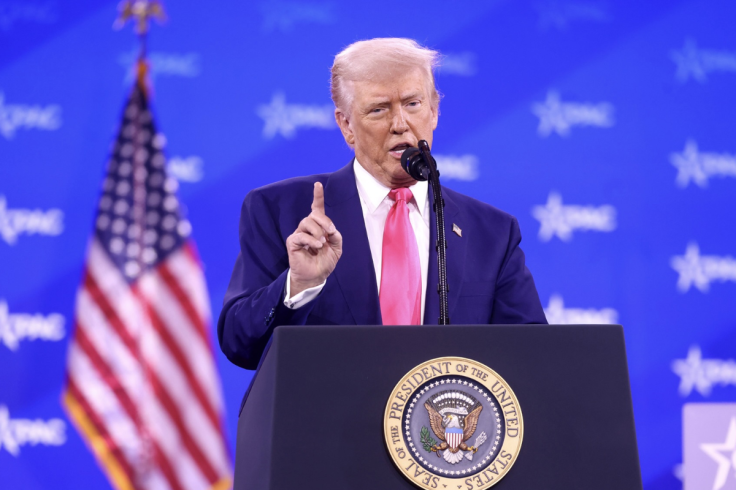
Donald Trump publicly shifted his tone on Jimmy Carter in Washington in July 2026, invoking the former president as he wrestled with Iran and rising inflation that have drawn unflattering Carter-era comparisons to his own presidency.
Jimmy Carter was long one of Trump's favourite political punchbags, a byword in his rallies and interviews for what he cast as Democratic weakness abroad and economic malaise at home. As a candidate and as president, Trump repeatedly cited Carter as a cautionary tale, arguing that voters should re-elect him to avoid a repeat of the late 1970s.
Now, facing a war with Iran and the highest consumer price rises in three years, Trump appears increasingly preoccupied with the very legacy he once mocked.
The shift has been subtle rather than sentimental. At a recent exchange with reporters, Trump was asked why he had not ordered US Special Forces into Iran to remove its enriched uranium. He replied: 'I didn't feel like being Jimmy Carter.'
The remark was a nod to the failed 1980 attempt to rescue American hostages in Tehran, a mission that ended with eight US servicemen dead in the Iranian desert and became fused in the public mind with Carter's political downfall.
Trump has been blunt about his reading of that history. In March, he said the botched raid 'cost them the election' against Ronald Reagan in 1980, framing it as a textbook example of how foreign policy failure can wreck a presidency overnight. The difference now is that he no longer talks about Carter solely as a foil, but as a cautionary mirror.
Trump's View On Jimmy Carter As Iran Crisis Deepens
The new tone on Jimmy Carter has emerged as Trump struggles with his own Iran problem. A US Iran ceasefire that had helped push down petrol prices between May and June has fallen apart, and the war's resolution has proved elusive.
According to the administration's account, Iranian attacks on commercial ships in the Strait of Hormuz have triggered renewed US strikes, including earlier attacks on Kharg Island, the strategic hub for Iranian oil exports that Carter once weighed seizing before deciding the risk to American hostages was too great.
That comparison is not accidental. Carter told Americans in his 1980 State of the Union address that the situation in the Strait of Hormuz 'demands the participation of all those who rely on oil from the Middle East and who are concerned with global peace and stability.' More than four decades on, Trump is watching the same narrow waterway threaten global shipping and his domestic political fortunes.

The economic backdrop is similarly uneasy, if not yet catastrophic. Inflation plagued both presidencies, but Carter arguably had it far worse. He faced a peak inflation rate of 14.7 per cent in April 1980, a number seared into the memory of economists and older voters. By comparison, consumer prices under Trump rose 4.2 per cent in May from a year earlier, a three year high that rattled markets and households but remained well below Carter-era levels.
Even that modest relief proved fragile. The subsequent month-on-month dip in prices, helped by cheaper fuel under the short-lived US Iran ceasefire, is now being reversed as oil markets respond to renewed fighting. Every time petrol creeps back up, the 'Carter' label gets another airing, on cable panels if not yet in Trump's own speeches.
The White House is keen to shut that comparison down. Asked about Trump's changing tone on Carter and the parallels in their challenges, spokesperson Olivia Wales insisted the president would not repeat history. 'Trump will never allow Iran to have a nuclear weapon,' she said in a statement, adding that he 'remains laser-focused on implementing his proven economic agenda to lower costs.'
She went further, casting Trump as a category of one: 'The president is a one-of-a-kind leader who will always unapologetically advance America's interests. The only legacy he is concerned with is making America greater than ever before.'
Legacy Politics And A President Studying Carter
Trump's view on Jimmy Carter also sits within a broader, slightly curious effort to root his decisions in presidential history. In recent weeks he has begun namechecking a roster of predecessors, praising William McKinley's enthusiasm for tariffs and describing Theodore Roosevelt as a 'great he-man.' He has said one reason he agreed to the now imperilled June ceasefire with Iran was to avoid the 'economic catastrophe' that befell Herbert Hoover.
'I'm a student of a lot of history,' Trump told reporters this week. On one level, it is a line designed to present his instincts as informed rather than impulsive. On another, it betrays a president very aware that the Iran conflict and rising prices will define how historians write his chapter.
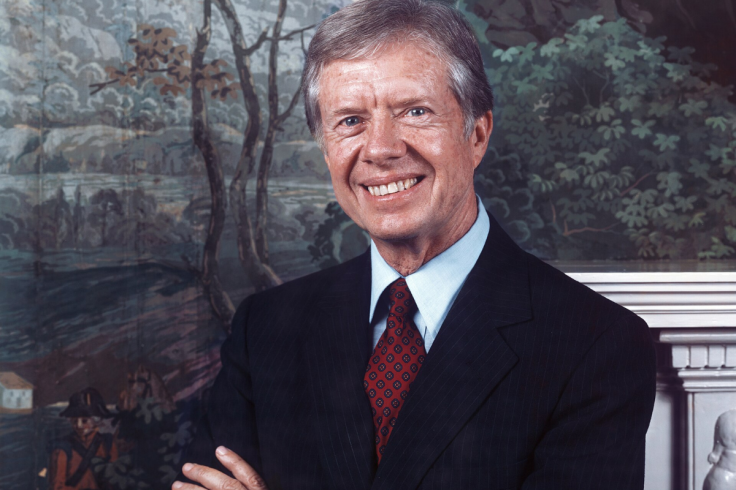
The Carter comparison, then, is less about admiration and more about fear. Trump does not want to be the president remembered for losing control of inflation and floundering in a messy Middle Eastern crisis, only to be turfed out by voters battered at the pump. The mere fact he now invokes Carter as a cautionary example, rather than a punchline, suggests that risk feels very real in the West Wing.
None of this means Trump has gone soft on the man he once battered as the avatar of Democratic weakness. His crack about not wanting 'to be Jimmy Carter' was as much a dig as an insight into his thinking.
Yet there is a grudging recognition that the 39th president was dealing with a brutal set of constraints, from hostage diplomacy to oil shocks, that no amount of swagger could magic away. Trump, who built his political brand on the promise that he alone could fix such stuff, is now discovering how stubborn those forces are.
It is one thing to invoke Carter on the campaign trail as a ghost of economic misery past. It is another to feel the polling numbers tighten as shipping lanes choke, fuel costs climb and voters begin to mutter that they have seen this movie before, and they did not like the ending.
© Copyright IBTimes 2026. All rights reserved.