

Trump Drops Pacific Drills to Preserve 'Vibe' With Kim Jong-un as North Korea Ramps Up War Tactics
President Trump reduces joint military exercises with South Korea, citing cost and diplomatic relations with North Korea
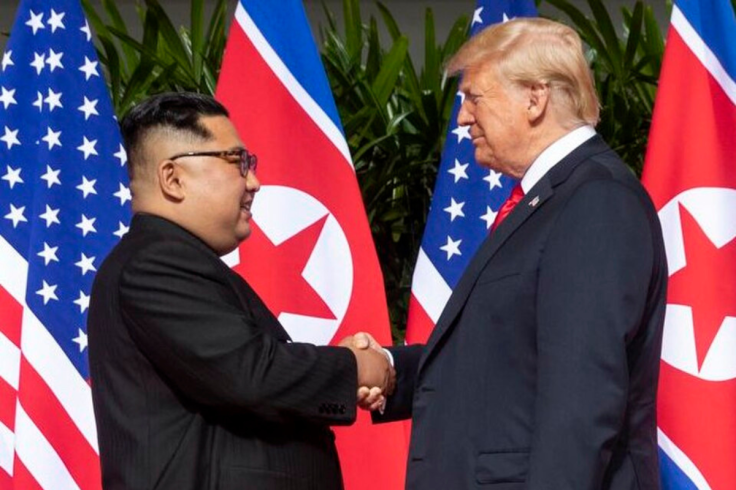
President Donald Trump has ordered the Pentagon to sharply cut back the largest annual joint military exercises between the United States and South Korea, saying the drills sent a hostile signal to North Korea and citing his own rapport with its leader, Kim Jong-un.
The decision came hours before the exercises were due to begin, and lands as military officials in both Seoul and Washington warn that Kim's forces are absorbing new battlefield lessons from the war in Ukraine.
In a post on Truth Social on Sunday, Trump said he was 'not happy' that the United States had long ago agreed to the exercises, which he called costly and provocative toward a country he described as 'unthreatening and respectful' during his presidency.
He said it was too late to cancel this year's drills outright and had instead directed Defence Secretary Pete Hegseth to 'substantially reduce' them. The move revives a pattern from his first term, when he repeatedly cast the exercises as an expensive provocation standing in the way of his personal diplomacy with Pyongyang.
What Trump Ordered and Why
The exercises, known as Ulchi Freedom Shield, are one of two major annual drills the allies conduct and were scheduled to run for about ten days from Monday.
They were expected to involve roughly 18,000 South Korean troops alongside US forces and personnel from 11 of the member states of the United Nations Command, the body that oversees the 1953 Korean War armistice.
Trump gave several reasons at once. 'Based on my very good relationship with Kim Jong Un, of North Korea, I am not happy with the fact that the United States has, long ago, agreed to participate in Joint Military Exercises with South Korea,' he wrote, adding that the drills were costly, with much of the bill paid by the United States, and sent a signal that was 'totally inappropriate and hostile'.
He also aired a separate grievance against Seoul, saying South Korea had declined to help with what he called the denuclearisation of Iran, a reference to the US war against that country.
The complaint tied the drawdown to Trump's wider foreign policy, linking a decades-old Pacific alliance to his current campaign in the Middle East.
The Warning About North Korea's Battlefield Lessons
The timing troubles military planners because of what North Korea has been doing while the alliance argues over drills.
Officials from both South Korea and the United States have warned that Kim's regime is learning new battlefield tactics from the Ukraine war, to which Pyongyang has sent both soldiers and missiles in support of Russia.
North Korea threatens 'overwhelming' response to US-South Korea joint military drills — KCNA
— Avinash K S🇮🇳 (@AvinashKS14) August 14, 2026
Pyongyang claims the exercise that begins August 17 is not merely 'defensive' but rather 'provocative', simulating modern warfare, including drone, electronic and cyber operations pic.twitter.com/JxGQYRtAiQ
This year's exercises had been designed with exactly that evolution in mind, incorporating training to counter drones, GPS disruption and cyberattacks, the kinds of capabilities that have defined the fighting in Ukraine. Scaling them back removes practice against the very threats the drills were rewritten to address.
North Korea has also kept up its own signalling. Days before Trump's announcement, it launched a ballistic missile toward the sea in what analysts read as a protest against the coming exercises, and over the weekend Kim reaffirmed his deepening partnership with President Vladimir Putin in a message to Moscow.
North Korea now supplies up to 40% of the ammo Russia is using in Ukraine, making Kim Jong Un an indispensable ally for Moscow.
— Furkan Gözükara (@FurkanGozukara) August 16, 2026
Years of isolation pushed Pyongyang and Moscow into a mutual defense pact, paving the way for 16,000 North Korean troops to join the fight. https://t.co/viiDD1tc56 pic.twitter.com/oYW1XLn1Ta
Kim had not commented on Trump's decision as of Monday.
A Return to First-Term Diplomacy
The announcement fits a template Trump set years ago. After his 2018 summit with Kim in Singapore, he startled allies by calling the joint drills 'expensive' and 'provocative' and agreeing to suspend some of them, and he met the North Korean leader three times during his first term without securing an agreement to give up nuclear weapons.
The days around this year's decision have carried echoes of that courtship. Over the weekend Trump posted an old photograph of himself standing beside Kim, writing that the two 'get along great' despite the unfriendly look on the image, a gesture widely read as a signal that he wants to arrange another summit.
For South Korea, the reduction raises harder questions about the reliability of a security guarantee that dates to a mutual defence treaty signed more than 70 years ago.
Analysts note that Trump's overtures come as North Korea profits from the Ukraine war and modernises its military, meaning the president is extending a hand to Pyongyang at a moment when its army is growing more capable rather than less.
© Copyright IBTimes 2026. All rights reserved.