Trump Explodes at Hegseth as America's Weapons Stockpile Hits Breaking Point
The conflicting accounts from the White House and Pentagon, and growing concerns over dwindling missile supplies have intensified scrutiny of America's military readiness.
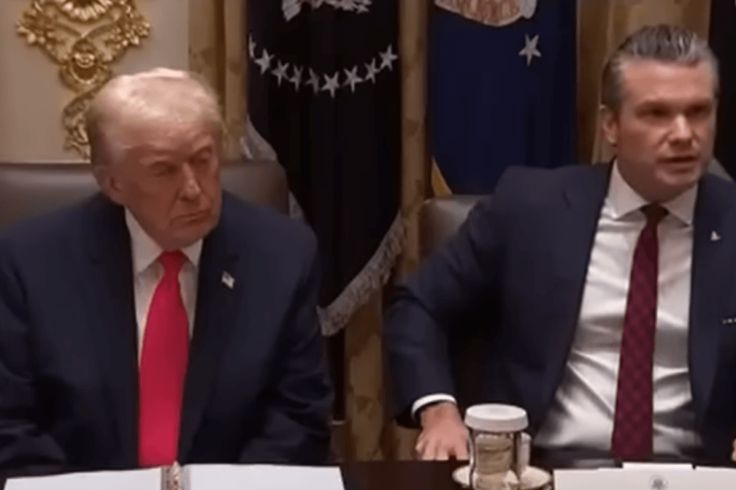
President Donald Trump's reported confrontation with Defence Secretary Pete Hegseth over the state of America's missile reserves has thrust US military readiness into the spotlight, exposing conflicting accounts from inside the administration as tensions with Iran continue to simmer.
According to The Washington Post, Trump challenged Hegseth during a cabinet meeting at Camp David after learning that key munitions inventories were far lower than he believed.
People familiar with the exchange revealed that the president was surprised by the situation, telling Hegseth he thought shortages of long-range and interceptor missiles 'had been fixed'.
The encounter took place on the sidelines of his Cabinet meeting at Camp David on Friday where Trump vented at Hegseth that he thought the munitions issue “had been fixed,” according to both persons familiar with the conversation, https://t.co/dRB2xgXil8 pic.twitter.com/0btF1CLWVJ
— Republicans against Trump (@RpsAgainstTrump) August 6, 2026
Camp David Confrontation Raises New Questions
That reported remark has become the focal point of the controversy.
If Trump genuinely believed the problem had already been resolved, it raises broader questions about how information was flowing between the White House and the Pentagon. Whether it reflected outdated briefings, miscommunication or differing assessments remains unclear, but the reported exchange suggested the president was caught off guard by the latest figures.
The report also alleged that when Trump pressed for answers, Hegseth shifted responsibility to Deputy Defence Secretary Stephen Feinberg. If accurate, the claim points to growing pressure inside the Pentagon as concerns mount over the country's military inventories.
Both the White House and the Pentagon swiftly rejected that version of events.
White House Press Secretary Karoline Leavitt described the report as '100% fake news', insisting the meeting 'literally never happened' and adding that Trump has 'the utmost confidence' in Hegseth.
Pentagon spokesman Sean Parnell also denied that the Defence Secretary had misled the president or blamed Feinberg, calling reports of depleted stockpiles and internal disagreements 'equally fictional'.
Missile Shortages Become the Real Story
While the reported Trump clashes with Pete Hegseth dominated headlines, the deeper issue centres on America's missile inventories.
CNN reported that the US military has used nearly 80 per cent of its THAAD missile interceptors and around half of its Patriot missile stockpile, leaving supplies of those critical defensive weapons 'dangerously low'.
THAAD systems are designed to intercept ballistic missiles at high altitude, while Patriot batteries protect troops, military bases and key infrastructure from incoming missile attacks.
Those figures matter because interceptor missiles cannot be replenished overnight. If tensions escalate or another large-scale conflict emerges, maintaining an adequate US weapons stockpile becomes essential for sustaining military operations while protecting allies and American forces overseas.
🇺🇸🇮🇷 Trump Erupts at Defense Secretary Pete Hegseth Over Critical Munitions Shortages Threatening U.S. Position in Iran War, per Washington Post pic.twitter.com/9FO5A7zoDa
— Megatron (@Megatron_ron) August 6, 2026
Trump Pushes Back Publicly
Despite reports of his private frustration, Trump publicly dismissed suggestions of a Trump weapons shortage.
Posting on Truth Social, the president insisted the United States possesses 'massive amounts of "munitions"', adding that defence manufacturers are rapidly expanding production and building what he described as the largest number of new factories in the country's history. He maintained that additional supplies are being produced and shipped as required.
The contrast between those public assurances and the reported Camp David discussion has fuelled debate over whether officials inside the administration share the same assessment of America's military readiness.
Iran Strategy Adds Pressure
The reported Trump and Pete Hegseth clash unfolded against the backdrop of continued tensions with Iran.
NBC News reported that Trump had also expressed frustration with advisers over the broader direction of the conflict. One source said there was 'no unity' within the administration, while another described the president as 'exasperated' by the lack of progress towards a long-term strategy. Officials also suggested military planners had been preparing for potential operations without clear policy guidance.
Even so, Pentagon officials publicly projected confidence. Parnell said Hegseth, CENTCOM Commander Admiral Cooper and Chairman Caine remained fully aligned and ready to carry out any presidential directive involving Iran.
Trump has continued signalling a preference for diplomacy while insisting military options remain available. He said Iran had sought negotiations rather than face what he described as the 'biggest attack since World War II', adding that the United States remains prepared to act if talks fail. Iran, however, denied holding recent negotiations, although officials indicated discussions involving Oman could help preserve the ceasefire and reopen talks over Tehran's nuclear programme.
Why the Dispute Matters
Whether the Camp David exchange unfolded exactly as reported remains contested. What is no longer in dispute is that questions surrounding America's missile reserves, military preparedness and Trump Iran military strategy have moved to the centre of Washington's national security debate.
The controversy is about more than one reported disagreement between the president and his Defence Secretary. It highlights the challenge of balancing public confidence with military readiness at a time when global tensions remain high.
As competing accounts continue to emerge, attention is likely to remain fixed on how the administration addresses both its strategic objectives abroad and concerns over the country's defensive capabilities at home.
© Copyright IBTimes 2026. All rights reserved.
- Recommended For You