'Space Is a Warfighting Domain': RAF Chief Warns Britain Faces a New Battlefield Above Earth
The No III Space Effects Squadron will be tasked with disrupting hostile activity in orbit as Britain warns that space has become a direct warfighting domain
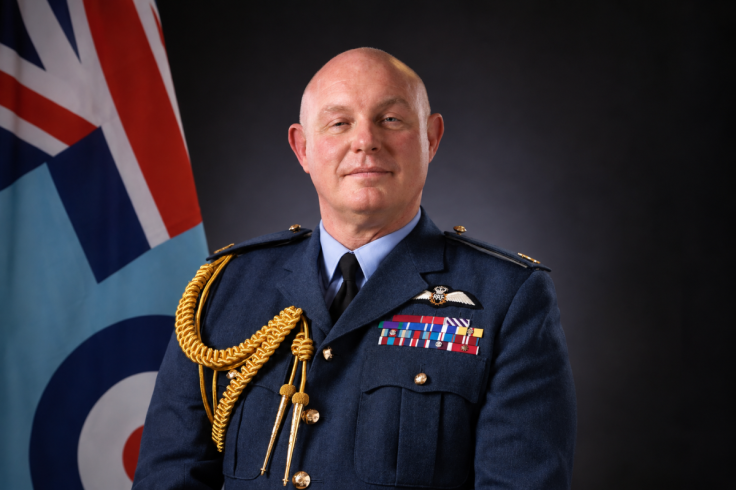
Britain is already using a ground-based system to jam or block foreign satellites and is creating a new military unit to counter threats in orbit, as the head of the Royal Air Force warned that 'space is now a warfighting domain'.
Air Chief Marshal Sir Harv Smyth told the UK Space Power Conference in London on Wednesday that Britain faces 'unprecedented threats' above Earth. 'Space no longer supports operations from the sidelines,' he said. 'It's a domain of direct competition, where our military advantage can be won or lost.'
New RAF Unit to Counter Threats in Orbit
The warning came as the Ministry of Defence confirmed the creation of No. III Space Effects Squadron, a unit designed to 'disrupt, degrade and deny' hostile activity in orbit.
It will draw personnel from across the armed forces and sit alongside two existing units, No. I Space Operations Squadron and No. II Space Warning Squadron, which monitor and warn about threats rather than act against them.
A defence source told the BBC that the RAF has for the past year run a classified ground-based electronic warfare system that can jam or block satellites, and has already used it 'to deter our adversaries'.
The system is understood to be capable of preventing hostile satellites from tracking Britain's nuclear-armed submarines and other sensitive military operations, including those involving special forces.
Russian Manoeuvres and GPS Disruption
Smyth pointed to what he called 'dangerous' and 'provocative' manoeuvres by five Russian military satellites that moved to within rapid reach of two Finnish commercial satellites in May. He also referred to a separate Russian satellite constellation that he said had caused disruptions to GPS signals across Europe, Greenland and Canada.
Defence Secretary Wes Streeting framed the threat in everyday terms, noting that mobile phones, banking apps, weather forecasting, energy supplies and deliveries all depend on satellites. Government analysis estimates that the loss of GNSS services would cost the UK economy around £1.4 billion a day.
'Our dependency on space is precisely why it is increasingly under threat from our adversaries,' Streeting said, adding that 'the challenges in space increasingly mirror the geopolitics on Earth.'
Last year, the then head of UK Space Command said Russia was attempting to jam British military satellites 'every week'. Britain has about half a dozen dedicated military satellites and relies heavily on the US Space Force's larger network.
Growing Global Space Arms Competition
The announcement follows the United States' confirmation last week that it had deployed an unspecified 'weapon' in space, amid growing concerns about military capabilities in orbit. The US has accused Russia and China of developing capabilities including jammers, blinding lasers and orbital projectiles.
China's foreign ministry accused Washington of 'preparing for war in outer space'and warned against turning space into 'a battlefield' or an arms race.
The UK has formally ruled out destructive anti-satellite missile tests and says it is working through the UN Committee on the Peaceful Uses of Outer Space to promote 'responsible space behaviours'.
Ministers have backed the policy with funding, with the government's £7.8 billion space strategy including £880 million for space control and intelligence, surveillance and reconnaissance capabilities.
A further £2.8 billion will support connectivity, including Connectivity in Low Earth Orbit and SKYNET defence communications programmes. SaxaVord Spaceport in Shetland has also been promised £30 million to accelerate its operational readiness for regular orbital launch activity from the UK.
Smyth said 'no one wants a war in space' and that the UK would 'never escalate military activity in space', adding that Britain was 'positioning to deter this'.
© Copyright IBTimes 2026. All rights reserved.
- Recommended For You