

Trump's Oil Reserve Releases Push US Stockpile to Its Lowest Point in Over Four Decades
Emergency oil drawdowns continue as geopolitical tensions impact global supply chains
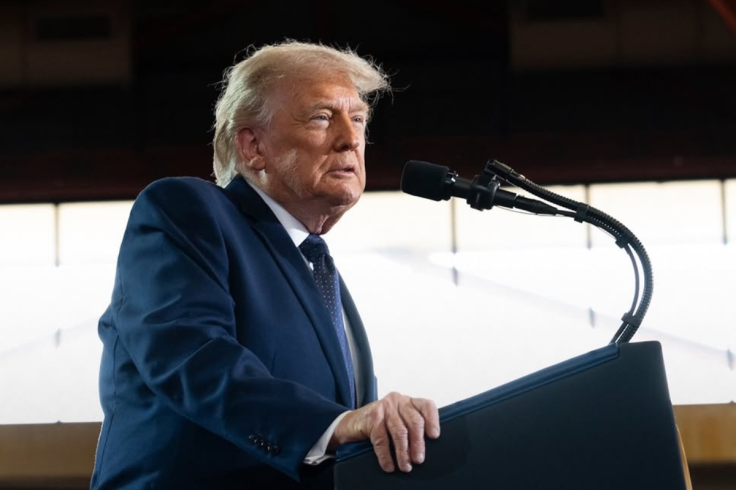
The United States Strategic Petroleum Reserve has fallen to 293.4 million barrels, its lowest level since December 1982, after a 5.3 million‑barrel drop last week as releases authorised by President Donald Trump continued to run down emergency crude stocks.
The continued decline stems from an emergency drawdown programme initiated in March to cushion global supply shocks caused by escalating hostilities with Iran and restricted shipments along the Strait of Hormuz.
Depleting the Strategic Petroleum Reserve Capacity
Official data published on Monday by the US Department of Energy revealed that the national oil reserve now sits at roughly 41 per cent of its total authorised capacity of 714 million barrels.
Inventories have not dropped below this threshold since the final days of 1982, when storage stood at 293.2 million barrels during the initial expansion of the network under President Ronald Reagan.
The current inventory consists of 100.9 million barrels of sweet crude alongside 192.5 million barrels of sour crude stored in deep subterranean salt caverns across Texas and Louisiana. Established in 1975 after the Arab oil embargo, the facility was designed to buffer against overseas disruption.
Emergency withdrawals averaging 6.3 million barrels weekly since April have reduced total reserves by 122 million barrels from the 415.4 million recorded in mid‑March.
Strait Disruption and Emergency Oil Releases
The continued drawdown forms part of an international agreement coordinated by the International Energy Agency, in which member nations committed 400 million barrels of crude and refined petroleum to global markets.
President Trump sanctioned the release of up to 172 million barrels from American facilities to temper energy costs and offset Persian Gulf shortfalls.
Shipping activity through the Strait of Hormuz, a conduit that historically handles a fifth of global petroleum transit, has contracted sharply under naval tensions.
Vessel tracking data from Kpler recorded fewer than 100 tanker passages last week, compared with more than 120 transits daily before the conflict.
Despite the volume entering distribution channels, domestic consumers have experienced little change at the pumps. The American Automobile Association recorded national petrol prices averaging £3.00 ($4.06) a gallon on Monday, representing a record high for the middle of August.
The persistent price pressure raises questions about how much relief stockpile releases can provide when major sea lanes remain constricted.
Structural Risks for Salt Cavern Storage
Beyond immediate price concerns, the pace of depletion has prompted debate regarding the physical limits of the salt dome storage facilities.
The administration maintains that hundreds of millions of barrels can still be withdrawn without compromising cavern stability, arguing that a baseline of 70 million barrels remains sufficient for structural safety.
However, former government specialists have disputed those assertions. Amos J Hochstein, who previously served as special presidential co‑ordinator for global infrastructure and energy, cautioned that deep extraction could induce irreversible geological damage.
JUST IN: 🇺🇸 US Strategic Petroleum Reserve falls to 293.4 million barrels, its lowest level since 1982.
— Watcher.Guru (@WatcherGuru) August 17, 2026
Hochstein warned that depleting supplies to administrative minimums risked degrading the subterranean structures to the point of never resurrecting them.
'Don't believe the people out of the government that are saying the SPR can go to 70 million barrels,' Hochstein said, dismissing official drawdown assurances. 'It's nonsense.'
Energy Department figures indicate that 11.4 million barrels were released in August after reductions of 17.4 million in July, 33 million in June and 39.4 million in May. While drawdown capacity nominally peaks at 4.4 million barrels daily, shipments take 13 days to reach commercial channels.
With diplomatic talks between Washington and Tehran stalled, these withdrawals leave a reduced buffer should further supply disruptions occur.
© Copyright IBTimes 2026. All rights reserved.