

Venezuela, Colombia Leaders Vow Armed Confrontation Vs Trump's Aggression Threats
Venezuela's acting president and Colombia's leader have vowed armed confrontation against US threats following Donald Trump's abduction of Nicolás Maduro.
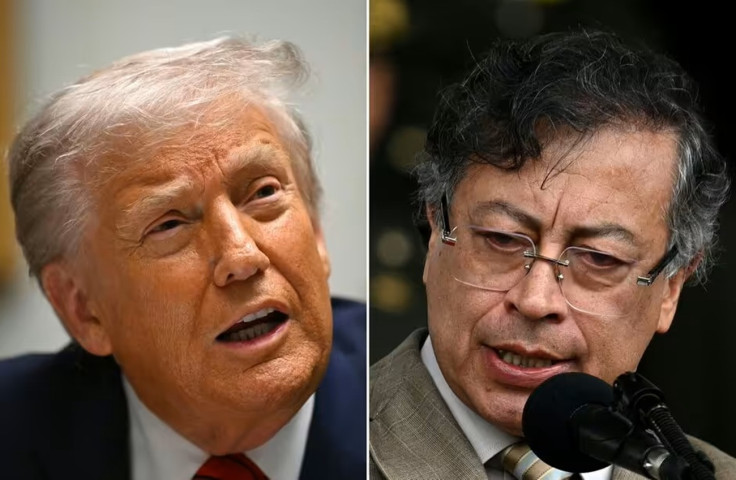
Latin America faces escalating tensions as Venezuela's acting president rallies troops for war and Colombia's leader pledges to take up arms in response to threats from US President Donald Trump. Defiant warnings from Caracas and Bogotá signal a potential explosion of conflict, with military forces on alert and the region teetering on the brink in the opening days of 2026.
Defiant Vows from Venezuelan Leadership
Venezuela's acting President Delcy Rodríguez has issued a warning to Trump, vowing to confront 'imperial aggression' head-on. Appearing alongside military commanders on state television, Rodríguez declared the nation ready for battle and urged unity across Latin America. 'What was done to Venezuela can be done to anyone,' she stated, condemning the US operation as brutal force aimed at breaking the will of the Venezuelan people, according to the Express.
Rodríguez, previously Venezuela's vice president, was sworn into office following the capture of Nicolás Maduro. She has since established a commission to secure his release and enacted decrees to detain US supporters. The Venezuelan Ministry of Defence announced full operational readiness, placing forces on high alert against further incursions.
Meanwhile, Maduro, appearing in a New York court, pleaded not guilty to drug trafficking charges, proclaiming his innocence as a 'decent man.' His defiant stance amplifies Rodríguez's call for resistance and fuels fears of prolonged unrest.
Colombia's President Prepares for Battle
Colombian President Gustavo Petro has escalated rhetoric, warning Trump that aggression would 'unleash the popular jaguar', a metaphor for massive public backlash. In a strong X post, Petro declared he would break his 1989 peace oath and take up arms to defend national sovereignty. 'For the Homeland I will take up arms again that I do not want,' he proclaimed.
This response follows President Trump's threats against Petro, whom he branded a 'sick man' tied to cocaine trafficking. When pressed on a potential US operation in Colombia, Trump responded, 'Sounds good to me.' Petro subsequently ordered Colombian forces to prioritise national loyalty, demanding that any pro-US commanders withdraw immediately.
Petro highlighted the risks, noting that indiscriminate bombings could kill innocent civilians and revive guerrilla groups in the mountains. His words evoke Colombia's history of civil strife, stirring memories of past conflicts.
Regional Tensions and Global Outcry
The abduction of Maduro has triggered widespread international condemnation. At an emergency UN Security Council meeting, even US allies criticised the raid as a breach of international norms, according to the New York Times. Russia accused the US of plotting regime change, while Panama called for a Venezuelan transition facilitated by opposition leaders.
Colombia is bracing for potential spillover effects, deploying armed forces to its border amid fears of refugee influxes and violence. Al Jazeera analysis highlights the potential for turmoil, with millions of Venezuelans already in Colombia straining resources. Protests in Caracas, including reports of gunfire near the presidential palace, underscore the region's instability.
Trump dismissed the war declarations, telling NBC News that the US targets drug traffickers, not nations. However, his administration plans congressional briefings on the operation, amid bipartisan pushback from US senators like Tim Kaine, who decried it as unauthorised.
Analysts Weigh In on Escalating Risks
In a piece published on EJIL: Talk!, legal scholars labelled the US action a serious violation of sovereignty, potentially encouraging similar moves by other global powers. ABC News commentator Elizabeth Neumann described the situation as a 'new low for the world order,' highlighting the presence of armed groups in Venezuela capable of resistance and undermining stability.
Foreign policy analyst Jason Pack, writing for The Guardian, argued that President Trump's strategy disregards lessons learned from the Iraq War, risking guerrilla warfare and mass migration. 'Venezuela is full of armed groups that would resist the regime's collapse,' he noted, echoing concerns of prolonged conflict.
BBC's Katy Watson explained that Trump's motivations appear tied to curbing Venezuelan migration, with nearly eight million citizens having fled under Maduro's leadership. However, she cautioned that military intervention could exacerbate the crisis, according to BBC insights.
Recent Developments Heighten the Drama
On Tuesday, Trump reiterated there would be no war with Venezuela, stating his focus is on oil management and reconstruction. On a call with MSNBC's Joe Scarborough, he remarked, 'The difference between Iraq and this is that Bush didn't keep the oil,' a comment shared on X.
Colombia remains on edge, with President Petro's warnings gaining traction amid calls for regional solidarity. UN discussions are ongoing, with allies like Britain urging restraint.
Protests have erupted in India, with effigies of Trump burned in solidarity. Meanwhile, US senators are pushing resolutions against unauthorised actions.
This showdown tests Trump's foreign policy mettle, with Latin American leaders standing firm. As armed vows echo, the world watches, hoping that rhetoric does not ignite real flames.
© Copyright IBTimes 2026. All rights reserved.