Boris Johnson's Train Was Minutes Ahead of Russian Drone Strike on Kyiv-Warsaw Service
The YES Express departed Yahodyn early after railway officials issued an evacuation alert, while a passenger-train locomotive was hit near the Polish border

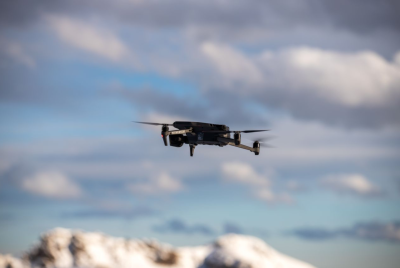
A special diplomatic train carrying former UK Prime Minister Boris Johnson left a Ukrainian railway station only minutes before a Russian drone struck a passenger train locomotive on the Kyiv‑Warsaw line, according to Ukrainian Railways.
The incident happened on 13 September 2026 near Yahodyn, close to the Polish border. Johnson was travelling with a European delegation after attending the Yalta European Strategy conference in Kyiv.
Among those travelling with him were former Swedish Prime Minister Carl Bildt and Günter Sautter, a foreign and security policy adviser to German Chancellor Friedrich Merz. At the time of the strike, former CIA Director David Petraeus was on a separate train at Yahodyn station.
Drone Strike Hits Close To Polish Border
Ukrzaliznytsia, Ukraine's state‑owned train company, said its Central Monitoring Group detected the incoming drone and issued an evacuation alert around 15 minutes before the impact. Passengers and railway staff were evacuated before the drone struck, and the railway operator said no passengers or crew members were injured.
The locomotive was hit around 2 kilometres (1.2 miles) from the Polish border. The frontier separates Ukraine from Poland, which is part of both NATO and the European Union.
Ukrzaliznytsia said railway dispatchers had adjusted the diplomatic train's departure time because of changing security conditions. The train left earlier than planned and cleared Yahodyn before the attack.
Railway officials said they could not rule out the possibility that the diplomatic train had been deliberately targeted. The railway operator said its schedules are regularly changed according to route availability and the level of threat from missile and drone attacks.
The Russian Defence Ministry said its long‑range drone operations in western Ukraine targeted infrastructure used to support the movement and delivery of military cargo from Europe.
Johnson Condemns Attack
In a separate interview with Forbes Ukraine published the same day, Johnson said Putin 'must understand that this war is stupid' and argued Ukraine should keep up pressure on Russia, including strikes on its infrastructure.
Johnson also praised Ukrainian railway workers and passengers, describing them as 'absolutely heroic'.
He said more than 1,700 Ukrzaliznytsia employees had been killed since Russia launched its full‑scale invasion.
The former prime minister also renewed his call for Western governments to seize and use frozen Russian assets to support Ukraine.
Johnson said more than €140 billion was being held in a Belgian bank account, alongside about £10 billion in London.
Johnson argued that Britain should take a leading role in finding ways to mobilise the funds. Bildt also posted video footage showing an evacuation and praised Ukrzaliznytsia's safety procedures.
Other Strikes Near the Border
The Yahodyn strike came four days after a separate Russian drone attack on the Starokozache border crossing between Ukraine and Moldova, in Odesa Oblast, on 9 September, which killed two people and injured three.
On 13 September, a drone struck a petrol station around 800 metres from the Polish frontier near the Dorohusk‑Yahodyn crossing. Two trucks caught fire and a lorry was destroyed. Operations at the crossing and several nearby checkpoints were temporarily suspended before later resuming.
In Odesa Oblast, another overnight drone attack struck the Starokozache international border crossing between Ukraine and Moldova. Two people were killed and three were injured. Sixteen people were evacuated, while border traffic was temporarily halted.
EU Officials Expressed Concerns Over NATO Border
Ukrainian and European officials said the strikes close to the Polish border showed the wider security risks posed by Russia's attacks. Ukrainian Foreign Minister Andrii Sybiha said Russian attacks were 'literally knocking on the doors' of the EU and NATO.
Polish Foreign Minister Radosław Sikorski described the incidents as an escalation and said Russia's threat was already 'inside the house'. He also accused Moscow of conducting a hybrid campaign involving acts including arson and sabotage.
German lawmaker Robin Wagener described the strikes as 'blind terror' and said Russia was 'playing with fire' close to the EU and NATO border. Polish Defence Minister Władysław Kosiniak‑Kamysz said Polish military systems had tracked incoming drones.
He said some strikes landed about 1 kilometre and 5 kilometres from Polish territory, but Poland's airspace was not violated.
The diplomatic train, known as the YES Express, had been arranged to carry international delegates back towards Poland after the Kyiv conference. Johnson was later photographed wearing a Ukrzaliznytsia hat carrying the railway operator's standard announcement: 'Car numbering starts from the front of the train'.
© Copyright IBTimes 2026. All rights reserved.
- Recommended For You