

Trump Demands Ukraine 'Get a New President' in Explosive Attack on Zelenskyy Over Russia War
Trump urges Ukraine to replace Zelenskyy after announcing a Russian diesel supply deal
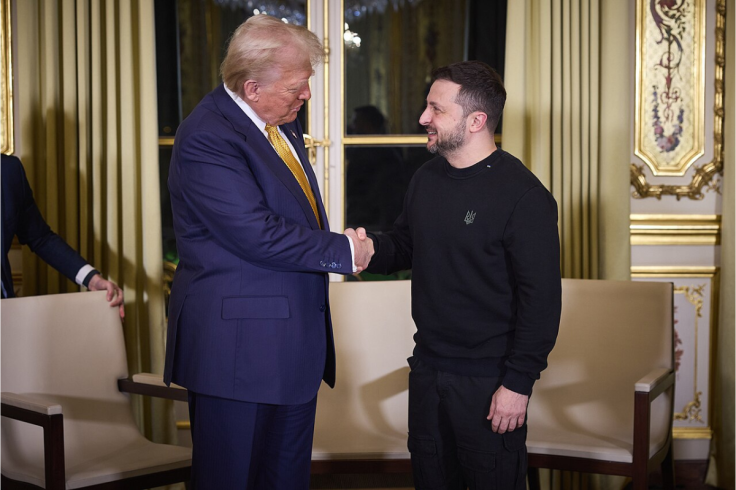
Donald Trump has called for Ukraine to choose a new president, criticising Volodymyr Zelenskyy over strikes on Russian oil refineries after announcing an arrangement to increase Russian diesel supplies. Kyiv has warned that easing restrictions on those exports could help finance Moscow's war effort.
Speaking to reporters on Saturday, 10 October, Trump said Ukraine needed a leader willing to reach an agreement with Russia. He blamed Ukrainian refinery attacks for diesel shortages and higher fuel costs, while Zelenskyy has said Ukraine would halt such strikes if Russia stopped attacking Ukrainian energy infrastructure.
Why Trump Wants Ukraine To Get a New President
'I think it's time for Ukraine to get a new president,' Trump said outside the White House. 'I suggest they get a new leader who can make a deal,' he added, accusing Zelenskyy of repeatedly failing to reach an agreement.
His comments followed the announcement of a diesel-supply arrangement with Russia a day earlier. Trump presented the additional supplies as relief for American farmers, ranchers and other users facing high fuel costs.
His explanation of the price pressure remains his assessment. Reuters has also identified the Iran war as a factor blamed for high diesel prices, rather than attributing the problem solely to Ukrainian refinery attacks.
Zelenskyy has defended those strikes as a response to Russian attacks on Ukraine's energy facilities. His position is that any halt should be reciprocal, rather than requiring Ukraine to stop while Moscow continues targeting its infrastructure.
The disagreement places fuel-market concerns alongside the question of how Washington can maintain pressure on Russia to end the war.
What Trump Announced About Russian Diesel
On Friday, 9 October, Trump said Russia had agreed to supply more than 300,000 tons of diesel immediately, another 500,000 tons in November and one million tons 'immediately thereafter'.
Those figures were announced supply commitments, not confirmation that the shipments had been delivered. Trump said the arrangement would increase availability and bring down prices.
The US Treasury Department's Office of Foreign Assets Control subsequently issued General License 135, authorising specified transactions involving the sale, delivery, offloading and importation of Russian-origin diesel, including imports into the United States.
The authorisation runs until 12.01am Eastern Daylight Time on 7 April 2027. It applies to transactions otherwise prohibited under two US sanctions regimes, rather than lifting every restriction on Russian energy trade.
The licence also excludes debits to accounts at US financial institutions belonging to Russia's central bank, National Wealth Fund or finance ministry.
Kyiv and Republicans Criticise the Arrangement
Zelenskyy has condemned the decision, warning that easing restrictions on Russian petroleum sales could help Moscow sustain its war effort.
Republican senator John Kennedy and former representative Mike Rogers, a Michigan Senate candidate, also criticised the arrangement, saying they opposed importing diesel from Russia, according to The Hill.
Their objections add to the dispute over whether increased supplies justify relaxing restrictions while Russia's invasion continues. The administration has emphasised potential relief for fuel users, while critics have focused on the economic benefit to Moscow.
That disagreement is separate from the question of whether either side will accept a reciprocal halt to attacks on energy infrastructure.
Trump's Energy-Ceasefire Claim Remains Unconfirmed
On Sunday, 11 October, Trump said Russia and Ukraine had agreed to an 'energy ceasefire' taking effect immediately. He did not publish its terms, and there was no immediate confirmation from Kyiv or Moscow.
Earlier that day, Zelenskyy said Ukraine would stop striking Russian refineries if Russia halted attacks on Ukrainian energy infrastructure. He subsequently said Kyiv was awaiting details from the US side.
A willingness to support reciprocal restraint is not the same as confirmation that a defined agreement has been reached. Reports of continued Russian strikes also left the timing and implementation of any arrangement unclear.
Zelenskyy separately offered to organise elections if Russian President Vladimir Putin agreed to a 60-day total ceasefire. That proposal concerned a broader halt to hostilities, not merely an energy truce, and did not establish an election date.
Earlier Peace Talks Left Major Questions Unresolved
Following their meeting at Mar-a-Lago on 28 December 2025, Trump said he and Zelenskyy were 'a lot closer' to a peace agreement.
Zelenskyy described a proposed 20-point plan as 90% complete. That figure concerned the development of the proposal, rather than a completed settlement accepted by Russia.
Major issues remained, including occupied territory, Ukraine's security and the conditions under which fighting would end.
Russia annexed Crimea in 2014, when fighting also erupted in the Donbas. Moscow's full-scale invasion began on 24 February 2022, escalating the conflict across Ukraine.
The latest diesel arrangement and ceasefire claim do not resolve those underlying disputes. The fuel licence has a defined expiry date, but the reported energy truce lacks publicly established terms, leaving uncertainty over whether price relief and reciprocal restraint can be achieved without weakening pressure on Moscow.
© Copyright IBTimes 2026. All rights reserved.