

What Is a Geomagnetic Storm: Facts on Solar Storms, Solar Flares, and Aurora Borealis Forecast
A severe geomagnetic storm triggered by an X-class solar flare is expanding aurora visibility and raising fresh questions about space weather risks.

A colossal coronal mass ejection (CME) has struck Earth, triggering severe (G4) geomagnetic storm conditions that could push the northern lights much farther south than usual tonight (19–20 January). The impact, confirmed by the National Oceanic and Atmospheric Administration's (NOAA) Space Weather Prediction Center, is already stirring Earth's magnetic field — setting the stage for a potentially spectacular aurora display across the northern United States and possibly beyond.
NOAA confirmed that G4 geomagnetic storm levels were first reached at 2:38pm EST (1938 UTC) on 19 January following the CME's shock arrival, with storming expected to continue through the evening. The CME was launched during a powerful X-class solar flare on 18 January and travelled towards Earth at speeds of up to 1,400 kilometres per second.
What Is a Geomagnetic Storm?
A geomagnetic storm is a major disturbance in Earth's magnetic field caused when charged particles from the Sun interact with the planet's magnetosphere. These storms typically occur when a CME reaches Earth and transfers energy into the magnetic field, disrupting its usual stability.

Storms are classified on a G-scale from G1 (minor) to G5 (extreme). G4 storms are considered severe and can affect satellite operations, GPS accuracy, radio communications and, in rare cases, power grids.
What Causes Solar Storms and Solar Flares?
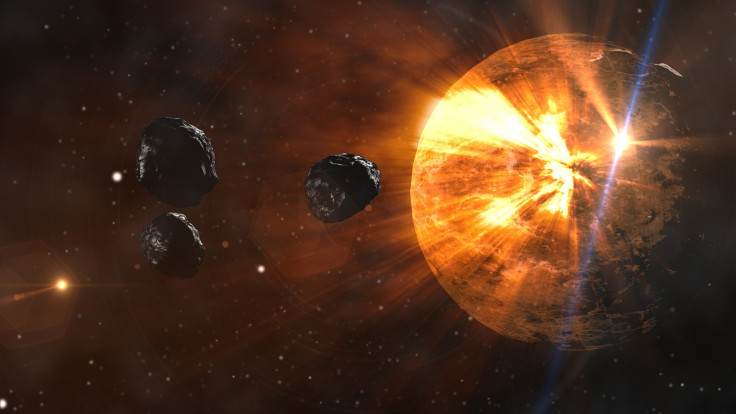
Solar storms originate from magnetic instability on the Sun. When twisted magnetic fields suddenly snap and reconnect, they release enormous energy in the form of solar flares and CMEs. Solar flares are intense bursts of radiation that reach Earth within minutes, while CMEs are vast clouds of plasma that can take between 15 hours and several days to arrive.
The current geomagnetic storm was triggered by an X-class solar flare — the most powerful category — accompanied by a CME that was reinforced by fast-moving solar wind from a coronal hole, intensifying its impact.
Why Auroras Appear During Geomagnetic Storms
Auroras occur when charged particles from the Sun are funnelled along Earth's magnetic field lines and collide with gases in the upper atmosphere. These interactions produce the shimmering green, pink and purple lights known as the aurora borealis and aurora australis.
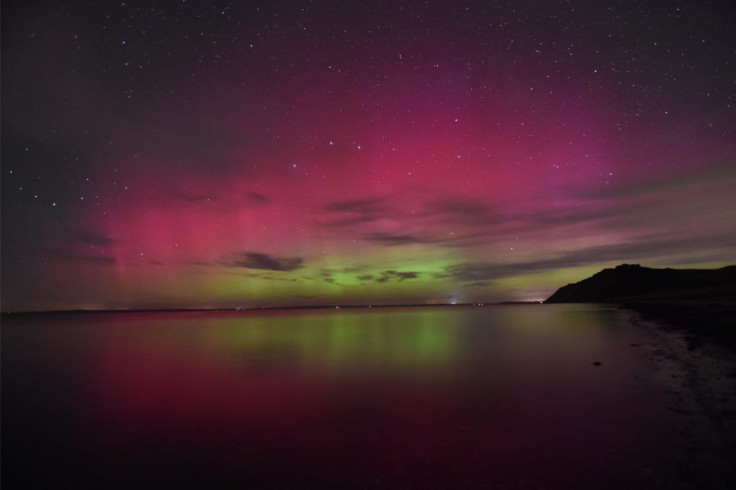
During strong geomagnetic storms, the auroral oval expands, allowing auroras to be visible at much lower latitudes than usual. NOAA forecasts suggest that this event could make the northern lights visible across up to 24 US states, depending on cloud cover and magnetic conditions.
Where and When the Northern Lights May Be Visible
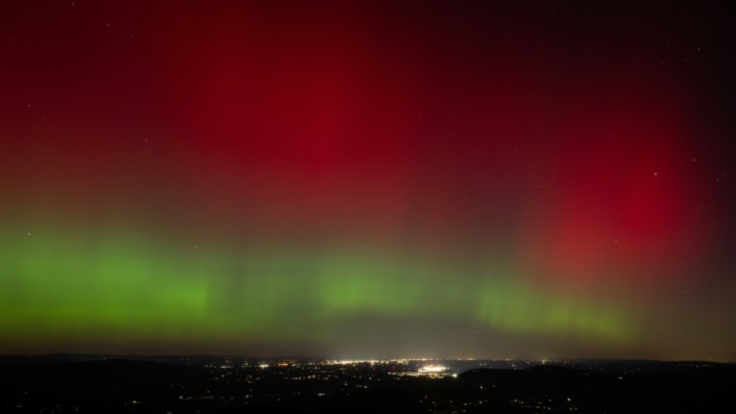
According to NOAA's Space Weather Prediction Center, auroral activity is expected to remain elevated through the night, with the strongest conditions forecast between 1:00am and 4:00am EST. Though auroras could appear earlier if magnetic conditions remain favourable.
Visibility depends heavily on the orientation of the CME's magnetic field. A southward-facing field allows solar energy to couple more efficiently with Earth's magnetosphere, increasing auroral intensity.
Solar activity follows an 11-year cycle, and scientists say we are currently approaching solar maximum — the period when storms become more frequent and intense. As reliance on satellite technology grows, understanding space weather and its potential effects has become increasingly important.
For now, the most visible impact of this storm may simply be a rare chance to witness the northern lights far from their usual Arctic home — a reminder that activity on the Sun can still reach across space and touch everyday life on Earth.
© Copyright IBTimes 2026. All rights reserved.