Egypt On Edge As Explosive Scan Reveals Giant Engineered Structures Under Pyramids
Scientists using Doppler tomography reveal spiralling tubes and vast chambers beneath the Khafre Pyramid, sparking fierce debate over Egypt's hidden past.

The mystery of the Pyramids has taken a dramatic turn after a pioneering radar scan revealed vast spiral structures and colossal chambers deep beneath the Giza Plateau, throwing Egypt into a storm of speculation, debate, and nervous anticipation.
The findings appear to support long‑suspected theories that the pyramids may have served a purpose far more complex than a simple burial site. Researcher Felito Biondi put it, he is 'struggling to express in words just how significant of a discovery this is'.
A New Technology That Changed Everything
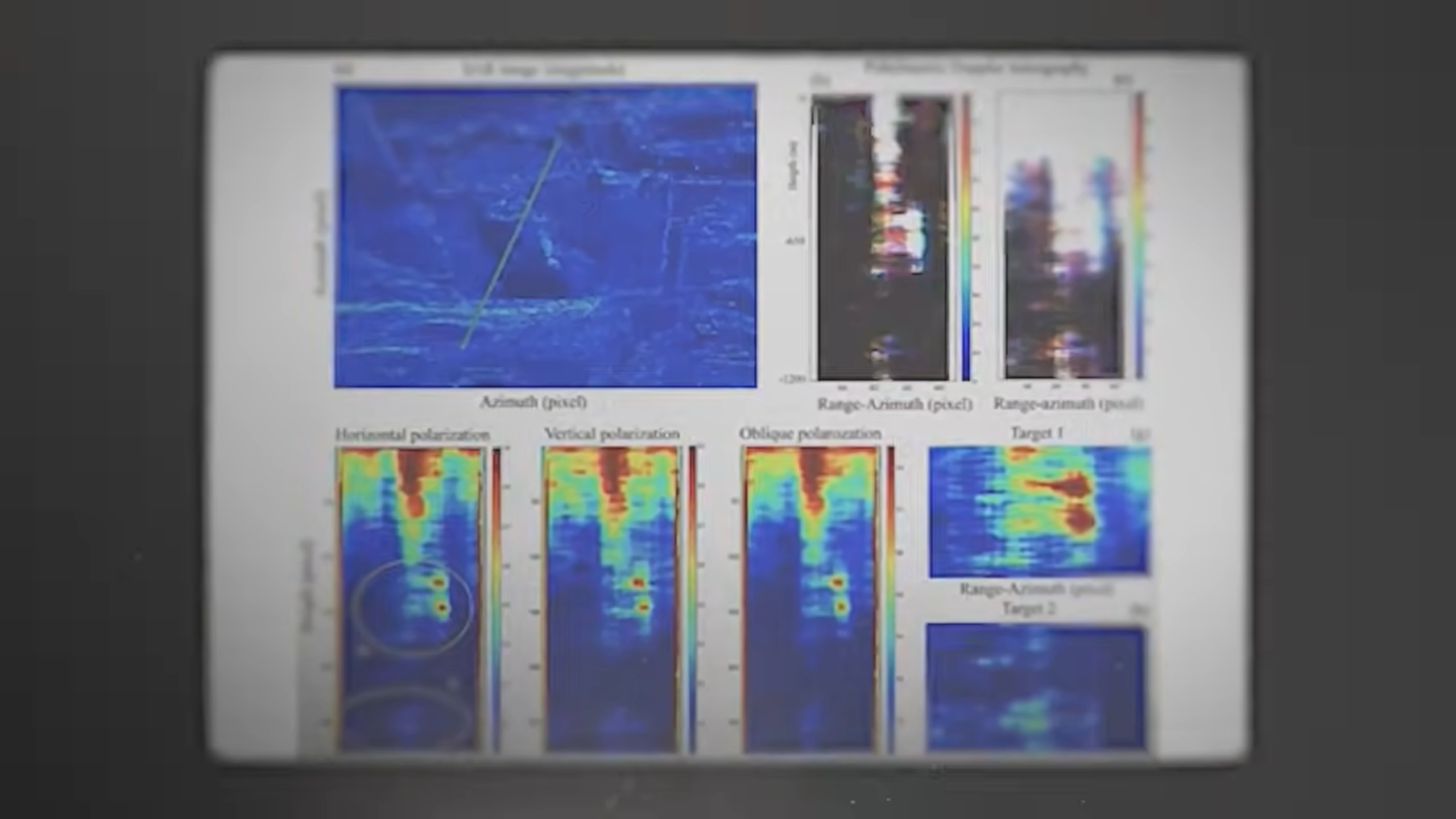
The breakthrough began with a technique never before used at this scale in archaeology. Synthetic Aperture Radar Doppler Tomography, developed by researcher Corrado Malanga and technician Felito Biondi, was initially intended for studying volcanoes and seismic zones. Biondi explained that the method retrieves the Earth's surface vibrations, allowing scientists to transform the data into internal tomographic slices. He said, 'We can see everything concerning the energy vibration on a certain depth' and described the technique as a way to 'look inside'.
Despite criticism from traditionalists, Biondi insisted that the method is valid beyond archaeology. He noted that it can be used for mining, crude oil extraction and even to map magma chambers, saying it had 'commercial purposes' and could be vital in monitoring dangerous volcanoes such as Mount Vesuvius. He also stressed that radar itself does not penetrate the Earth, but vibrational interactions between photons and phonons at the surface boundary allow deep structural mapping. According to him, the team had successfully combined the two information sources to produce what he called 'a tomographic inversion'.
What The Scans Actually Revealed
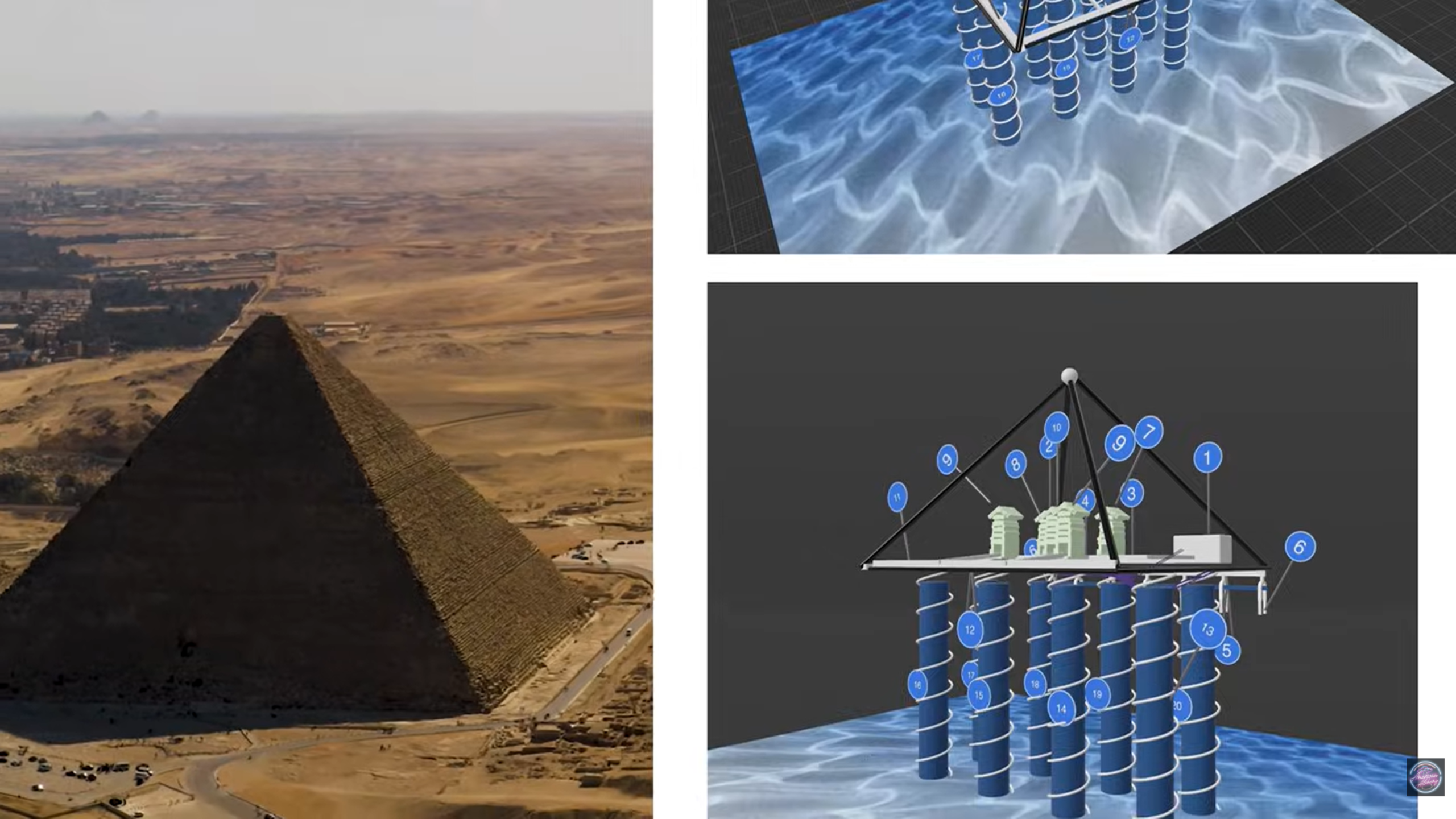
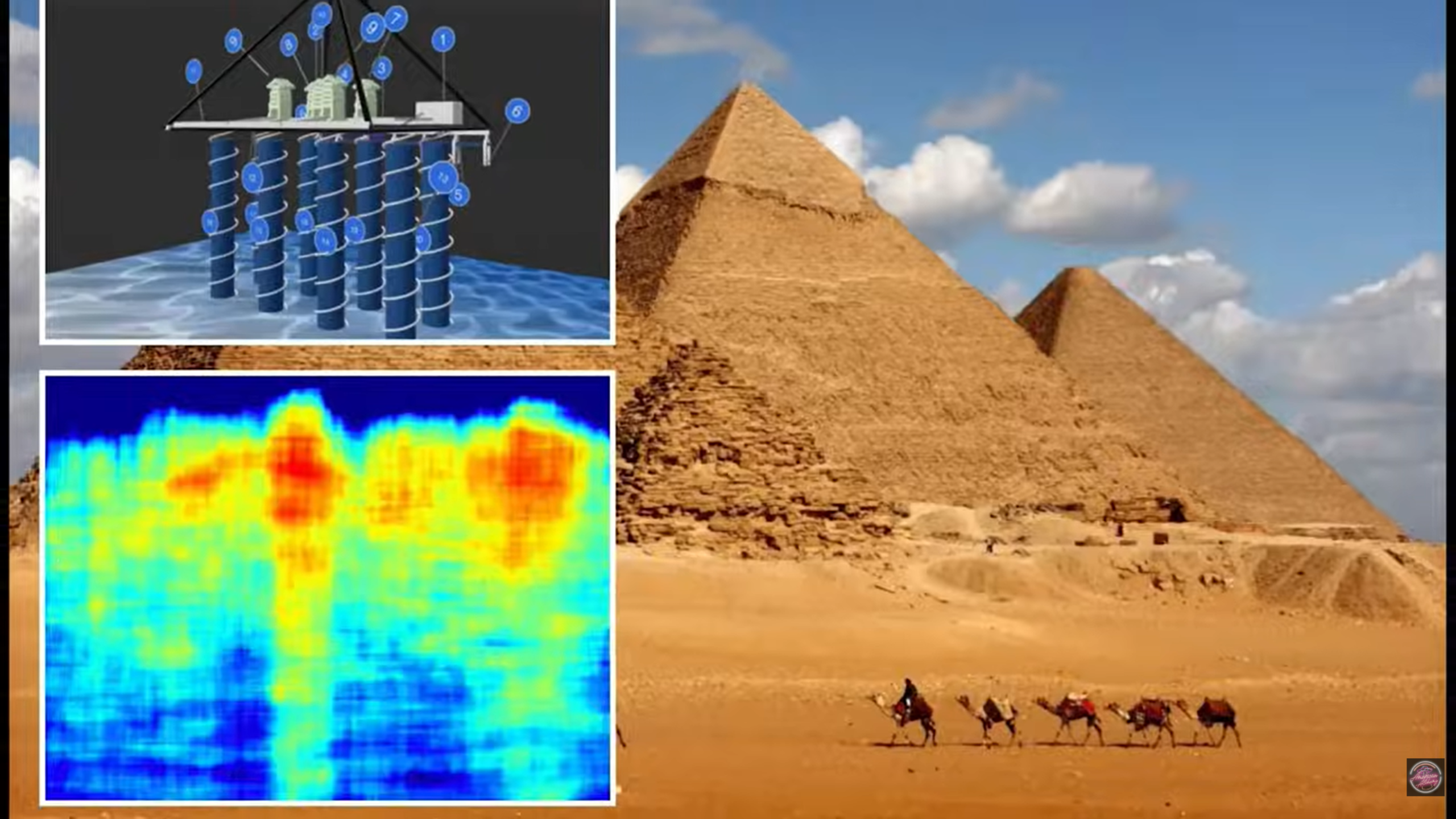
The results were astonishing. Beneath the Khafre Pyramid, the team identified eight hollow cylindrical structures descending far into the Earth.
Biondi described them as 'tubes that are connected to the base of the pyramid' and added that each contained a central core wrapped by a spiralling shape.
He emphasised their depth, saying, 'We have measured approximately over one kilometre of depth'. The tubes connect to two cubic chambers located at the very bottom, each estimated at roughly eighty metres in width and height. Biondi said the chambers appear to form part of a larger system he called 'huge structures that are connected to the base of the pyramid'.
The spiralling form immediately raised questions. During the interview, the host asked whether the arrangement resembled an engineered device or possibly an ancient energy grid.
Biondi avoided speculation but confirmed that the coils, columns and geometric organisation were real and consistent across all tomographic slices.
He acknowledged that their purpose remains unknown, saying, 'The truth is we know the truth only if we go inside the physical site'. However, when asked why the spirals might exist, he admitted that 'maybe the water goes through these spirals' and that the material could be piezoelectric.
A Debate Fuelled By Controversy And Hope
The discovery has triggered a sharp divide within Egypt's archaeological community. Former Minister of Antiquities Zahi Hawass dismissed the findings as 'fake news' and insisted that nothing new lies beneath Giza.
Yet many academics and independent researchers have voiced support for Biondi, noting that the area is known to contain subterranean chambers that have never been fully explored.
Supporters argue that the revelations echo theories proposed by engineer Christopher Dunn, who suggested decades ago that the pyramids may have functioned as ancient energy devices.
The interview host noted that the scans appeared to match Dunn's hypotheses, particularly the concept of microwave waveguides and solid energy generators. Biondi expressed gratitude for Dunn's support and said it is 'time to stay all together and work on a common purpose'.
For Biondi, the motivation goes beyond science. He said he began by studying Vesuvius because he wanted to 'make something for humanity', and that the same desire drove him to explore Giza. He believes the Pyramids hold answers to human origins, saying that people are born 'and we do not know who we are'.
Why This Discovery Matters Now
Egypt is now under pressure to respond. The scans suggest a carefully engineered system that challenges conventional timelines, building techniques and cultural assumptions about the ancient world.
The presence of deep chambers, spiralling columns and kilometre‑long tubes poses questions that cannot be ignored, and the global scientific community is urging controlled excavation.
Whether the structures represent forgotten technology, ritual architecture or something entirely new, they have already reshaped the conversation. As Biondi said, 'We are watching huge structures' and the next step is simple: 'We have to go and see in person what there is underneath'.
© Copyright IBTimes 2026. All rights reserved.
- MOST POPULAR IN Science