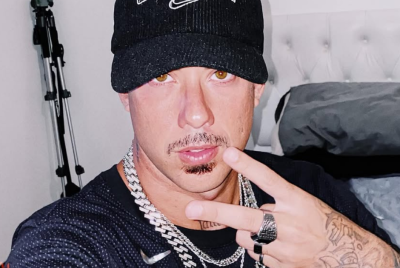
Quick Facts About Wiz Khalifa's Father, Laurence Thomaz: Personal Details, Final Moments and Cause of Death
Wiz Khalifa announces the passing of his father, Laurence W. Thomaz, reflecting on their relationship and his father's influence.


The words he chose were simple and brutal.
'Today my father decided not to wake up,' Wiz Khalifa wrote to his 36 million followers. No build‑up, no black‑and‑white photo, just a sentence that sounded as if it had been pulled straight out of the moment he heard the news.
In a few lines on X (formerly Twitter), the rapper born Cameron Jibril Thomaz confirmed what fans had already begun to fear: Laurence W. Thomaz, the U.S. Air Force veteran who raised him across bases and broken marriages and early mixtapes, was gone.
'I will always love him, miss him and be greatful for the things he taught me,' Wiz added, misspelling 'grateful' in a way that made the post feel unedited, uncomposed. 'He went out like a true yogi, at peace and on his own time. I love you forever Laurence W. Thomaz.'
Within minutes the replies filled with condolences, prayer emojis and the usual internet noise. Underneath all that, though, lay a quieter question that doesn't fit easily into 280 characters: who, exactly, was the man the world only really knew as 'Wiz Khalifa's dad'?
Today my father decided not to wake up. I will always love him, miss him and be greatful for the things he taught me. He went out like a true yogi, at peace and on his own time. I love you forever Laurence W. Thomaz.
— Wiz Khalifa (@wizkhalifa) February 13, 2026
Quick Facts About Wiz Khalifa's Father: Soldier, Co‑Parent, Quiet North Star
Laurence W. Thomaz was never a public figure in his own right. There were no tell‑all interviews, no reality shows, no memoir. But to understand why his death has hit hip‑hop in a way that feels personal, you have to trace the outline of the life he did have.
Thomaz served in the United States Air Force, as did Wiz's mother, Peachie Wimbush. Their careers meant the family bounced from base to base when Wiz was small – Germany, the UK, Japan – before he eventually settled in Pittsburgh, the city he still reflexively shouts out on stage.
The marriage did not survive the logistics. Thomaz and Wimbush divorced when their son was about two. By most accounts, though, this was not one of those splits that left a parent as a ghost. Wiz has said repeatedly that both mother and father stayed in his life; what didn't survive was any ability to be in the same room together.
'My parents were divorced since I was 2, and I had both of them in my life. Love my mother, love my dad, but they can't be in the same room together, and that's not good for a kid,' he told N.O.R.E. and DJ EFN on Drink Champs in 2023. 'It's not their fault because they probably didn't grow up seeing the best functioning anything.'
That unvarnished description – loving parents, dysfunctional unit – has been central to how Wiz talks about his own choices. Where his childhood was a relay between two households, his adulthood, particularly his co‑parenting with ex‑wife Amber Rose over their son Sebastian, has been a deliberate attempt to do it differently.
'We're such a good unit for him that I didn't see growing up,' he said in the same interview. You don't have to read very far between the lines to see his father in that sentence: both as part of the old pain and part of the new blueprint.
Friends and collaborators say Thomaz remained in close contact with his son even as the venues got bigger and the weed anthems louder. Wiz himself has always been quick to credit that grounding. In biographies and profiles over the years, he has spoken of his dad less as a disciplinarian and more as a sort of steadying presence – the person he leaned on when fame did what fame tends to do to young men with money.
'He was a military man,' one long‑time associate said, 'but with Wiz he was more like a coach. Not yelling, just telling him, 'You already know what the right thing is, I raised you.''
How Fatherhood Changed Wiz – And What Laurence Saw Before He Went
One of the more striking things about the tributes to Laurence Thomaz is that they do not run in just one direction. In recent years, he had been the one publicly talking about how much his son had grown up.
When Wiz and Amber Rose had Sebastian in 2013, it turned the rapper – then best known for Black and Yellow and a happily stoned bachelor image – into something more complicated: a touring artist who also had to make it home for Lego and school runs.
'Sebastian's matured him,' Thomaz said in an interview picked up by fatherhood podcast The Father Hood. 'But it's made him more serious and understand: 'I have to be here. I can't do the dangerous, reckless things I was doing before: I have this little guy to look out for.''
It is not a quote that went viral at the time. There were no headlines about 'Wiz's dad says he's grown.' But read against Friday's announcement, it lands differently. A father had seen his son come out the other side of the standard rapper gauntlet – drugs, arrests, messy break‑ups – and had lived long enough to watch him consciously try to stop the cycle of unresolved family damage at their grandson's generation.
There is something almost painfully ordinary about that hope. Strip away the Rolling Loud stages and the private jets, and you are left with a dynamic that would be instantly familiar to a lot of working‑class military families: a kid who did not always see his dad, but who knew, crucially, that the man was there, and tried, and then grew up and tried a bit harder.
That banal miracle is part of why Thomaz's death has resonated past the usual celebrity‑condolence script. The hip‑hop world is not short on stories of absent fathers. It has fewer of men like this: flawed, present, not saints, but also not ghosts.
Wiz's description of his father's final moments – 'He went out like a true yogi, at peace and on his own time' – hints at an end that was, if not expected, then at least not violent. There has been no official statement about cause of death; no police incident, no hospital leak. Just a family notification and a grown man crying onto his phone and hitting 'post'.
In a culture that rewards polished narratives and punishes vulnerability, there was something disarmingly raw about that X message. No euphemisms, no talk of 'transitioning' or 'gaining his wings.' Just: today, my father decided not to wake up.
The replies that mattered most won't be the public ones. They will be the texts from cousins, the calls from old squadron mates, the quiet, practical conversations about funerals and estates and who needs to fly where. But for fans who have watched Wiz Khalifa grow up in public – from the skinny Pittsburgh teenager with a pencil tattoo to the shirtless festival staple – the post was a reminder that behind every "self‑made" star there is usually at least one person who did the less glamorous making.
Laurence W. Thomaz served his country. He raised a son across continents and court dates and awkward visits where the adults couldn't quite manage basic civility. He saw that son become a father and, by his own account, calm down a little.
Now he is gone, and the man who once rapped breezily about 'young, wild and free' is left writing about gratitude, peace and the one bond you can't smoke or spend your way out of.
Rest in peace, indeed, to the dad behind the stage name.
© Copyright IBTimes 2025. All rights reserved.
- Recommended For You